Virtual-asset regulation… the endgame of a policy that began with bans [Hankyung Koala]
Summary
- He said that after the measures in 2017 that amounted to a de facto blanket ban, revisions to the Specified Financial Information Act cemented the five-exchange system, yet no one is satisfied.
- He said that allowing corporate investment and allowing foreign investment are being discussed belatedly, and that under increasingly elaborate regulation, no one is benefiting.
- He said that in an era when virtual-asset trading volume exceeds the combined trading volume of the KOSPI and KOSDAQ, the government should not ban choices first and then allow them conditionally, but should not block the choice itself from the outset.
Forecast Trend Report by Period


Kim Min-seung’s ₿ficial
A regulation that makes everyone unhappy—who was it for?
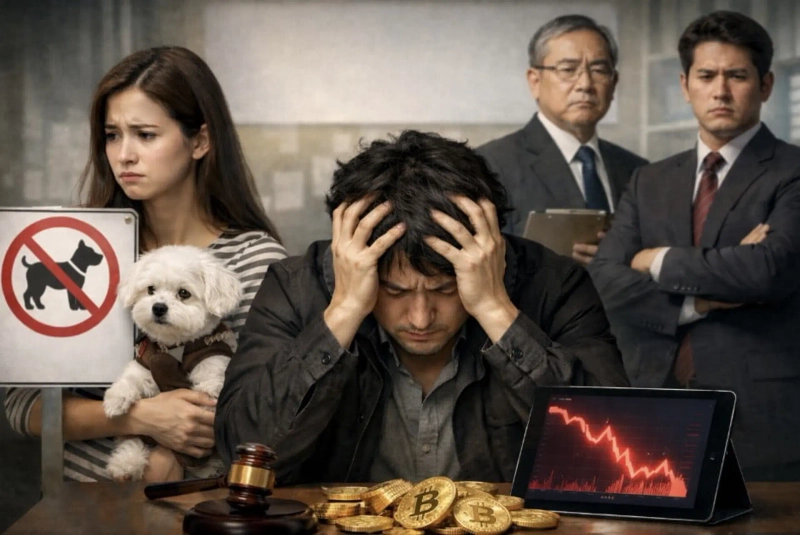
Starting on the 1st, restaurants have been allowed to admit customers accompanied by pets. The word “allowed” is attached to it. That also means that, until now, it was prohibited. At first glance, it looks like a welcome change in that it represents legal permission. But the mood on the ground is different. A long list of conditions comes with it: dedicated entrances, partitioned spaces, hygiene standards, the risk of administrative penalties, and more. Owners are quietly opting for “no-pet zones.” It bears the name of permission, but in practice it is closer to a ban. Pet owners feel stifled, and proprietors are put in a bind. Then one cannot help but ask: why was “restriction as a rule” the starting point in the first place?
Restaurant owners are rational by nature. If they violate hygiene standards, they lose customers. Customers are rational, too. If animals make them uncomfortable, they can simply avoid that restaurant. Businesses that welcome pets and those that do not are naturally separated by the market, and customers choose based on preference. That is how a normal market works.
What broke that order of autonomy were complaints from a small number of “uncomfortable people.” When complaints accumulate, the government has little choice but to respond. Experts are convened from each field—hygiene, animals, quarantine, food service. Each offers a reasonable view within their domain. But when those reasonable views are aggregated, an unrealistic regulation is born. That is because they started trying to solve the wrong problem from the outset.
Virtual assets are no different. After measures that amounted to a de facto blanket ban emerged in 2017, revisions to the Act on Reporting and Using Specified Financial Transaction Information (the “Specified Financial Information Act”) cemented today’s five-exchange system. And now, nearly a decade later, allowing corporate investment and allowing foreign investment are being discussed belatedly. Yet no one is satisfied—businesses that obtained VASP status, those that could not, retail investors, or corporates. Then, under this regulatory framework,
who, exactly, is happy?
People who are uncomfortable with blockchain and virtual assets can simply choose not to participate. Companies that deem it innovation can invest, and investors who consider it a scam can keep their distance. Trustworthy operators survive in the market, and those that are not are weeded out. This, too, is the normal functioning of a market. But in 2017, a minority of “uncomfortable people” voiced strong dissatisfaction with the very existence of virtual assets, and as a result the market’s normal operating mechanism was blocked at the source. The outcome resembles the pet-entry issue. Everyone ended up unhappy.
The structure of the two cases is identical. It does not mean regulation itself is irrational. On the contrary, the best experts likely designed the most sophisticated approach. The problem is the direction. With the overarching premise of “it must be blocked” already fixed, only then did they deliberate “what to allow, and under what conditions,” and that is why this result emerged.
The debate started from the wrong place. The crux was not “why should it be allowed?” The real question was “why was it banned from the beginning?” A minority’s subjective discomfort became grounds to restrict the freedom of the majority and industrial development. And the regulation that responded to that discomfort became increasingly elaborate as it passed through experts’ hands. Yet under those ever more sophisticated rules, no one actually gained.
Good regulation intervenes where markets fail. Because there was an incident decades ago in which someone was bitten by a dog at a restaurant, it is excessive to make it the rule to restrict, in principle, the entry of all dogs and all dog owners to every restaurant and cafe nationwide. The virtual-asset market is no different.
Good regulation must reflect today’s reality. The era when everyone had two children and only well-off households—or those with a yard—kept large dogs is already over. This is an era in which more than half of people in their 30s are unmarried, and more “dog strollers” are sold than baby strollers. It is also an era in which virtual-asset trading volume surpasses the combined trading volume of the KOSPI and KOSDAQ.
Regulation must keep pace with the times. It does not need to run ahead of them. All the more, we must not judge today’s market by clinging to some people’s past “discomfort.” The market arrives at answers in due course. What the government should do is not to ban the natural course first and then allow it conditionally. It is to not block that choice itself in the first place.
Kim Min-seung, head of Korbit Research Center, ...
He is a founding member and head of the Korbit Research Center. He works to explain complex events and concepts in the blockchain and virtual-asset ecosystem in an accessible way, and to help people with different perspectives understand one another. His experience includes blockchain project strategy planning and software development.

Korea Economic Daily
hankyung@bloomingbit.ioThe Korea Economic Daily Global is a digital media where latest news on Korean companies, industries, and financial markets.