Oracle shrugs off AI-fueled 'end of software' narrative, rebounds on cloud momentum
Summary
- Oracle said fiscal 2026 third-quarter revenue rose 22% and adjusted EPS came in at $1.79, beating market expectations.
- Oracle cited OCI revenue surging 84% and RPO jumping 325% to $553bn as evidence underpinning its growth.
- Jefferies raised its price target on Oracle to $320 from $149, and the stock surged 8.7% in after-hours trading, the report said.
Forecast Trend Report by Period


Oracle posts earnings surprise
Revenue up 22%…operating profit $5.4bn
Cloud infrastructure drives growth
EPS of $1.79 beats estimates
Remaining performance obligations surge more than fourfold
AI coding technology sharply boosts profitability
Ellison: "The SaaS doomsday thesis doesn’t apply"
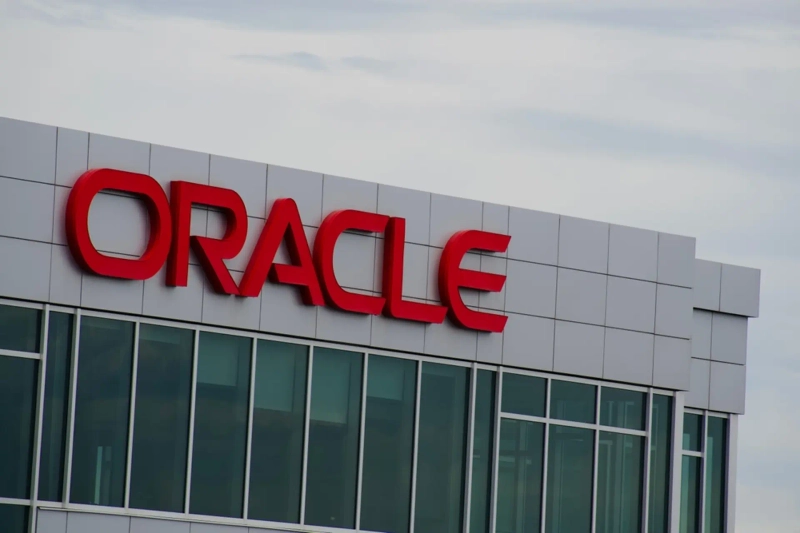
Oracle, the U.S. software company that has come to symbolize the "AI bubble" debate, delivered results and a revenue outlook that topped market expectations. The company’s cloud business—previously a source of concern due to hefty capital spending that outpaced revenue—showed steep growth, while a sharp increase in contracted backlog helped ease investor anxiety.
Infrastructure revenue jumps 84%
On the 10th (local time), Oracle said revenue for fiscal 2026 third quarter (December 2025–February 2026) rose 22% year on year to $17.19bn (about 25.35 trillion won), beating the market consensus of $16.91bn.
Operating profit increased 25% over the same period to $5.464bn. Adjusted earnings per share (EPS) also came in at $1.79, above the estimate ($1.70).
The main driver was Oracle Cloud Infrastructure (OCI), the segment that leases Oracle-owned data centers to AI companies via the cloud. OCI revenue surged 84% year on year to $4.9bn, far exceeding the previous quarter’s growth rate (68%) and topping Wall Street’s expected growth (79%). The jump is seen as reflecting increased adoption of Oracle’s infrastructure by major tech companies such as OpenAI and Meta for AI model training and inference. Total cloud revenue, including OCI and software-as-a-service (SaaS), rose 44% year on year to $8.9bn.
Oracle also raised its outlook. It kept its fiscal 2026 revenue forecast, with just the fourth quarter remaining, at $67bn, but lifted its fiscal 2027 revenue outlook by $1bn to $90bn. That is above the market estimate of $86.6bn.
As the basis, the company pointed to a surge in remaining performance obligations. Oracle executives disclosed RPO of $553bn, up 325% year on year.

Can it shake off its Wall Street troublemaker label?
Since last year, Oracle has been particularly volatile even among Wall Street megacaps. The stock nearly doubled from $168 at the start of the year on the back of an "AI rally," but after September it became embroiled in the "AI bubble" thesis—criticisms that profitability and growth were underwhelming relative to heavy capex—and the shares plunged 33% through year-end. This year, the stock has corrected about 23% as fears spread that one of its core businesses, SaaS, could be displaced by general-purpose AI from OpenAI and Anthropic.
In its earnings release that day, Oracle addressed market concerns and struck a confident tone. Co-CEO Mike Sicilia referenced the "SaaS doomsday" thesis, saying, "Small SaaS vendors with single-function products could take a hit, but Oracle’s platform ecosystem spanning entire industries will instead see its competitiveness strengthened through AI." Chairman Larry Ellison said, "Thanks to AI code-generation technology, we can build more software with fewer people, in less time," adding, "I think Oracle is an innovative company, and the SaaS doomsday thesis doesn’t apply to us."
Wall Street’s reaction has been positive. Dan Ives, an analyst at Wedbush, said, "The increase in remaining performance obligations confirms that Oracle is progressing normally along its growth trajectory," adding, "It’s also positive that profitability is improving at the same time while demand for AI infrastructure hasn’t cooled." Investment bank Jefferies sharply raised its price target on Oracle after the earnings release to $320 from $149.
After the earnings announcement, Oracle jumped 8.7% in after-hours trading in New York to close at $162.4.
Byun Beom-jin / New York correspondent Park Shin-young forward@hankyung.com

Korea Economic Daily
hankyung@bloomingbit.ioThe Korea Economic Daily Global is a digital media where latest news on Korean companies, industries, and financial markets.