KOSPI whipsaws on Iran war…Two scenarios ahead [Analysis+]
Summary
- Brokerages said that if the U.S.-Iran war concludes with a "limited ceasefire", international crude prices could stabilize lower to $60–$70 a barrel, easing volatility in equities.
- However, they noted that if the war is prolonged—such as through ground troop deployment—and international crude prices stay extremely strong above $120 a barrel, negative spillovers to the real economy and financial markets could widen, creating additional downside risks for equities.
- Brokerages advised that only a signal guaranteeing safety in the Strait of Hormuz can reduce the risk of foreign dumping of won-denominated assets and sustain the market’s relief rally, serving as an inflection point for equities.
Forecast Trend Report by Period


"If there is a 'limited ceasefire,' oil prices could stabilize lower at $60–$70"
"If prices exceed $120 a barrel, equities face additional downside risk"
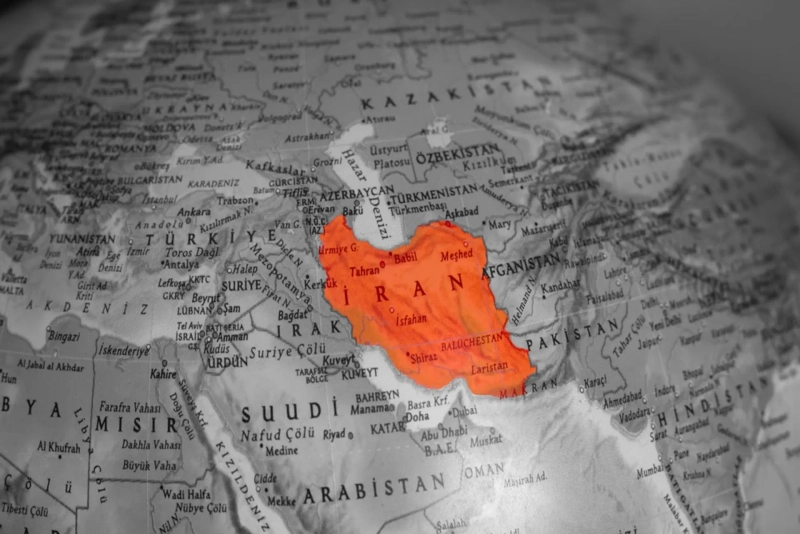
As the U.S.-Iran war fuels heightened volatility in the KOSPI—producing what is often described as a "whipsaw market"—attention is turning to the trajectory of oil prices, which have been on a roller coaster since the outbreak. Market watchers say a meaningful end to hostilities would require assurances of safety in the Strait of Hormuz, while warning that investors must also factor in the risk of a drawn-out war of attrition with longer-term supply-chain damage.
According to the Korea Exchange on the 11th, the KOSPI closed at 5,609.95, up 1.4% from the previous day. Investor sentiment partially recovered as international crude prices plunged after President Donald Trump signaled the possibility of an early end to the war. However, the index gave back part of its gains intraday on reports that the U.S. and Israel had bombed across Iran’s capital, Tehran.
Equities are currently swinging sharply with oil-price moves, as South Korea is structurally among the most vulnerable major economies to energy supply-chain risks. Industry data show that South Korea’s crude import bill as a share of GDP exceeds that of Japan and Germany. Dependence on the Middle East accounts for 72% of crude imports, and 95% of that volume passes through the Strait of Hormuz.
While the government says crude stocks provide more than 200 days of buffer, inventories of naphtha—a key manufacturing feedstock (30–60 days)—and liquefied natural gas (LNG·14–30 days), a core power-generation fuel, have relatively short cycles. In particular, LNG carries a comparatively lower risk of rapid drawdowns thanks to diversified import sources beyond the Middle East, but naphtha remains 58% dependent on the region—raising concerns that petrochemical production disruptions could emerge after 3–4 months.
Brokerages broadly see a high likelihood that the U.S. and Iran move toward a "limited ceasefire" amid the political burden of surging oil prices. In that scenario, infrastructure repairs may take time, but coordinated releases from strategic petroleum reserves (SPR) led by the U.S. and other advanced economies, alongside output increases by Saudi Arabia and other producers, could allow international crude prices to average $80 a barrel in Q2 and stabilize lower to $60–$70 in the second half of the year.
Conversely, if the war drags on—such as through the deployment of ground forces—supply-chain losses would be unavoidable, making it the worst-case scenario for equities. Analysts say if the two countries fail to find a diplomatic off-ramp, tensions around the Strait of Hormuz could persist, dealing a severe blow to global logistics and energy supply chains.
Ha Geon-hyeong, a researcher at Shinhan Investment Corp., said, "If supply-chain disruption materializes, international crude prices are likely to remain extremely strong, with the average exceeding $120 a barrel, and the negative spillovers to the real economy and financial markets will inevitably broaden." He added, "A sharp rise in logistics costs weakening export competitiveness and an increased fiscal burden from extending fuel-tax cuts are likely to act as additional downside risks for equities."
Another concern is that signs of a prolonged war could spur a stronger dollar and trigger foreign capital outflows. South Korea’s energy vulnerability is structurally such that an oil-price shock translates directly into a sharp deterioration in the trade balance.
Lee Jin-kyung, a researcher at Shinhan Investment Corp., said, "The economic hit to the eurozone and Asian countries with high dependence on energy imports is expected to be larger than that to the U.S.," adding, "In that case, a risk premium tied to sovereign credit risk could be reflected in the exchange rate, exposing the market to a phase in which foreigners may dump won assets."
Brokerages also advised that a simple political declaration of an end to the war would not be enough; a signal guaranteeing the safety of the Strait of Hormuz would be required to create an inflection point for equities.
Yoo Seung-min, a researcher at Samsung Securities, said, "A U.S. declaration of an end to the war is not effective on Iran, so it should also include a halt to Israel’s attacks," adding, "Only when there is meaningful stability in the Strait of Hormuz can the relief rally in financial markets continue."
Noh Jeong-dong, Hankyung.com reporter dong2@hankyung.com

Korea Economic Daily
hankyung@bloomingbit.ioThe Korea Economic Daily Global is a digital media where latest news on Korean companies, industries, and financial markets.