US Set to Announce Launch of Section 301 Probe; Korea’s Non-Tariff Barriers Key
Summary
- It said the Trump administration is set to launch a Section 301 investigation under the Trade Act, aiming to apply a 15% tariff to Korea in line with the existing reciprocal rate.
- It said the key issues for Korea are non-tariff barriers, particularly platform regulation and alleged discrimination against US digital companies.
- It said that while Section 301 tariffs have no cap once imposed, there is an assessment that justifying tariffs well above 15% would be difficult.
Forecast Trend Report by Period


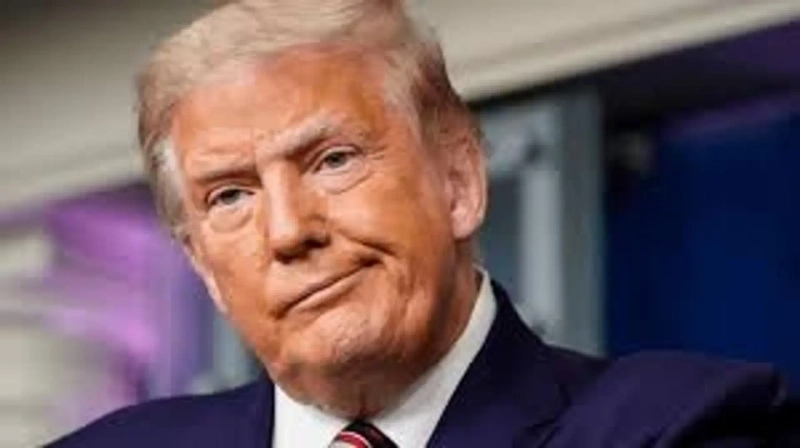
The Donald Trump administration is expected to soon announce the launch of a Section 301 investigation under the US Trade Act.
According to Bloomberg and other outlets on the 11th (local time), the Trump administration is expected to publish the notice of the Section 301 investigation in the Federal Register later that afternoon.
The probe had been foreshadowed after the US Supreme Court last month ruled unconstitutional the reciprocal tariffs and fentanyl-related tariffs imposed under the International Emergency Economic Powers Act (IEEPA). The Trump administration has stressed that even if the existing reciprocal tariffs are nullified, it can still levy tariffs on partner countries at a similar level.
The key tool it has said it will use to do so is Section 301 of the Trade Act. The provision allows the US to impose corresponding tariffs based on a partner country’s unfair trade practices. It was used during the first Trump administration as the legal basis for steep tariffs on China and has remained in place since, leading to assessments that it offers much stronger legal durability.
In the immediate aftermath of the unconstitutional ruling, President Trump invoked Section 122 of the Trade Act to impose a 10% tariff on imports worldwide under the label of a “global tariff,” and he wrote on social media that he would raise it to 15%, though it has not yet been implemented. Tariffs imposed under Section 122 are valid for only 150 days without congressional approval—through July 24.
The Section 301 probe is being led by the Office of the US Trade Representative (USTR). It is widely seen as certain that the USTR will conduct a Section 301 investigation on Korea as well to apply a tariff around the existing reciprocal rate of 15%. A major purpose is to secure a coercive tool to pressure investment into the US.
Because Korea has signed the Korea-US FTA, it is fair to say there has been virtually no clear discrimination against the US through tariffs. The issue, however, is non-tariff barriers. In particular, platform regulation—where the interests of US Big Tech are at stake—is expected to be the central issue. Previously, Coupang’s investment vehicles withdrew a petition to the USTR seeking an investigation into Korea, but with the Section 301 probe about to begin, it is interpreted that the Coupang issue has been folded into the broader probe. Other issues drawing close scrutiny from the US include the online platform bill pending in the National Assembly and amendments to the Act on Promotion of Information and Communications Network Utilization and Information Protection that have already passed.
For Korea, the probe is expected to focus mainly on alleged discrimination against US digital companies. It is also said that raising concerns over suspected currency manipulation by some countries will be included in the investigation, though it is not yet clear whether Korea will be cited on the exchange-rate issue.
Once imposed, Section 301 tariffs can be raised with no upper limit. However, unlike IEEPA-based tariffs, it is less straightforward for President Trump to arbitrarily raise or lower them at will. That is because an investigation must quantify US damages and provide a justification process for imposing tariffs at a commensurate level. In discussions with US trade experts, the view was that justifying around 15% may be possible, but it would be difficult to justify far higher levels—for example, imposing 50% or 60% on Korea.
One key point of interest is how Korea’s tariff rate will differ from those applied to China, Japan, Vietnam and the European Union. China’s tariff rate is expected to be higher than those for other countries, and it will also be important to watch whether the US seeks another round of bilateral talks with economies such as the EU or Japan—countries that have been assigned the same tariff rate as Korea—to apply differentiated tariffs.
Ahead of the launch of the Section 301 probe, Korean government officials have been visiting Washington in succession. Industry and Trade Minister Kim Jung-kwan and Trade Minister Yeo Han-koo visited Washington, DC last week to present views ahead of the probe’s launch, including on the Coupang issue. Prime Minister Kim Min-seok is currently in the US carrying out his schedule.
Washington=Lee Sang-eun, Correspondent selee@hankyung.com

Korea Economic Daily
hankyung@bloomingbit.ioThe Korea Economic Daily Global is a digital media where latest news on Korean companies, industries, and financial markets.