Stocks swing between heaven and hell on 'war shock'… brokerages' 'surprise advice' [Analysis+]
Summary
- Brokerages said a strategy of buying focused on earnings growth stocks and oversold names remains effective.
- Yuanta Securities said it expects earnings improvement this year in sectors including semiconductors, IT hardware, IT appliances, displays and securities.
- Shinhan Investment Corp. said banks, shipbuilding and power equipment have relatively low valuation burdens and limited risk of earnings-path impairment.
Forecast Trend Report by Period


"Time to buy earnings plays and oversold names"
Middle East conflict triggers an average of 650 VI activations a day
Circuit breaker triggered twice this month alone
KOSPI and KOSDAQ post record four-day drop
Brokerages: "Buying is better than sitting on the sidelines"
"Past geopolitical shocks typically reverted within a month"
"Watch semiconductors, brokerages, power equipment, etc."
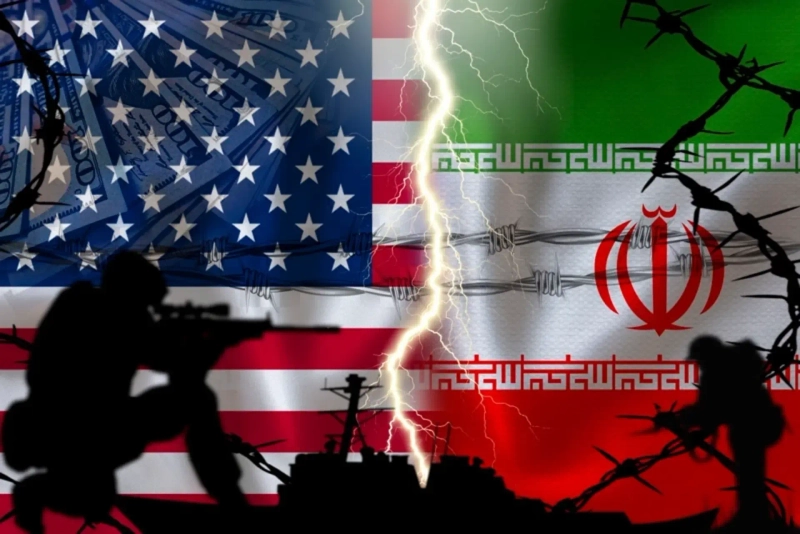
As volatility in Korea’s stock market has surged amid a war between the United States and Iran, brokerages are advising investors to focus on beaten-down names where earnings are expected to improve. They cite past episodes of major market shocks, when rebounds were observed in companies with those characteristics.
4,500 VI triggers in seven days… circuit breaker sounds twice
According to the Korea Exchange (KRX) on the 12th, the number of volatility interruption (VI) activations in the main KOSPI market totaled 4,548 from the 3rd of this month—the first trading day after U.S. and Israeli airstrikes on Iran—through the previous day. The figure is the combined total across stocks, beneficiary certificates, exchange-traded funds (ETFs) and exchange-traded notes (ETNs). That works out to an average of 649.7 activations per day—more than three to four times the levels seen in January (134.3) and February (183.4) this year. VI is a mechanism that switches trading to a two-minute single-price call auction when a specific stock is expected to swing sharply in a short period, helping to cushion market shocks.
Safety valves aimed at curbing marketwide volatility have also been triggered in succession. In the KOSPI market, the circuit breaker (a 20-minute trading halt) has been triggered twice this month. It is the first time since March 2020 that the circuit breaker has been triggered twice in a single month. Sell-side and buy-side sidecar curbs (temporary suspension of the effectiveness of program-trading quotes) were triggered five times and three times, respectively—already exceeding the total for all of 2020 (seven times), when COVID-19 erupted. On the 4th, the KOSPI and KOSDAQ plunged 12.1% and 14%, respectively, marking the largest one-day declines in Korea’s market history; the following day, the 5th, they surged 9.63% and 14.1%, underscoring the market’s roller-coaster swings.
The spike in volatility reflects the convergence of macroeconomic concerns tied to the Iran war with investor unease after a sharp short-term rally. In particular, analysts say Korea looked especially vulnerable versus global peers, given its heavy reliance on energy imports and its export-driven economic structure. Another factor cited is the rapid build-up of sidelined market liquidity. As of the 10th, the combined total of investor cash deposits (126 trillion won), margin loan balances (32 trillion won) and securities lending balances (143 trillion won) came to roughly 301 trillion won.
Kwon Soon-ho, an analyst at Daishin Securities, said: "Looking at data since 2010, a statistical pattern emerges in which the VKOSPI (the KOSPI 200 volatility index) peaks around periods when a rise in customer deposits coincides with high returns in the local market," adding, "The recently expanded pool of market funds has been geared more toward short-term tactical positioning than long-term investment."
"Market overreaction… focus on semiconductors, brokerages, power equipment"
With uncertainty from the Middle East still weighing on markets and making it harder to respond, the securities industry argues that a buying strategy centered on earnings growers and oversold names remains valid.
In an analysis by Yuanta Securities of how global geopolitical shocks have affected Korea’s stock market since 1990, the KOSPI fell 17.7% at the outbreak of the First Gulf War (August 1980) and 13.3% after the Sept. 11 attacks. On average, the losses were retraced back to pre-event levels about 10.6 days after the market bottomed; from one month after the outbreak of each event, share-price performance tended to evolve largely independent of geopolitical risk, the report said.
The takeaway, the firm said, is that buying is advantageous in sectors that have both earnings momentum and have seen excessive drawdowns. Yuanta Securities cited semiconductors, IT hardware, IT appliances, displays and securities as sectors that have underperformed the market since the KOSPI formed a peak (6,307.27) on the 26th of last month, but are still expected to see earnings improvement this year.
Shinhan Investment Corp. pointed to banks, shipbuilding and power equipment as sectors where valuation burdens are relatively low and the risk of earnings-path impairment remains limited even when swings in oil prices and interest rates rattle markets.
Kim Yong-gu, an analyst at Yuanta Securities, stressed: "Buying is absolutely more advantageous than passively watching," adding, "The market’s extreme overreaction to Middle East-driven geopolitical uncertainty should be used as an opportunity to re-enter and reshuffle portfolios." He added, "In general, after a market panic, priorities for rebound and normalization have been set by considering both oversold price/valuation conditions and forward earnings momentum together."
Go Jeong-sam, Hankyung.com reporter jsk@hankyung.com

Korea Economic Daily
hankyung@bloomingbit.ioThe Korea Economic Daily Global is a digital media where latest news on Korean companies, industries, and financial markets.