Steel faces fears of additional duties after '50% product tariffs'… semiconductors and autos also on alert
Summary
- It reported that, with the U.S. Section 301 trade-law probe and the already-imposed 50% steel product-specific tariff, concerns are growing that the steel industry’s profitability could deteriorate if additional duties are imposed and origin verification is tightened.
- It noted that semiconductors receive most-favored-nation treatment under the WTO Information Technology Agreement (ITA), but raised the possibility that the United States could use Section 301 to pressure additional local investment.
- It reported that the auto and battery industries are closely watching the tariff burden, tighter origin verification, delivery delays and cost increases, along with the possibility that the United States may demand expanded local production and additional investment.
Forecast Trend Report by Period


Uncertainty grows across domestic industry
If origin checks and customs screening are tightened
Concerns rise over worsening profitability due to delivery delays
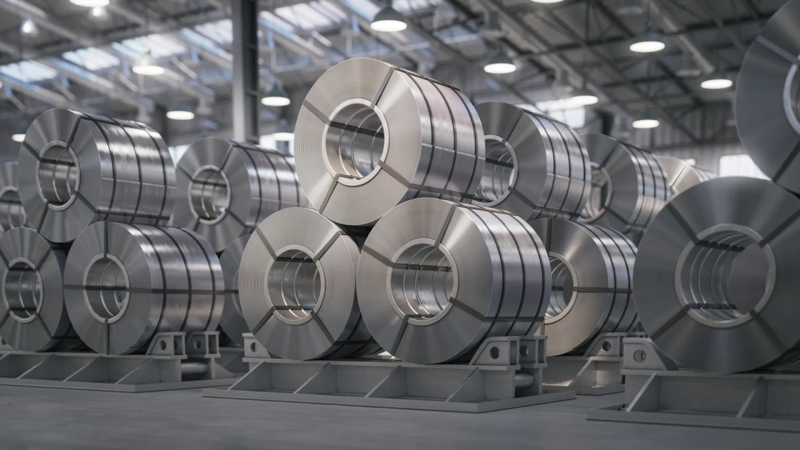
As the United States launches a Section 301 investigation under its trade law targeting South Korea, tensions are rising across Korea’s industrial sector. In particular, the steel industry—already subject to steep product-specific tariffs—warns it could take a direct hit if additional duties are imposed and origin verification is tightened. The semiconductor, auto and battery industries are also closely watching potential direct and indirect fallout, including supply-chain realignments and weakening product demand.
According to industry sources on the 12th, the sector expected to face the biggest shock is steel. The U.S. government has imposed a 50% tariff on steel products from South Korea (including aluminum) since June last year. On top of that, additional measures could follow the Section 301 findings—ranging from additional duties and import curbs to tougher origin verification. The United States already determines steel origin not by the final processing location but by the country where raw materials are melted and cast—the so-called “melt and pour” standard. The industry says customs uncertainty itself—such as contract delays, rising inventories and shipping disruptions—could translate into higher costs.
Accordingly, POSCO and Hyundai Steel are expected to work with the government to demonstrate that “exports of Korean steel are different from China’s oversupply or circumvention exports.” They are also likely to strengthen origin management and tracking of melting and casting histories, while shifting further toward higher value-added products—such as automotive steel sheet, electrical steel sheet, and special steels for defense and nuclear power—rather than commoditized materials.
Semiconductor makers such as Samsung Electronics and SK hynix are also monitoring developments. While semiconductors receive most-favored-nation treatment from the U.S. government under the World Trade Organization (WTO) Information Technology Agreement (ITA), Washington could use Section 301 as leverage to pressure firms into additional onshore investment, including new memory fabs. Still, some expect tariffs could backfire given that Korean companies hold the upper hand in supply in the high-bandwidth memory (HBM) market; imposing duties would raise costs for U.S. big tech.
The auto industry is also on high alert. Hyundai Motor and Kia have steadily increased their share of U.S. local production, but profitability would inevitably deteriorate if tariff burdens rise on Korean-made parts and certain models. Moreover, autos have complex parts supply chains, meaning that tighter origin checks alone could lead to delivery delays and higher costs. Industry observers said the United States may seek not only tariffs but also expanded local production and additional investment.
The battery industry is widely seen as facing relatively limited impact, as Korea’s three major battery makers—LG Energy Solution, Samsung SDI and SK On—have already built large-scale production bases in the United States. Still, some point out that battery materials such as cathode and anode materials could face heavier burdens if tariffs are raised.
Reported by Kim Jin-won, Kim Chae-yeon and Shin Jung-eun | jin1@hankyung.com

Korea Economic Daily
hankyung@bloomingbit.ioThe Korea Economic Daily Global is a digital media where latest news on Korean companies, industries, and financial markets.