PiCK
Strait of Hormuz blockade persists… Dow hits new year-to-date low [New York market briefing]
Summary
- It reported that major New York stock indexes closed down more than 1% as Iran’s new supreme leader’s plan to block the Strait of Hormuz and international oil prices topping $100 weighed on markets.
- It said energy, utilities and consumer staples rose, while most sectors—including industrials, consumer discretionary, technology and financials—fell more than 1–2%.
- It reported that investor sentiment weakened as surging crude prices reduced the perceived scope for Fed rate cuts, compounded by concerns over deterioration in private credit and redemption restrictions.
Forecast Trend Report by Period


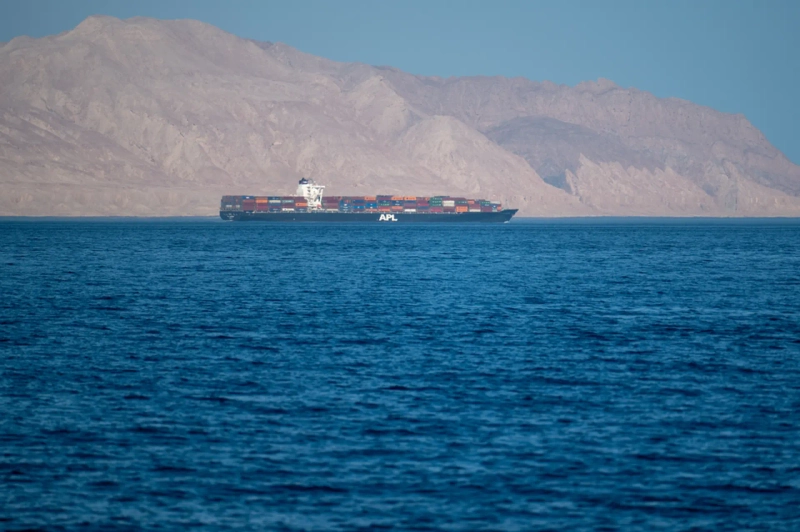
Major U.S. stock indexes in New York closed down more than 1%. The move came after Iran’s new supreme leader said he would continue the blockade of the Strait of Hormuz, pushing international oil prices above the $100 level.
On the 12th (local time) at the New York Stock Exchange (NYSE), the Dow Jones Industrial Average fell 1.56% from the previous day to close at 46,677.85, its lowest level this year. The Standard & Poor’s (S&P) 500 declined 1.52% from the prior session to 6,672.62, while the Nasdaq Composite ended down 1.78% at 22,311.979.
By sector, energy, utilities and consumer staples rose. Industrials and consumer discretionary fell more than 2%, while health care, financials, communication services and technology also slid more than 1%.
A surge in international crude prices damped risk appetite. Global benchmark Brent rose 9.2% from the previous day to settle at $100.46 a barrel. U.S. West Texas Intermediate (WTI) gained 9.7% to $95.73 a barrel.
Concerns intensified after Mojtaba Khamenei, elected as Iran’s new supreme leader, delivered his first message declaring an ultra-hardline response toward the U.S. and Israel. In his first official statement, he said, “We must continue to use the lever of blocking the Strait of Hormuz as a means of pressure on the enemy.” Iran’s Islamic Revolutionary Guard Corps (IRGC) also said it attacked four vessels in the Strait of Hormuz area that day.
While damage is mounting as the Strait of Hormuz remains blocked, U.S. naval escorts for merchant ships are expected to take time. U.S. Energy Secretary Chris Wright said in an interview with CNBC that the U.S. Navy was “not ready” to escort ships transiting the Strait of Hormuz, adding, “I think it will be possible by the end of this month.”
Ryan Detrick, chief market strategist at Carson Group, said, “There is a growing perception that resolving the Middle East conflict is being increasingly delayed,” adding, “Behind the surging oil price is the view that the likelihood of U.S. Federal Reserve (Fed) rate cuts in the second half is shrinking rapidly.”
According to the Chicago Mercantile Exchange (CME) FedWatch tool, the federal funds futures market priced in a 74.2% probability that the policy rate will be held unchanged through June. Goldman Sachs pushed back its timing for rate cuts this year by three months.
Concerns over deterioration in private credit also weighed on sentiment. Recently, investors have been flooding private credit funds with redemption requests to get their money back. However, anxiety has been rising as major Wall Street firms such as Morgan Stanley and Cliffwater are restricting redemptions.
By Young-gi Jin, Hankyung.com reporter young71@hankyung.com

Korea Economic Daily
hankyung@bloomingbit.ioThe Korea Economic Daily Global is a digital media where latest news on Korean companies, industries, and financial markets.