"Markets stay calm despite escalation of the Iran war"…Wall Street bets on a short conflict
Summary
- It reported that global financial markets have remained relatively calm despite the Iran war and the blockade of the Strait of Hormuz.
- It said that despite a surge in global oil prices, investors, expecting the situation to end as a short conflict, are not significantly pricing in a long-term supply crisis in the futures market.
- It reported that the WSJ warned that, despite strategic oil reserve releases and the limited decline in U.S. equities, markets could swing sharply if the war drags on, underscoring the need to brace for uncertainty.
Forecast Trend Report by Period


Oil tops $100 a barrel
Still relatively low compared with past Middle East crises
U.S., the largest oil producer, plus IEA stockpile releases
Wall Street overly confident it will end as a short war
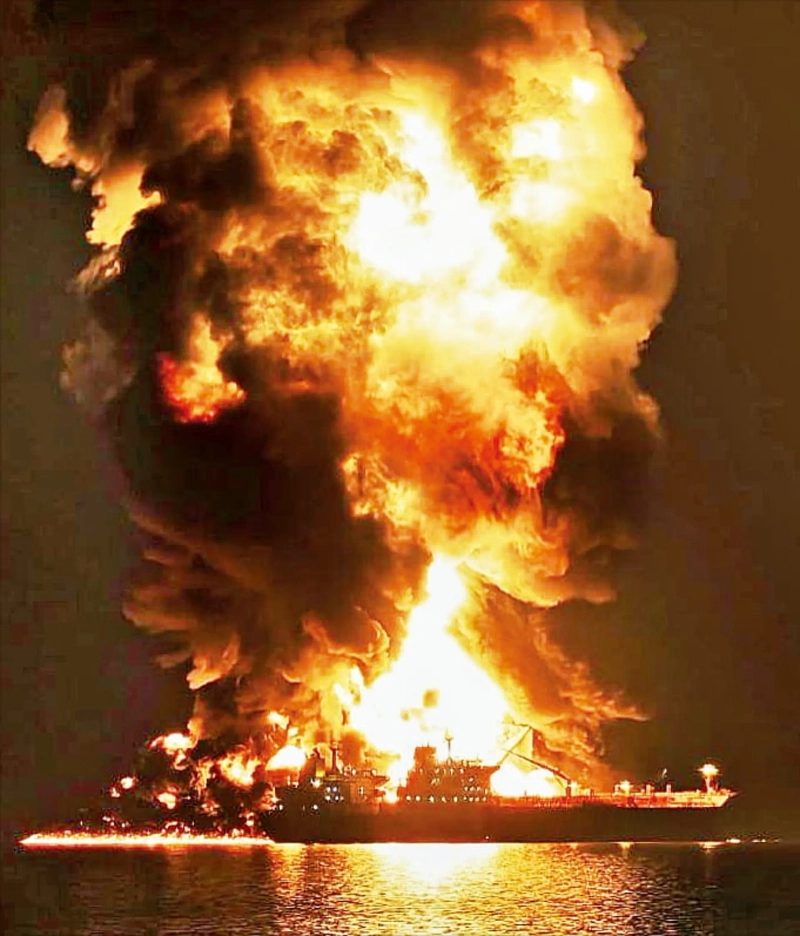
Even as the war between Iran and the U.S.-Israel escalates—tankers are attacked and crude shipping lanes are effectively blocked—global financial markets have yet to fall into panic. However, warnings are mounting that markets may be interpreting the war too optimistically.
On the 12th (local time), The Wall Street Journal (WSJ) published an analysis saying the situation is serious enough that the International Energy Agency (IEA) has described it as "the largest supply disruption in the history of the global oil market," yet markets are exhibiting excessive confidence that it will end as a short conflict.
Following U.S. and Israeli strikes on Iran, the Strait of Hormuz—one of the world’s most important crude transit routes—has effectively been closed, and mines have reportedly been laid in some waters. Scenes of drone-hit tankers engulfed in flames continue, while countries heavily dependent on Middle Eastern crude are stepping in to curb a surge in oil prices.
Even so, global crude prices are hovering around $100 a barrel. That is relatively low compared with past Middle East crises. On an inflation-adjusted basis, Brent crude surged to $179 a barrel during the 1979 Iranian Revolution and hit $155 during the 1980 Iran-Iraq War. During the 2011 Arab Spring, it rose to around $180, and in 2022—immediately after Russia’s invasion of Ukraine—oil also spiked to as high as $130.
WSJ cited three main reasons why the rise in oil prices has been limited relative to the war.
First, oil prices themselves were low before the outbreak.
Before this conflict began, global crude inventories were at their highest level in the past five years, and prices were holding around $72 a barrel—below the inflation-adjusted average since 1970.
That said, the pace of the rise has been extremely fast. In the first nine trading days after the war began, oil prices jumped about 40%. That is far faster than the early increase during the Arab Spring, and roughly comparable to the initial spike during Russia’s invasion of Ukraine in 2022 or the early stage of the 1990 Gulf War.
Second, the market is not yet fully pricing in the possibility of a prolonged war. Investors are betting the conflict will end within weeks. Concerns emerged over the weekend that it could drag on, but markets shifted back to relief after President Donald Trump said on Monday that the war was "almost completely over."
In fact, oil briefly surged to $128 a barrel on the night of the 8th, but most of those gains were erased after Trump’s remarks. Stock markets also rebounded.
On prediction market Polymarket, the probability that the war would end by the end of this month rose from 20% to 43%, then fell back to around 20%.
Wall Street is also gradually beginning to price in the risk of a longer disruption. Goldman Sachs raised its forecast for the duration of Hormuz-related supply disruptions from 10 days to 21 days. Because it would take weeks for production and shipping to normalize, the actual economic shock could last longer, the bank said.
Even so, investors view the situation as a short-term shock rather than a long-lasting supply crisis. Futures markets reflect that: prompt crude prices have risen sharply, but the increase in December-delivery contracts is only about half as large.
That suggests the market sees this not as a structural crisis lasting months or more, but as a short-lived shock likely to end within weeks.
Third is the release of strategic reserves. The IEA and its member countries have moved to release about 400 million barrels of strategic oil reserves. Roughly 20 million barrels per day used to transit the Strait of Hormuz, and about 15 million barrels per day of that is estimated to be disrupted. Some volumes are being rerouted via Saudi Arabian pipelines, and production increases are being pursued elsewhere.
While reserve releases cannot fully replace the lost supply, they are helping ease upward pressure on prices in the near term.
Equity markets have also been relatively stable.
Since the Iran war began, the S&P 500 has fallen only about 3%. While some countries’ markets have taken a major hit, U.S. equities have been relatively less affected.
One reason investors have remained relatively calm is that the U.S. economy has become more resilient to energy shocks than in the past. The United States is now the world’s largest oil producer, and assessments suggest the economic fallout from higher energy prices is more limited than before.
However, this market optimism rests on one key premise: that the war will end quickly.
Markets are anticipating a short conflict based on past experience and the political backdrop—such as the possibility that President Trump could step back if conditions worsen, the U.S. presidential election scheduled for this year, and the view that Iran may struggle to absorb prolonged damage from air strikes.
But some argue the trajectory of the war cannot be explained by simple logic.
According to Iran’s state media, an Israeli air strike killed family members of Iran’s new leader. This has increased uncertainty over whether Iran’s leadership will delay retaliation while consolidating power and rebuilding its military, or continue the war under current conditions.
The Yemen case shows that missile and drone attacks can continue even when a state is severely weakened. Iran is far more powerful than Yemen, and while laying mines in the narrow Strait of Hormuz is relatively easy, removing them during hostilities is extremely difficult.
WSJ said financial markets are overly dependent on the assumption that the war will be short.
If events such as the sinking of a large oil tanker, the shootdown of a civilian aircraft, or an attack on a key Saudi Arabian pipeline occur, market views could shift in an instant.
Ultimately, the current calm in financial markets is based on expectations that the war will end quickly. But with neither the outcome nor the duration of the war certain, analysts say this is a time to prepare for uncertainty rather than assume an optimistic result.
New York=Park Shin-young, correspondent nyusos@hankyung.com

Korea Economic Daily
hankyung@bloomingbit.ioThe Korea Economic Daily Global is a digital media where latest news on Korean companies, industries, and financial markets.