U.S. temporarily lifts sanctions on Russian crude…For Korea, a 'pie in the sky' [Lee Sang-eun's Washington Now]
Summary
- The United States said it temporarily lifted sanctions on Russian crude for one month to curb rising oil prices driven by the war with Iran.
- It said Brent futures and WTI futures surged to $100.46 and $95.73 a barrel, respectively, amid disruptions to Middle Eastern crude supplies.
- Korea is reviewing resuming imports of Russian crude, but says it is realistically difficult due to institutional constraints such as SWIFT sanctions and insurance.
Forecast Trend Report by Period


The United States has temporarily lifted sanctions on Russian crude oil in an effort to cap rising oil prices driven by the war with Iran. The move marks a 180-degree shift for Washington, which last year sought to tighten economic pressure on Russia, including imposing sweeping additional tariffs on countries importing Russian crude. The waiver is valid for only one month, but is expected to be extended if the war drags on.
U.S. Treasury Secretary Scott Bessent on the 12th (local time) announced sales authorizations for Russian crude that meets certain conditions. The measure allows all transactions involving Russian crude and petroleum products loaded onto vessels through the 11th, until 12:01 a.m. on the 11th of next month. Bradley Smith, director of the Treasury’s Office of Foreign Assets Control (OFAC), said it “also covers products produced by companies sanctioned under the Russian Harmful Foreign Activities Sanctions Regulations and the Ukraine-/Russia-related sanctions programs.” Bessent wrote on social media that the step is intended to “enhance the stability of global energy markets” during the war.
With the closure of the Strait of Hormuz now in its second week and attacks on unarmed merchant ships, oil prices have been seesawing. Contrary to a series of remarks by U.S. officials suggesting the blockade could be lifted, Mojtaba Khamenei, Iran’s supreme leader, said that day, “We must continue to use the lever of closing the Strait of Hormuz as a means of pressuring the enemy.”
As pessimism grows that the blockade will not be resolved quickly, Brent futures (May delivery) settled at $100.46 a barrel. West Texas Intermediate (WTI) futures (April delivery) ended at $95.73 a barrel, up 9.7% from the previous session.
With Middle Eastern crude supplies effectively choked off, market demand for Russian crude is surging. After announcing last week that it would exempt India from sanctions related to imports of Russian crude, the United States on the day expanded the waiver globally. Russia, whose exports had been constrained by sanctions, is reportedly keeping about 130 million barrels loaded on tankers anchored at sea.
Bessent argued that the move is “a limited, short-term measure applicable only to oil in transit” and “will not provide significant financial benefit to the Russian government,” but many in the market view Russia as the biggest winner from this war. The Financial Times (FT) reported that the Russian government is estimated to have earned about $1.3 billion to $1.9 billion through oil export taxes since the outbreak of the war. FT also said that if oil prices hold at $70 to $80 a barrel through the end of this month, Russia could gain an additional $3.3 billion to $4.9 billion in revenue.
In the United States and Europe, concern is growing over a decision that abruptly reverses efforts to maintain economic sanctions on Russia. Edward Fishman, a senior fellow at the Council on Foreign Relations (CFR) Geoeconomics Center, told The New York Times that the move “nullifies in one shot the enormous pressure that had been applied to Russia.” Europe says it will not join the U.S. step and will keep its sanctions in place.
Washington is pulling out all the stops to prevent inflation and a political backlash stemming from a surge in oil prices. White House press secretary Karoline Leavitt said that day, “For national security, the White House is considering temporarily waiving the Jones Act so that essential energy products and agricultural goods can flow freely into U.S. ports.” The Jones Act requires that cargo shipped between U.S. ports be transported on U.S.-built, U.S.-owned vessels, and is seen as one factor behind higher prices in places such as Alaska and Hawaii.
The South Korean government is also reviewing, together with domestic refiners and other companies, whether imports of Russian crude could resume, as it needs to secure supplies by any means amid an emergency in crude procurement. Korea had imported large volumes of Russia’s ultra-low-sulfur light crude through 2021, but halted imports in the second half of 2022 after joining sanctions following the outbreak of the war in Ukraine.
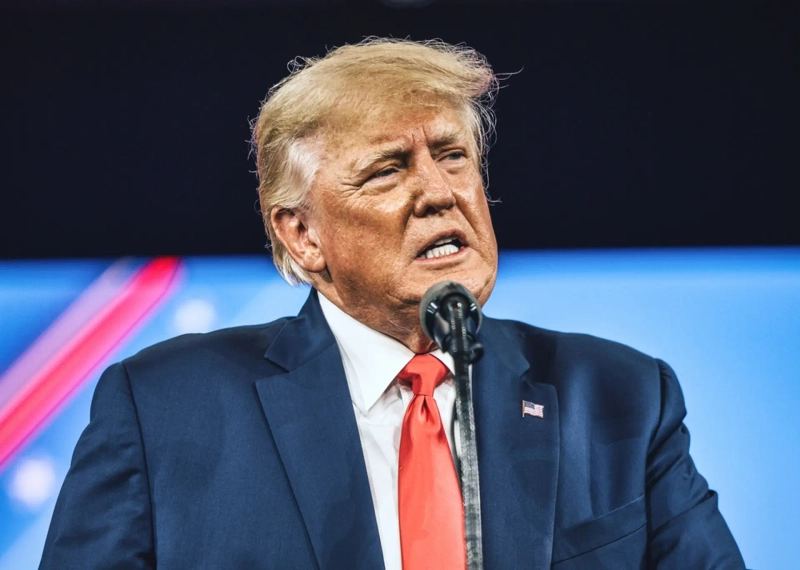
However, even if the U.S. temporarily eases sanctions, many institutional constraints created by existing measures remain. Korea would need to revise foreign-exchange rules to allow transactions that bypass restrictions on the SWIFT international payments network. It is also unclear whether global insurers would allow shipowners’ liability insurance coverage for vessels carrying Russian crude. A government official said, “It looks like the Trump administration is trying to intervene in the market (to stabilize oil prices),” adding, “There are parts that are realistically not easy.”
Washington = Lee Sang-eun, correspondent / Kim Dae-hoon, reporter

Korea Economic Daily
hankyung@bloomingbit.ioThe Korea Economic Daily Global is a digital media where latest news on Korean companies, industries, and financial markets.