"How should we manage our money in times like these?"…We asked the experts
Summary
- PBs said that as market volatility has increased due to the Middle East war, portfolio diversification and diversified investing across Korean equities, U.S. equities and gold are important.
- Experts said that amid rising oil prices and inflation concerns, investors should raise Korea’s weight—citing the domestic market’s PER and earnings growth—as a buy-the-dip opportunity, while also diversifying into resource-rich countries such as Brazil.
- Some PBs said investors should avoid leveraged investing in volatile markets, and that high-net-worth individuals should use government and public bonds, bonds and tax-saving strategies to manage safe assets and real returns.
Forecast Trend Report by Period


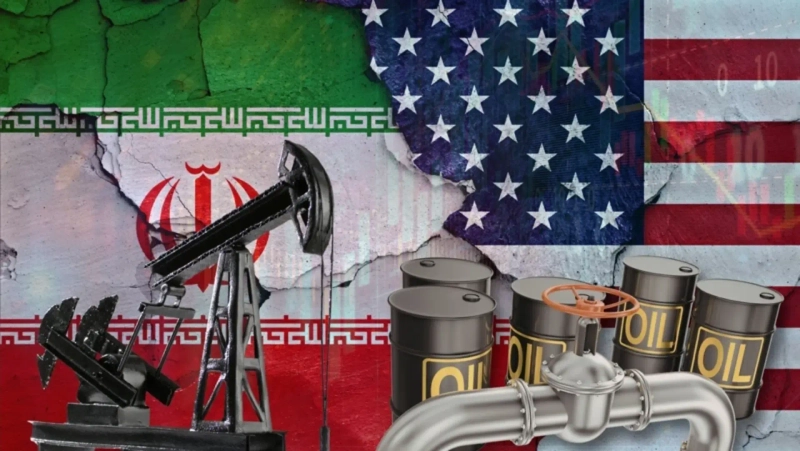
As the war between Iran and the United States shows signs of becoming protracted, prices of risk assets—including the Korean stock market—have been swinging sharply. After Iran’s blockade of the Strait of Hormuz, international crude prices rose above $100 a barrel, and the KOSPI plunged more than 10% in a single day before rebounding by nearly 10%, underscoring extreme volatility.
With volatility in asset prices rising, we reviewed wealth-management strategies on the 15th based on advice from private bankers (PBs) at major commercial banks. PBs said geopolitical uncertainty is likely to persist for some time and recommended diversifying portfolios and maintaining steady diversification across assets. Some also argued that war-driven price pullbacks should be viewed as an opportunity to buy risk assets such as equities at lower levels.
○"A volatile market likely to persist"
PBs broadly expect heightened market volatility stemming from the expanded conflict in the Middle East to continue for the time being. Kim Hyun-seop, head of KB Kookmin Bank’s KB Gold&Wise The First Dogok Center, said, "Since no one knows when the war will end, investors should enter the market with the mindset that stock prices could face an additional adjustment of around 20% at any time," adding, "More than ever, it is crucial now to diversify portfolios across Korean equities, U.S. equities, and gold, while also staggering entry points."
Another view was that even if the Middle East conflict calms faster than expected, markets will remain volatile this year. Oh Kyung-seok, senior specialist at Shinhan Bank’s Shinhan Premier Pathfinder, said, "With the U.S. heading into the midterm elections in November, policy uncertainty—including tariffs—is high, and the direction of monetary policy under Kevin Warsh, the new chair of the U.S. central bank (Fed), is also highly uncertain at this point," adding, "Even if the Middle East conflict ends quickly and peacefully, expected returns on U.S. assets should be set lower this year." He continued, "Invest in U.S. stocks, but diversify across regions such as Korea and China," and added that "with rising oil prices fueling inflation concerns, resource-rich countries such as Brazil are likely to benefit, so Brazilian equities are also worth watching."
○A view that it is also a "buy-the-dip opportunity"
Some PBs saw the war in the Middle East as an opportunity to buy Korean stocks at lower prices, citing the still-solid earnings power of Korean companies and the view that equities remain in a valuation trough.
Park Tae-hyung, PB branch manager at Woori Bank’s TCE Signature Center, said, "For clients who were not able to fully ride the domestic market’s upward trend from last year through February, we are guiding them to use the Iran–U.S. war as an opportunity to add to Korean assets," adding, "In volatile markets like recent ones, investors should actively use staged buying opportunities centered on companies whose fundamentals have not been damaged, industries with sustained earnings growth, and sectors expected to benefit from policy support." He emphasized, "Under normal circumstances, we would recommend allocating 60% of investable assets to the U.S., but through the end of this year it would be preferable to take Korea’s weight to 60%."
Oh also noted, "While the KOSPI has risen rapidly since last year, the average price-to-earnings ratio (PER) for companies listed on the main board is still around 9.6x, below the 10-year average of 10.4x," adding, "There is ample room to expect further upside in the Korean market based on earnings growth." He continued, "We recommend allocating half of an equity portfolio to Korea and diversifying the rest across overseas markets including the U.S."
Kim likewise said, "With the government strongly committed to supporting stock prices and the U.S. continuing to check China’s manufacturing sector, a favorable environment is taking shape for the Korean market," adding, "I think it is fine to allocate about 35~50% of overall wealth-management assets to Korean equities." He added, however, "Given the high volatility, we do not recommend using leverage to invest."
○High-net-worth individuals should also prepare tax-saving strategies
Some experts urged caution, noting that stock indices have already risen significantly and volatility has increased. Oh Jung-hoon, VIP PB team leader at Hana Bank’s Yeongtong Financial Center branch, said, "In wealth management, it is important to beware of getting rich overnight and to manage greed at a level that meets the target return you set in advance," adding, "Many clients have grown their assets by taking advantage of recent volatility, but if you have achieved your target return, a good strategy is to move investment assets into safe assets and wait until sharp stock-market swings subside." Oh emphasized that for high-net-worth individuals who are not inclined toward aggressive investing, simply building a solid tax-saving plan can generate a high real rate of return, rather than buying stocks due to FOMO. He added, "There was a case where a client who had been rolling KRW 2 billion solely in time deposits switched to government and public bonds with a low stated rate but short remaining maturities, capturing returns while also saving about KRW 30 million in taxes," adding, "If you are subject to comprehensive taxation on financial income and manage assets conservatively, you should actively look into tax-saving tools such as bonds."
Reporter Jeong Eui-jin

Korea Economic Daily
hankyung@bloomingbit.ioThe Korea Economic Daily Global is a digital media where latest news on Korean companies, industries, and financial markets.