Japan’s Takaichi on Hormuz dispatch: ‘Reviewing what may be possible’
Summary
- Japanese Prime Minister Sanae Takaichi said the government is reviewing how it can take the necessary steps regarding a U.S. request to dispatch warships to the Strait of Hormuz.
- Japan said it is weighing the applicability of security-related legislation tied to collective self-defense and a situation having an important influence, while reserving judgment on the international-law assessment of the U.S. attack on Iran.
- The Nikkei reported an analysis that turmoil in the Iran situation has narrowed Japan’s room to exercise diplomacy, forcing the country into a difficult choice.
Forecast Trend Report by Period


Japan ahead of U.S.-Japan summit
Weighs dispatch amid cautious stance
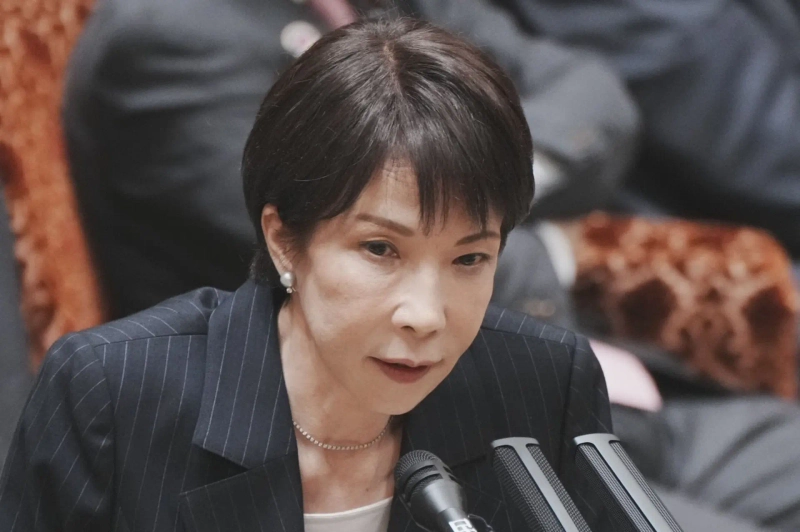
Japanese Prime Minister Sanae Takaichi said on the 16th, regarding a U.S. request for Japan to dispatch warships to the Strait of Hormuz, that “the government of Japan is currently reviewing how it can take the necessary steps.”
According to the Mainichi Shimbun, Takaichi made the remarks while attending the House of Councillors (upper house) Budget Committee that day, saying, “(From the U.S. side) there has not yet been a request, so it is difficult to answer,” but adding the above. She further said, “Japan is examining, within the scope of the law, how to protect the lives of vessels and crews connected to Japan, and what may be possible.” Japan believes there is a strong possibility that President Donald Trump will ask Prime Minister Takaichi at the U.S.-Japan summit to be held in Washington on the 19th (local time) to support warships in the Strait of Hormuz.
Japan is weighing whether it can apply security-related legislation that provides for the exercise of the right of collective self-defense in a “survival-threatening situation,” or rear-area support for other countries’ militaries under a “situation having an important influence.” The problem is that the security-related legislation cannot be applied if the country to be supported has violated international law through a preemptive attack or the like. Some view the U.S. attack on Iran as potentially violating international law. Japan has reserved judgment on the international-law assessment of the U.S. attack on Iran.
The U.S. also demanded Japan’s participation in a “coalition of escorts” in 2019, when tensions with Iran intensified, to protect civilian vessels. At the time, the Shinzo Abe administration chose, instead of joining the coalition, to dispatch a destroyer escort to nearby waters under the Self-Defense Forces Law to conduct intelligence gathering. It was a decision made with careful consideration of relations not only with the U.S. but also with Iran, a traditional friendly nation. The Nikkei said, “The situation in Iran has become more chaotic than at the time, leaving Japan with less room to exercise diplomatic leverage,” adding that “Japan is being forced into a difficult choice.”
Japanese Defense Minister Shinjiro Koizumi held a phone call with U.S. Secretary of Defense (Secretary of War) Pete Hegseth for about 30 minutes late the previous night. Secretary Hegseth explained recent developments and the outlook for the Middle East situation, including the Strait of Hormuz. Minister Koizumi conveyed that maintaining peace and stability in the Middle East, including the Strait of Hormuz, is extremely important and that he wants to maintain good communication with the U.S. and other relevant countries. It has not been disclosed whether the dispatch of warships was discussed, but it is likely that the basic issue was addressed.
Tokyo = Kim Il-gyu, correspondent black0419@hankyung.com

Korea Economic Daily
hankyung@bloomingbit.ioThe Korea Economic Daily Global is a digital media where latest news on Korean companies, industries, and financial markets.