PiCK
China trade envoy: "Agreed with the U.S. to keep tariffs stable… raised concerns over 'Section 301'"
Summary
- Envoy Li Chenggang said the two sides agreed to maintain stability in tariff levels during high-level economic and trade talks with the U.S.
- He said the talks covered setting up a working-level mechanism to promote bilateral trade and investment and the possibility of extending tariff suspensions.
- Li said he conveyed China’s position and concerns over the U.S. Section 301 investigation and opposed unilateral investigations.
Forecast Trend Report by Period


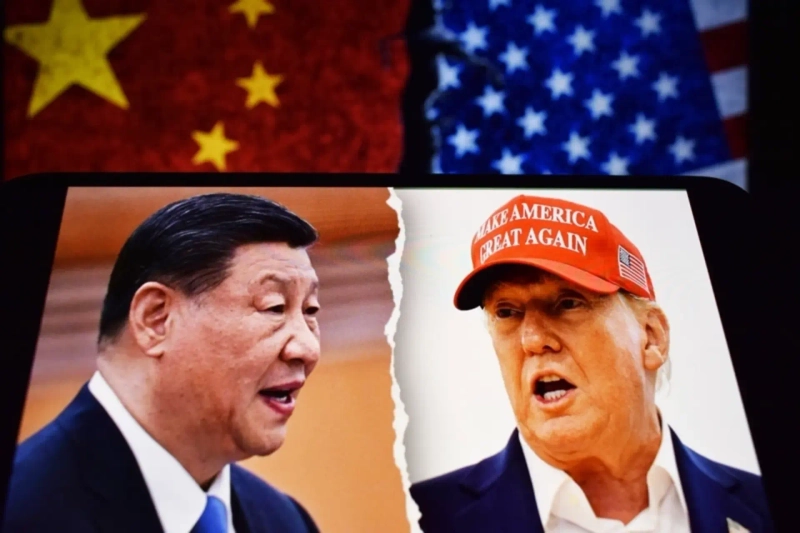
China’s trade envoy said that in trade talks with the United States, the two sides discussed establishing a working-level mechanism to promote bilateral trade and investment cooperation, as well as the U.S. “Section 301 investigation” issue.
According to Reuters on the 16th (local time), Li Chenggang, China’s international trade negotiator and vice minister of commerce, made the remarks after meeting reporters upon concluding the second day of high-level economic and trade talks with the U.S. in Paris, France, saying, “Both sides agreed to maintain stability in tariff levels.”
Li said, “The two sides discussed bilateral tariffs under the new circumstances and the possibility of extending tariff suspensions,” adding that they “also exchanged views on mechanisms related to bilateral trade and investment.”
On the same day, China’s state-run Xinhua News Agency also reported that Li said, “Over the past day and a half, the Chinese and U.S. teams held in-depth, candid and constructive consultations. Through this round of talks, the two sides reached preliminary consensus on some issues and will continue to maintain the consultation process going forward.”
According to Xinhua, Li said both sides agreed that “a stable China-U.S. economic and trade relationship benefits both countries and the world,” and that building a working-level mechanism to promote bilateral trade and investment was also discussed at the meeting.
Xinhua added that Li conveyed China’s position and concerns to the U.S. regarding Washington’s launching of an investigation into “imports of forced-labor products” targeting China and others under Section 301 of the U.S. Trade Act.
He said, “We oppose (the U.S.) unilateral investigations. We will closely monitor developments in the investigation,” adding, “We hope the U.S. and China can meet in the middle, and we hope the U.S. will honor its commitments.”
The U.S. delegation, including Treasury Secretary Scott Bessent, and the Chinese delegation, led by Vice Premier He Lifeng of the State Council, held talks for more than six hours the previous day at the Organisation for Economic Co-operation and Development (OECD) headquarters in Paris and then proceeded with the second-day session.
The Paris meeting— the sixth high-level China-U.S. economic and trade talks since the launch of the second Trump administration—was the first face-to-face engagement between the two sides since the U.S. Supreme Court ruled on the 20th last month that President Trump lacked authority to impose tariffs under the International Emergency Economic Powers Act (IEEPA).
After the Supreme Court ruling invalidated the “reciprocal tariffs,” the Trump administration subsequently introduced a 10% global tariff and, to roll out alternative tariffs, has been conducting investigations into forced-labor and overcapacity-related products targeting major trading partners including China, based on Section 301 of its trade law (hereinafter Section 301).
While the talks also served as advance preparations to coordinate the agenda for a summit between President Trump—scheduled to visit China later this month—and Chinese President Xi Jinping, Li did not mention the summit.
However, in an interview with CNBC on the day, Secretary Bessent said, “If President Trump wants to remain in Washington, DC to direct the war against Iran, the China-U.S. summit could be delayed,” adding, “It may not be optimal to travel abroad at a time like this.”
He added, “If the summit schedule is postponed, it will not be because President Trump asked China to cooperate on escorting merchant ships in the Strait of Hormuz, but because of the execution plan.”
Lee Bo-bae, freelance reporter for Hankyung.com newsinfo@hankyung.com

Korea Economic Daily
hankyung@bloomingbit.ioThe Korea Economic Daily Global is a digital media where latest news on Korean companies, industries, and financial markets.