Japan begins considering dispatching the Self-Defense Forces to the Strait of Hormuz
Summary
- The Asahi Shimbun reported that the Japanese government has begun reviewing the possibility of dispatching the Self-Defense Forces to the Strait of Hormuz in response to President Trump’s request.
- Prime Minister Sanae Takaichi said Japan is continuing its review by issuing various instructions on what it can do independently within the legal framework in order to set a direction on an SDF deployment ahead of the Japan-U.S. summit.
- Defense Minister Shinjiro Koizumi and South Korean Foreign Minister Cho Hyun said there have been no decisions regarding an SDF deployment and a Middle East deployment, respectively, describing the situation as confusing and under cautious review.
Forecast Trend Report by Period


Asahi reports… Takaichi: "We are examining various options"
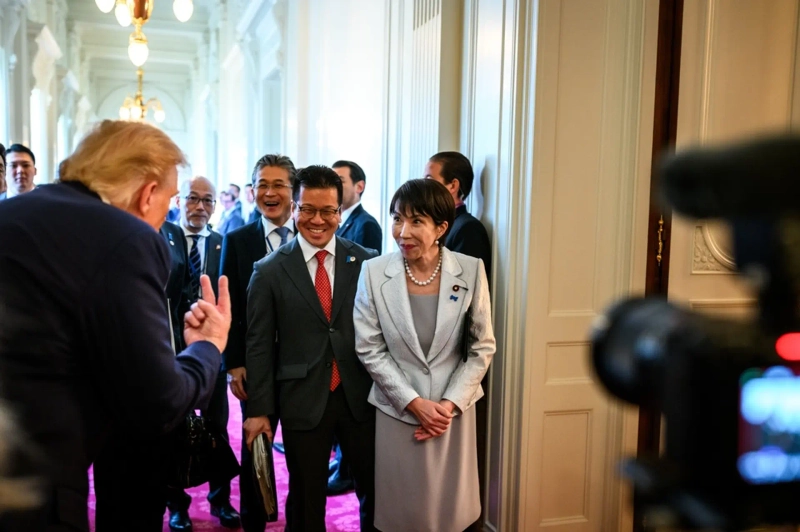
The Japanese government has begun reviewing whether it can dispatch the Self-Defense Forces (SDF) to the Strait of Hormuz in response to a request from President Trump, the Asahi Shimbun reported on the 17th.
According to the report, Japanese Prime Minister Sanae Takaichi said the previous day in the House of Councillors (upper house), "We are continuing our review by issuing various instructions on what Japan can do independently within the legal framework." A Japanese government official also told Asahi that the government is closely examining the possibility of an SDF deployment. Asahi said Takaichi appears to be seeking to settle on a general direction before the Japan-U.S. summit scheduled for the 19th (local time).
However, the Japanese government maintained a cautious stance. Defense Minister Shinjiro Koizumi said, "We have not received a request from the United States," adding, "Nothing has been decided regarding an SDF deployment." Asahi also reported that "dispatching the SDF to a combat zone faces many legal hurdles," and that the government is weighing the matter carefully, including the period after fighting ends. Takaichi said, "Some missions may require Diet approval, and in such cases I would like to speak respectfully with the leaders of each party."
President Trump on the 16th again strongly pressured South Korea and Japan—both of which host tens of thousands of U.S. troops—to send forces. Japan previously declined a U.S. request in 2019, during Trump’s first term, to join the Hormuz 'maritime security coalition,' and instead dispatched a destroyer independently.
The South Korean government is also maintaining a cautious approach. Foreign Minister Cho Hyun said at a plenary meeting of the National Assembly Foreign Affairs and Unification Committee that day, in response to a question about whether there had been an official U.S. request for a Middle East deployment, "It’s a situation where one could say it was a request, or not," adding, "As for the deployment itself, it is very difficult for me to answer at this moment whether there have been discussions with the U.S. side."
Cho added, "As reported in the media, it’s a somewhat confusing situation," and said, "Regarding the Strait of Hormuz issue, we are paying attention to President (Donald) Trump’s SNS and the like, and are communicating closely on the pending issues through various channels between South Korea and the United States."
Hong Min-seong, Hankyung.com reporter mshong@hankyung.com

Korea Economic Daily
hankyung@bloomingbit.ioThe Korea Economic Daily Global is a digital media where latest news on Korean companies, industries, and financial markets.