Iran’s oil exports ‘similar to last year’ despite war…U.S. turned a blind eye
Summary
- It said the United States has effectively turned a blind eye to Iran’s crude exports out of concern over an oil-price spike, leaving Iran’s daily crude export loadings little changed from last year.
- It said Iran is earning an average of $140 million a day (about 210 billion won) from crude exports thanks to the oil-price spike, and has also expanded natural gas exports.
- It said that while the Strait of Hormuz closure is hurting other Persian Gulf countries as the United States does not block Iranian tankers, analysts warn Iran could be worse off if Washington moves to enforce a blockade.
Forecast Trend Report by Period


"U.S. tacitly allows Iranian tankers amid fears of an oil-price spike"
Iran earns 210 billion won a day from crude exports
Bessent: "We let Iranian ships sail out"
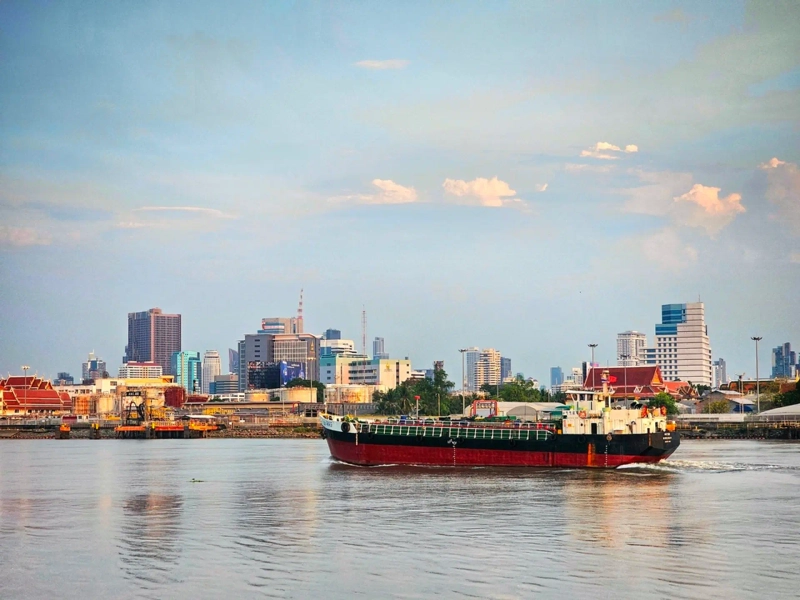
A series of reports in U.S. and U.K. media suggest that Iran is exporting crude at levels similar to last year despite the war. The analysis is that the United States is effectively turning a blind eye to Iranian tanker traffic out of concern over a surge in oil prices.
On the 16th (local time), CNN, citing analytics firms, reported that Iran’s daily crude export loadings are about 1 million barrels or more, not far from last year’s daily average of 1.69 million barrels. According to the UK’s Financial Times (FT), Iran is earning an average of $140 million a day (about 210 billion won) from crude exports, benefiting from the oil-price spike. Since the outbreak of hostilities, at least 13 very large crude carriers have loaded oil at Kharg Island.
This contrasts with the situation in which the Strait of Hormuz has been effectively closed, causing most Persian Gulf countries to suffer severe disruptions to oil and natural gas exports. The United States has claimed it has destroyed Iran’s naval capabilities, but it does not appear to have tried to stop Iranian tankers. Even when it struck military targets on Kharg Island on the 13th, it did not touch oil infrastructure. TankerTrackers, a maritime data firm, said that on the 14th—the day after the strikes—all 55 storage tanks were intact and two Iranian tankers were loading 2.7 million barrels of crude.
U.S. Treasury Secretary Scott Bessent said in a CNBC interview, "Iranian ships are already coming out, and we let them do so," adding that it was "to ensure crude is supplied to the world." Iran, too, is pursuing a strategy of selective access. In a CBS interview the previous day, Iranian Foreign Minister Abbas Araghchi said, "The Strait of Hormuz is open, and passage is restricted only for enemy states and their allies." Iran allowed two Indian vessels to pass in exchange for India releasing three Iranian tankers it had seized, and it is also considering a plan to allow limited passage for tankers that trade in yuan rather than dollars.
Iran appears to have anticipated the outbreak of hostilities: in February this year it raised crude exports to a daily average of 2.04 million barrels, above its usual level, and also expanded natural gas exports. Still, some analysts say Iran could be in a more disadvantageous position than other Persian Gulf countries if the United States decides to impose a blockade, because Iran has few viable export routes unless it uses Kharg Island and the Strait of Hormuz.
Hong Min-seong, Hankyung.com reporter mshong@hankyung.com

Korea Economic Daily
hankyung@bloomingbit.ioThe Korea Economic Daily Global is a digital media where latest news on Korean companies, industries, and financial markets.