BOK board member: "Middle East war raises upside inflation risks… FX rate not a cause for serious concern"
Summary
- Lee Soo-hyung, a member of the Bank of Korea’s Monetary Policy Board, said the weakness in the won has persisted since the Middle East war, but it is not yet a stage that warrants excessive concern.
- He said there is little need for major concern about the exchange rate given the current account surplus, stabilizing residents’ overseas investment, and the semiconductor cycle holding up.
- However, he said the surge in international oil prices driven by the Middle East war has increased upside inflation risks and downside growth risks, raising the possibility that the May Monetary Policy Board dot plot could differ from February.
Forecast Trend Report by Period


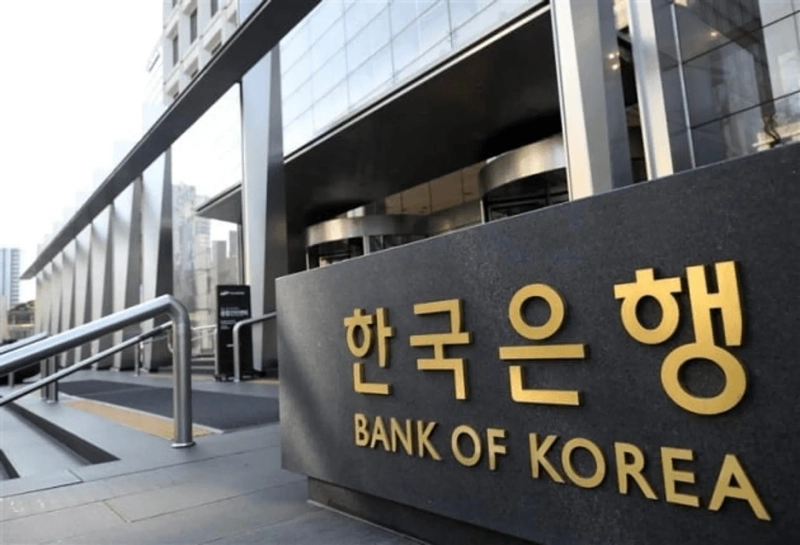
Lee Soo-hyung, a member of the Bank of Korea’s Monetary Policy Board, assessed that although the won has remained under pressure since the recent war in the Middle East, it is not yet at a stage that warrants excessive concern.
Speaking at a press briefing held on the 17th at the Bank of Korea headquarters in Jung-gu, Seoul, Lee said, “After the Iran situation, dollar strength emerged and the won depreciated, and it is true that volatility against other major currencies is high,” adding, “But it is hard to see this as a Korea-only problem.”
With the war between the U.S. and Israel and Iran that began at the end of last month, the won-dollar exchange rate surged, rising to KRW 1,501 per dollar in the previous day’s regular session. It was the first time in about 17 years—since March 2009—that the won-dollar rate exceeded KRW 1,500 per dollar in daytime trading.
Lee said, “Excluding the war, dollar supply and demand is being maintained solidly thanks to the current account surplus, and residents’ overseas investment has also recently shown signs of stabilizing.” He added, “There is also an aspect in which the won is used as a hedging instrument for the Taiwan dollar among East Asian countries.”
He also said, “The market’s response is that the current account surplus is likely to remain solid and the semiconductor cycle will not be significantly affected overall,” adding, “Residents’ overseas investment is also regaining stability, so personally I don’t think this is a situation to worry too much about.”
However, he expressed concern that the Middle East war is exposing the economy to upside inflation risks and downside growth risks. “In the February economic outlook, we assumed Brent crude at USD 64 per barrel, but it is clear that the recent surge in international oil prices has become an upside factor for inflation,” he said. He added, “How long the high-oil-price environment persists is also important, more than the elevated level itself.”
He also said, “As the situation continues in which the burden on economic agents increases due to rising raw material prices, it will act as a downside factor for growth.”
He projected that the dot plot to be released at the May Monetary Policy Board meeting could change compared with February. “Given the upside inflation risks and downside growth risks, there is a possibility it will differ from the February result,” he said.
Reporter Shim Sung-mi smshim@hankyung.com

Korea Economic Daily
hankyung@bloomingbit.ioThe Korea Economic Daily Global is a digital media where latest news on Korean companies, industries, and financial markets.