Iraq says it is in talks with Iran on oil tankers’ ‘transit through the Strait of Hormuz’
Summary
- Iraq said it is in talks with Iran to allow tankers carrying Iraqi crude oil to transit the Strait of Hormuz, as it has cut oil production from 4.4 million barrels to about 1.2 million barrels per day.
- It said international oil prices rose again as Iran selectively allowed tankers and bulk carriers to pass through the Strait of Hormuz while resuming attacks on UAE oil fields, adding uncertainty to a U.S.-led Persian Gulf escort plan.
- It reported that traders of crude oil, fertilizers and some chemical feedstocks, as well as the global shipping industry and traders, are watching closely as ships from multiple countries, including China, continue operating through the Strait of Hormuz.
Forecast Trend Report by Period


Iraq’s oil output cut from 4.4 million barrels to 1.2 million after the war
Also working to resume oil exports to Turkey
Hong Kong-flagged vessel also transits the Strait of Hormuz on the day
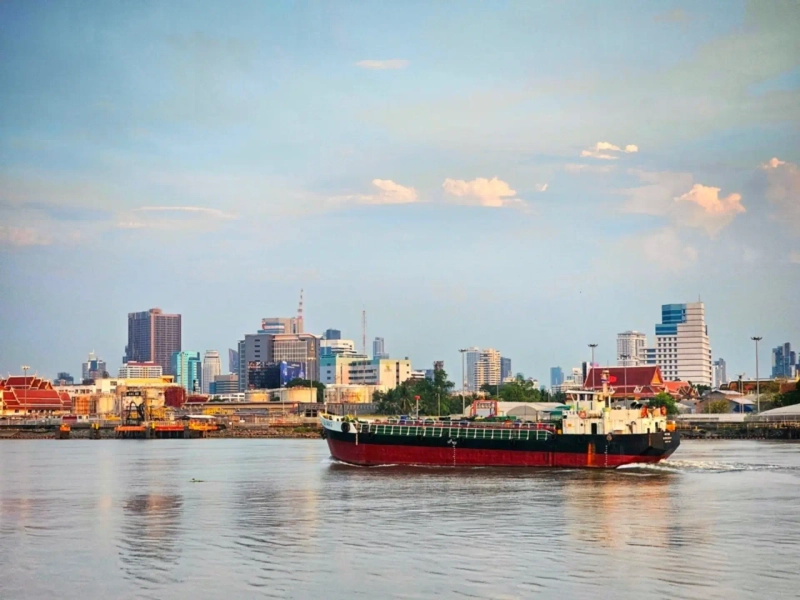
Iraq said it is in contact with Iran to ensure that tankers transporting Iraqi crude can pass through the Strait of Hormuz, as the country is being forced to curb oil production.
According to Bloomberg on the 17th (local time), Iraqi Oil Minister Hayan Abdul Ghani told the state news agency that “we are in talks with Iran regarding Iraqi tankers’ passage through the strait.”
Iraq moved early to cut production after a conflict erupted in the Persian Gulf, as crude storage tanks filled rapidly. Iraq’s output fell from 4.4 million barrels to about 1.2 million barrels per day.
Iraq also said it is working to resume exports to Turkey via the Kirkuk–Ceyhan pipeline. Early in the war, some vessels sailing from Iraq to Turkey were attacked off the Iraqi coast during transshipment.
According to vessel-tracking data compiled by Bloomberg, the number of ships transiting the strait in both directions, which had exceeded 100 on February 27 during U.S. and Israeli airstrikes on Iran, fell to just 1–2 a day immediately after the war began, then rose to six on the 14th and 11 on the 15th. However, it dropped back to two on the 16th local time.
On the day, a small Hong Kong-owned bulk carrier was seen entering the Persian Gulf via the Strait of Hormuz.
The small bulk carrier Jashangda, owned and operated by Hong Kong-based Jashangda Shipping, approached the Persian Gulf late the previous day from the Gulf of Oman through the strait and transited westbound. The vessel, which operates between China and the Middle East, was shown heading near the Iranian coast toward Kish Island and was expected to arrive at Iraq’s Umm Qasr port.
Since the Strait of Hormuz was effectively closed, transits have been closely monitored. Since then, only a handful of vessels with Iranian, Chinese, Indian, Pakistani and Greek affiliations have passed through the strait.
Traders of crude oil, fertilizers and some chemical feedstocks, as well as the global shipping industry, are watching closely as ships from multiple countries, including China, continue to transit the strait. India and Turkey are among the countries that have been negotiating with Iran to ensure safe passage. There have also been indications that Chinese ships have crossed the Strait of Hormuz.
Iran’s foreign minister said over the weekend that “the Strait of Hormuz has been closed only to ships from ‘enemy countries.’” As Iran selectively allowed the passage of tankers and bulk carriers while resuming attacks on oil fields in the United Arab Emirates (UAE) and as uncertainty grew over a U.S.-led Persian Gulf escort plan, international oil prices rose again on the day.
Kim Jeong-a, contributing reporter kja@hankyung.com

Korea Economic Daily
hankyung@bloomingbit.ioThe Korea Economic Daily Global is a digital media where latest news on Korean companies, industries, and financial markets.