[Analysis] "Oil prices surge and rate jitters collide…broad risk-off selloff"
Summary
- It said a Middle East-driven energy shock led to higher oil prices, quasi-stagflation fears, and a broad risk-off move across global assets.
- It noted that the dollar index, 10-year US Treasury yields, and the VIX rose in tandem while bitcoin and ethereum fell, underscoring crypto’s pullback in step with macro factors.
- It warned that if the Strait of Hormuz blockade is prolonged, oil could reach $150, raising the risk of further market declines and broader stagflation fears, while major central-bank policy and the IEA’s reserve-release plan were cited as key near-term variables.
Forecast Trend Report by Period


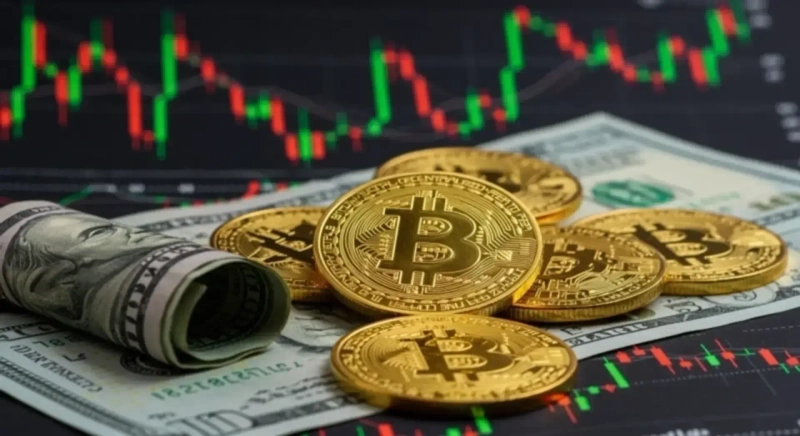
A Middle East-driven energy shock and rising inflation pressures are weighing on global risk assets, including cryptoassets. Markets are increasingly pricing in “quasi-stagflation” fears sparked by higher oil prices, with risk appetite seen contracting sharply.
According to Binance Research on the 19th, international oil prices jumped. Brent (BRN) rose as much as 7% intraday, while WTI (WTI·CL) gained 4.2%. US equities, however, fell, with the S&P 500 down 1.45%, the Nasdaq 100 off 1.25%, and the Russell 2000 lower by 1.64%. Bitcoin (BTC) slid 4.6% and Ethereum (ETH) dropped 5.2%.
Market volatility also intensified. The dollar index (DXY) climbed 0.76% and the 10-year US Treasury yield rose 6.5bp. The volatility index (VIX) surged 17% to around the 25 level. Gold (XAU) fell 3.6%, suggesting its safe-haven role was limited.
The latest shock was triggered by Middle East geopolitical risks and energy supply disruptions. Iran hinted at further attacks on energy facilities in the Gulf following Israel’s strike on a key gas field. Qatar said the Ras Laffan industrial city sustained damage from a missile attack. Crude shipments through the Strait of Hormuz are down 98% from prior levels.
US monetary policy factors added to the pressure. The Federal Reserve (Fed) kept rates unchanged while maintaining its outlook for one rate cut this year. However, the producer price index (PPI) rose 0.7% month on month and 3.4% year on year, topping market expectations. Even though the figures predate the full pass-through of the latest energy-price spike, they still confirmed inflation pressure, reinforcing a hawkish interpretation.
Markets are increasingly describing a shift to an “oil-beta regime,” where rising crude prices and rate burdens combine. With geopolitical risk, inflation data and the Fed’s hawkish stance interacting, the resulting stronger dollar and higher yields are seen fueling broad, synchronized selling across risk assets.
Another factor cited for the larger declines is the start of the corporate share buyback blackout period, which has weakened downside support for equities. About 45% of S&P 500 constituents are reportedly set to suspend buybacks from this week through late April.
Crypto markets also came under pressure, moving closely with the macro backdrop. A stronger dollar and higher real yields raise funding costs and damp risk appetite, driving a coordinated pullback in major assets such as bitcoin, the report said.
Some in the market warn that if a blockade of the Strait of Hormuz drags on, oil could rise to around $150 a barrel. In that case, the risk of further market declines and broader stagflation concerns could grow, the analysis said.
Binance Research said markets will be watching policy responses from major central banks and policy signals from President Trump. Near-term swing factors include rate decisions by the Bank of England (BoE) and the European Central Bank (ECB), the International Energy Agency’s (IEA) plan to release strategic reserves, and whether transit through the Strait of Hormuz normalizes.

Minseung Kang
minriver@bloomingbit.ioBlockchain journalist | Writer of Trade Now & Altcoin Now, must-read content for investors.