Summary
- The Financial Supervisory Service said it has urged the National Assembly to strengthen its inspection and sanctions authority so it can directly supervise virtual asset exchanges at a bank-level standard.
- The FSS said virtual asset businesses should be regulated to the financial company standard, with major strengthening of internal controls, IT systems, user protection, and unfair trading rules.
- The FSS said it needs to take part in a stablecoin-related consultative body to carry out key supervisory tasks such as licensing issuance and managing distribution.
Forecast Trend Report by Period


Recommendations Submitted to the National Assembly
“Will also join the stablecoin consultative body”
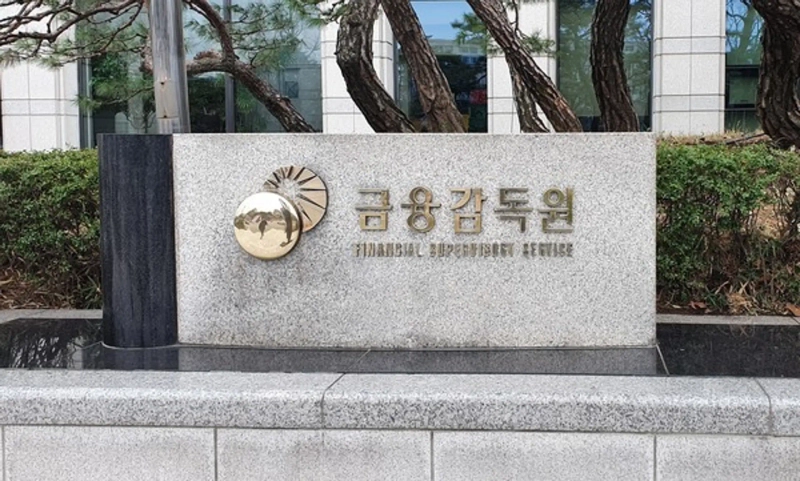
It has been confirmed that South Korea’s Financial Supervisory Service (FSS) has conveyed to the National Assembly its view that its authority should be strengthened so it can directly supervise virtual asset exchanges at a bank-level standard. It also said it intends to participate in a consultative body related to stablecoins. The move is seen as reflecting the judgment that a far stronger framework for supervision and sanctions than at present is needed to firmly bring the virtual asset market into the regulatory mainstream.
According to the National Assembly and financial authorities on the 19th, the FSS recently submitted to the National Assembly’s Political Affairs Committee a document titled “Recommendations on preventing financial incidents and on supervision and investigation systems in the introduction of Phase 2 virtual asset legislation.” The recommendations call for regulating virtual asset businesses to the standard of financial companies across the board, including internal controls, IT systems, user protection, and unfair trading rules.
At the core is an expansion of the FSS’s inspection and sanctions authority. The FSS said that, to ensure the virtual asset market takes root in its early stage, the law should explicitly stipulate inspection and sanctions powers comparable to those under the Banking Act. It argued that under the current structure—where sanctions are imposed via the Financial Services Commission—swift responses are difficult. The FSS noted that if inspection and sanctions powers are not clearly set out in law, responses may be delayed when businesses refuse to submit materials, and overlapping sanctions procedures could lengthen processing times.
If such measures are reflected, the path would open for the FSS to directly inspect exchanges and, if illegal conduct is found, even impose disciplinary action on executives and employees. In effect, it would bring virtual asset exchanges into a supervisory framework broadly comparable to that applied to banks.
The FSS also said internal control obligations should be significantly tightened. It called for codifying in law a “balance verification obligation” to continuously confirm whether custodial virtual assets match ledger records, and for mandating multi-level approvals and management of system access privileges. The FSS’s view is that incidents such as Bithumb’s recent reward mispayment were rooted not in IT glitches but in inadequate internal controls, and therefore should be regulated by law.
The FSS further proposed requiring firms to establish and submit IT investment plans, and mandating root-cause analysis and measures to prevent the spread of damage in the event of incidents such as hacking. It said issues involving IT facilities and security should be included among matters subject to corrective orders by supervisory authorities, allowing them to compel investment if necessary.
It also presented measures to strengthen user protections. These include limiting exchanges’ arbitrary suspension of deposits and withdrawals, and establishing a basis to impose business suspensions for material violations. The FSS also mentioned creating a new right for users to request access to materials, and placing the burden of proof on operators in disputes related to contracts.
On unfair trading regulation, the FSS proposed expanding the scope of rules on the use of non-public information, and introducing “market order-disrupting acts” to regulate conduct that unduly affects market prices even if an intent to manipulate prices is not clearly established. It also included a measure to restrict unfair trading offenders from being appointed as executives in the virtual asset sector and the broader financial industry for up to five years.
In addition, the FSS recommended that, as a supervisory authority, it should participate in the consultative body that discusses stablecoin-related policy. The logic is that because it would carry out key supervisory tasks such as licensing issuance and managing distribution, it needs a role in the policy deliberation process as well.
A National Assembly official said, “As the virtual asset market is in the early stage of being incorporated into the regulatory mainstream, the FSS appears to believe it is necessary to establish a supervisory framework at the level of the financial sector,” adding, “In the legislative process ahead, discussions will continue over the allocation of authority and the level of regulation.”
By Cho Mi-hyun, mwise@hankyung.com

Korea Economic Daily
hankyung@bloomingbit.ioThe Korea Economic Daily Global is a digital media where latest news on Korean companies, industries, and financial markets.