PiCK
Netanyahu: “Iran has lost its nuclear capability”…Wall Street pares losses to close [New York Stock Market Briefing]
Summary
- Wall Street’s three major indexes closed lower in tandem as expectations grew that the U.S. central bank (Fed) will hold its policy rate through year-end.
- After Netanyahu said Iran no longer has the ability for uranium enrichment and missile manufacturing, bargain-hunting flowed in and the indexes pared their losses.
- The market saw a roller-coaster session as a surge in global oil prices, strength in AI and semiconductor themes, and a decline in the volatility index (VIX) unfolded simultaneously.
Forecast Trend Report by Period


Wall Street’s three major indexes fell in tandem. Risk appetite cooled as the prevailing view solidified that the U.S. central bank (Fed) will keep its policy rate on hold through year-end.
However, the market finished well off its lows after Israeli Prime Minister Benjamin Netanyahu said Iran no longer has the ability to enrich uranium, helping curb earlier declines. His remarks were read as suggesting the war’s objectives had been achieved.
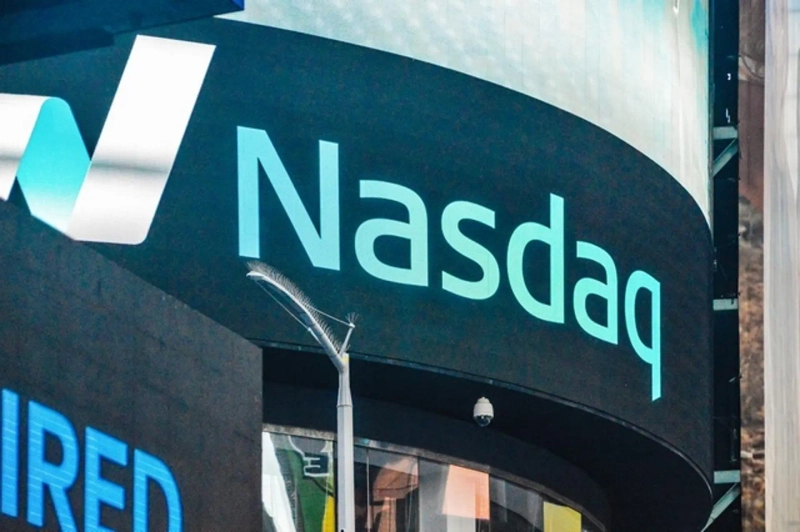
On the 19th (local time), at the New York Stock Exchange (NYSE), the Dow Jones Industrial Average closed down 203.72 points (0.44%) at 46,021.43. The S&P 500 fell 18.21 points (0.27%) to 6,606.49, while the tech-heavy Nasdaq Composite slipped 61.73 points (0.28%) to 22,090.69.
The New York market swung wildly on the day amid concern over further Fed tightening and hopes for an end to the Iran war.
In a press conference the previous day, Fed Chair Jerome Powell said there would be no rate cuts unless inflation comes down, and noted that a rate hike was also discussed at this meeting.
According to CME’s FedWatch Tool, federal funds rate futures are pricing in a 66.8% probability that the policy rate will remain unchanged through the end of December this year, jumping sharply from 47.1% near the prior close. It even neared 80% intraday.
The European Central Bank (ECB) and the Bank of England (BOE) are also aligning their policy stance with the Fed. Both unanimously kept policy rates unchanged on the day, while the ECB is widely seen as moving to hike as early as next month and no later than June. The rate-swap market is also reflecting roughly a 50% chance of three ECB rate hikes this year.
Persistently elevated oil prices also weighed on sentiment. Brent, the global benchmark, for May delivery surged more than 10% intraday, nearing $120 per barrel, after Iran bombed Qatar’s gas field.
But late in the afternoon, after details of Netanyahu’s press conference hit the tape, bargain-hunting quickly emerged, pulling all major indexes back to near-flat territory.
At a meeting, Netanyahu said, “Iran can no longer enrich uranium or manufacture missiles,” adding that Israel is destroying industrial facilities to prevent Iran from building missiles.
Markets interpreted the comments as implying the war’s objectives were largely met.
Mega-cap tech firms with market capitalizations above $1 trillion all declined except Broadcom. Tesla fell more than 3%.
Artificial intelligence (AI) and semiconductor names outperformed. The Philadelphia Semiconductor Index rose 0.87%.
The CBOE Volatility Index (VIX) fell 1.03 points (4.11%) from the previous session to 24.06.
By Go Jeong-sam, Hankyung.com reporter jsk@hankyung.com

Korea Economic Daily
hankyung@bloomingbit.ioThe Korea Economic Daily Global is a digital media where latest news on Korean companies, industries, and financial markets.