"If it isn’t opened within 48 hours, it will be obliterated"…US-Iran all-out war fears push tensions to the brink
Summary
- The report said the risk of armed conflict is rising as the United States and Iran trade threats over opening the Strait of Hormuz and potential strikes on power plants.
- It said regional instability in the Middle East is intensifying as Iran and Israel move into tit-for-tat retaliation, including strikes on the Dimona nuclear facility and air raids in central Tehran.
- It said Iran launched a 4,000 km-range ballistic missile, putting major Western European cities within reach, while attacks on neighboring countries such as Saudi Arabia and Iraq have also continued.
Forecast Trend Report by Period


Iran strikes Dimona…Israel launches immediate retaliatory counterstrike
4,000 km range…Western Europe now within reach
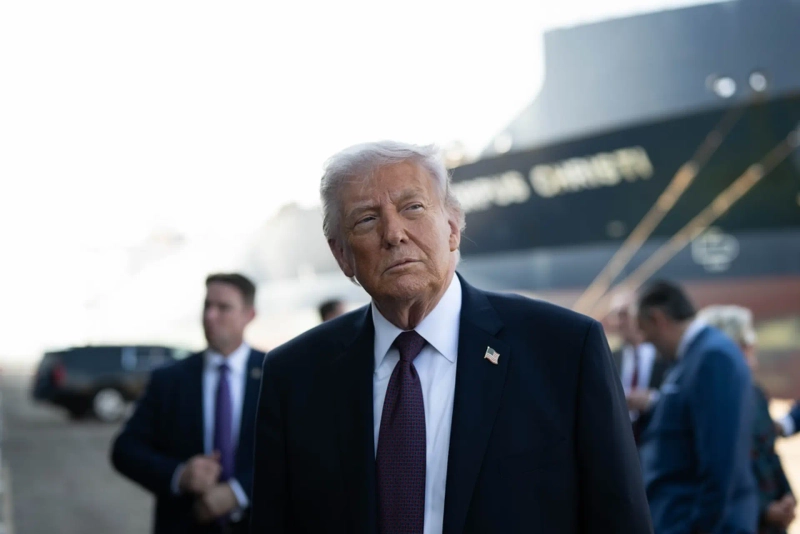
Armed clashes between the United States, Israel and Iran are spiraling out of control. After President Donald Trump threatened to obliterate Iran’s power plants, Iran countered by vowing a total closure of the Strait of Hormuz.
On the 21st (US Eastern Time), Trump wrote on Truth Social that “if Iran does not fully open the Strait of Hormuz within 48 hours from now without any threats, the United States will attack and obliterate Iran’s various power plants, starting with the largest.”
In response, a spokesperson for Iran’s Central Military Headquarters said, “If the US threat is carried out, the Strait of Hormuz will be completely closed and will not be reopened until the power plants are rebuilt.” An Iranian military spokesperson also warned that “if Iran’s fuel and energy infrastructure is attacked, all energy, IT and desalination infrastructure in the region owned by the United States and its regime will become targets.”
The front has also widened. On the 21st, Iran fired missiles at the southern Israeli city of Dimona, home to nuclear facilities, in retaliation for the US-Israeli strike on the Natanz uranium enrichment complex. According to Israel’s Ministry of Health, 64 people were injured in Dimona and 116 in the nearby town of Arad. Within hours, Israel launched an immediate counter-retaliation, saying it was “carrying out airstrikes in central Tehran targeting the Iranian terrorist regime.”
Iran has also escalated its missile threat. On the 20th, Iran fired a ballistic missile at the UK-US joint military base on Diego Garcia in the Indian Ocean, 4,000 km from the Iranian mainland—surpassing the 2,000 km range it had previously maintained as a self-imposed ceiling. Bloomberg said the launch signaled that major Western European cities such as London in the UK and Paris in France could fall within Iran’s strike range.
Attacks on neighboring countries continued as well. Saudi Arabia said it intercepted one of three missiles headed toward Riyadh, while the other two landed in uninhabited areas. There were also eight rocket and drone attacks targeting US diplomatic and logistics facilities near Baghdad International Airport. Hezbollah fired rockets at troops stationed in northern Israel, killing one soldier—the first fatality inside Israel from Hezbollah attacks since fighting resumed on the 2nd.
Hong Min-seong, Hankyung.com reporter mshong@hankyung.com

Korea Economic Daily
hankyung@bloomingbit.ioThe Korea Economic Daily Global is a digital media where latest news on Korean companies, industries, and financial markets.