Under Trump pressure to 'open Hormuz'... NATO chief: "22 countries rallying, including South Korea"
Summary
- The Trump administration said that lifting the blockade of the Strait of Hormuz is the only certain and definitive way to stabilize global oil prices and ocean freight rates.
- It said concerns are growing that if the Iran war is prolonged, the broader economy will face heavier burdens, including a surge in energy prices and the possibility of stagflation.
- It said that 22 countries, including South Korea, are participating in a Strait of Hormuz security operation to promote stability in energy exports and the regional economy.
Forecast Trend Report by Period


Trump: "Hormuz must be opened within 48 hours"
Bessent: "Will completely destroy defensive facilities around Hormuz"
Trump administration says it can fight even for 100 days, but
If the Iran war drags on, inflation worries could sour public opinion
Under Trump pressure to 'open Hormuz'... NATO chief: "22 countries rallying, including South Korea"
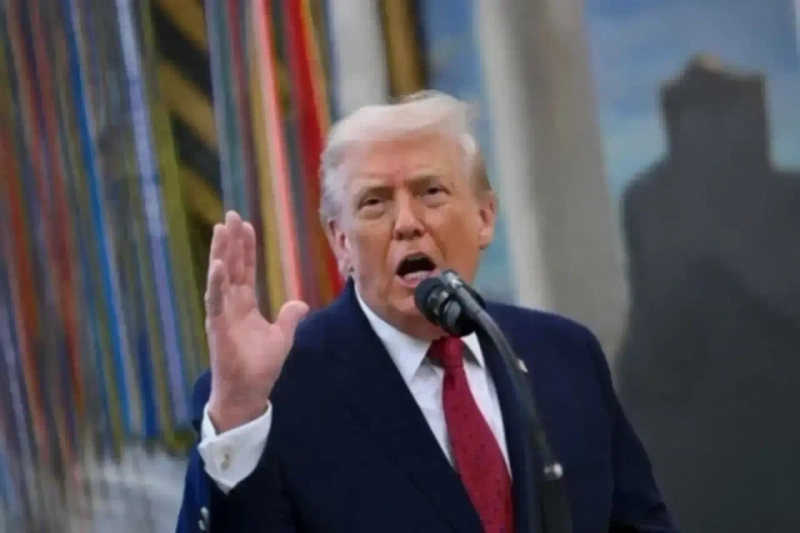
The Donald Trump administration is going all-out to lift Iran’s blockade of the Strait of Hormuz. That is because it views reopening the Strait’s shipping lane as the only certain and definitive way to stabilize global oil prices and ocean freight rates. Concerns also played a role that if the Iran war lasts longer than expected and inflation re-ignites, the Trump administration’s domestic political footing in the U.S. could narrow.
Under pressure from the Trump administration, North Atlantic Treaty Organization (NATO) member states, including South Korea, have also decided to dispatch forces to the Strait of Hormuz.
Bessent: "Objective is total destruction"
U.S. Treasury Secretary Scott Bessent said in an NBC interview on the 22nd (local time) that "the U.S. and Israeli strikes aim to completely destroy Iranian defensive facilities around the Strait of Hormuz."
He stressed that President Donald Trump will take "all necessary measures," including neutralizing Iran’s air force and navy and blocking its ability to acquire nuclear weapons.
Bessent said, "Operations using military assets will continue until the defensive facilities are completely eliminated," adding, "To de-escalate tensions, it may instead be necessary to escalate them."
Bessent’s remarks are in the same vein as President Trump’s demand the previous day that Iran ensure "full opening of the Strait within 48 hours, without threats."
The reason President Trump and Secretary Bessent are concentrating so heavily on the Strait of Hormuz is that public sentiment in the U.S. is unsettling.
In a poll conducted by CBS News and YouGov of 3,335 U.S. adults from the 17th to the 20th (local time) (margin of error ±2.1%p), 38% responded positively and 62% negatively to the question of whether President Trump is handling the Iran-related situation well.
With the war entering its fourth week, a surge in energy prices is weighing on the broader economy. According to the American Automobile Association (AAA), gasoline prices are up 34% from a month earlier. There are also warnings that oil prices could spike to $175 per barrel.
Still, publicly the Trump administration is taking the position that it can tolerate short-term price increases. Secretary Bessent emphasized that "after a temporary price rise, long-term stability is possible without an Iranian regime that possesses nuclear weapons." On the timing of oil-price stabilization, he added, "I can’t be sure whether it will be 50 days or 100 days."
However, if the Iran war actually drags on, prices could jump and growth could slow—raising the prospect of stagflation—prompting forecasts that it will not be easy for the Trump administration to hold out.
NATO also moves to cooperate
NATO member states have also begun full-fledged cooperation to secure safety in the Strait of Hormuz.
NATO Secretary General Mark Rutte said in an interview with CBS News on the 23rd that "allies are rallying for security in the Strait of Hormuz," adding that "it is a natural process that it took several weeks for European countries to build a coordination framework."
The operation includes non-NATO countries as well—such as Australia, Bahrain, Japan, South Korea, New Zealand, and the United Arab Emirates (UAE)—centered on NATO members. Secretary General Rutte said a total of 22 countries are participating.
Regarding President Trump’s demand that NATO take part in protecting the Strait of Hormuz, Secretary General Rutte said, "I understand the president’s frustration given that preparations take time." He added, however, that "it is also true that each country needed some time, as they had to prepare responses without sufficient prior information regarding the initial strikes on Iran."
The mood among Gulf countries is also shifting. They had previously sought to check Iran but did not want regime change through war, judging the risks along the way to be too great. But as Iran launched attacks on neighboring countries, the atmosphere began to change.
The Economist recently reported that "as Gulf countries directly experience Iranian retaliation, they are changing their stance toward calling for disabling the regime," adding that "beyond a decline in energy exports, the broader Gulf-region economy is being hit." This comes as foreign workers leave and the tourism industry takes a blow.
New York = Correspondent Park Shin-young nyusos@hankyung.com

Korea Economic Daily
hankyung@bloomingbit.ioThe Korea Economic Daily Global is a digital media where latest news on Korean companies, industries, and financial markets.