PiCK
Naver–Dunamu merger accelerates… “Cap on major shareholders’ stakes may be unconstitutional”
Summary
- Constitutional scholars said the Basic Act on Digital Assets’ cap on major shareholders’ stakes may be unconstitutional, citing infringements of fundamental and property rights.
- They said this assessment is expected to have a positive impact on the push for a business combination between Naver Financial and Dunamu, including a merger via a comprehensive share swap.
- Naver said that despite the major shareholder stake regulation, its direction for combining with Dunamu will not change and it will design an optimal structure in line with the outcome of the KFTC merger review.
Forecast Trend Report by Period


Naver–Dunamu merger, once feared due to a 20% stake cap
Korean Association of Constitutional Law: cap on major shareholders’ stakes “may be unconstitutional”
Constitutional scholars continue to point to infringements of fundamental and property rights
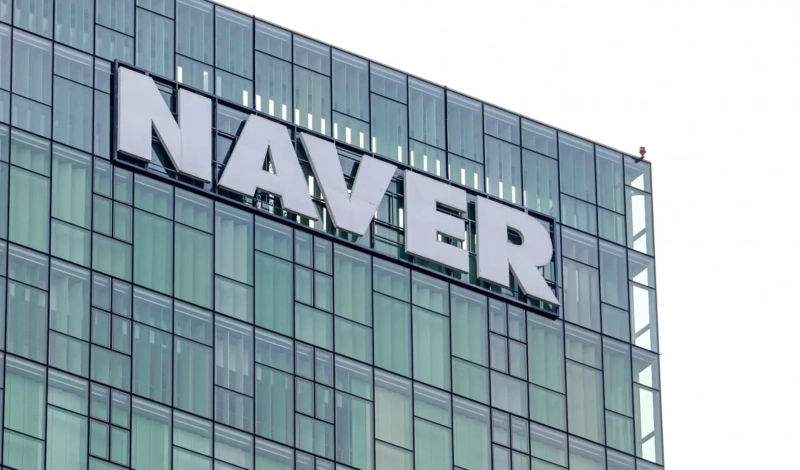
A “green light” is expected for the business combination between Naver and Dunamu. Constitutional scholars have argued that the “cap on major shareholders’ stakes” under the proposed Basic Act on Digital Assets—an obstacle to the merger—may be unconstitutional. The Korean Association of Constitutional Law concluded that the measure is highly likely to be unconstitutional as it contains legal difficulties such as infringement of fundamental rights stemming from a violation of the constitutional principle against excessive restriction.
“Stake cap infringes fundamental rights… also runs counter to the constitutional system of private property”
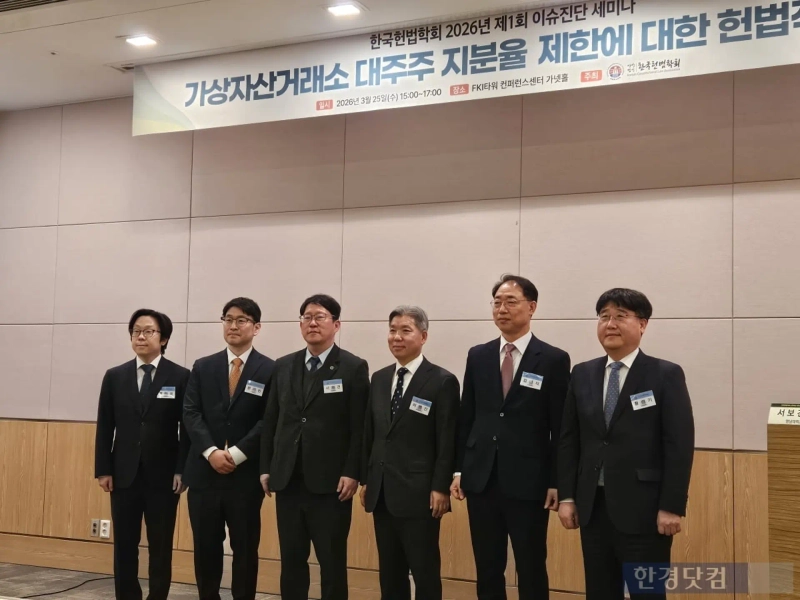
The Korean Association of Constitutional Law held a special seminar titled “Constitutional issues surrounding measures to cap major shareholders’ ownership in virtual asset exchanges” at the FKI Conference Center in Yeongdeungpo-gu, Seoul, at 3 p.m. on the 25th. Kim Myung-sik, a professor in the Department of Public Talent and Legal Affairs at Chosun University who presented that day, stressed that the stake-cap regulation could be a measure that directly restricts constitutionally guaranteed fundamental rights. To restrict fundamental rights, all requirements under the constitutional principle against excessive restriction set out in Article 37(2) must be met: △legitimacy of purpose △appropriateness of means △minimum infringement △balance of legal interests. Prof. Kim argued that the regulation fails to satisfy these four requirements.
He said it is neither justified in its concrete approach—given differences in functional equivalence, market structure and environment—nor consistent with the appropriateness of means, as regulatory tools already exist, to introduce rules governing ownership structures for virtual asset exchanges by assuming they fall into the same category as capital-market infrastructure. Existing measures include the “Act on the Protection of Virtual Asset Users, etc.” (effective July 2024) and the “Act on Reporting and Using Specified Financial Transaction Information, etc.” (amended February 2026).
Prof. Kim also explained that the requirement of minimum infringement is not met. “A stake cap is a measure that directly intervenes in property rights,” he said, adding that “in overseas legislative cases, government objectives are achieved without directly depriving property rights—through measures such as upgrading internal control systems and establishing market surveillance frameworks.”
He further warned that “if a precedent is set whereby a specific industry is viewed as public infrastructure and direct regulation of ownership structures is introduced, there may be policy concerns that the regulatory logic could later expand across industries as a whole, and it could also lead to a contraction of Korea’s startup ecosystem and entrepreneurial spirit.”
In the panel discussion as well, participants concluded that the cap on major shareholders’ stakes is highly likely to be unconstitutional. Kye In-kook, a professor at Korea University’s Graduate School of Public Administration, said, “Not only does this bill raise considerable questions even regarding the legitimacy of its purpose, but its means are also questionable in light of overseas legal systems as well as coherence with domestic legislation,” adding, “In particular, it exposes significant issues at the stages of minimum infringement and proportionality in the narrow sense.”
Hwang Sung-ki, a professor at Hanyang University Law School, also expressed concern that retroactively forcing adjustments to already established property rights runs counter to the private property system guaranteed under Article 23 of the Constitution and strongly suggests unconstitutionality due to infringement of individual property rights. Prof. Hwang said the currently discussed Basic Act on Digital Assets △runs counter to the prohibition on depriving property rights through retroactive legislation, △violates the principle of protection of legitimate expectations, △conflicts with the principle of proportionality and the principle against excessive restriction, and △does not accord with the constitutional principle of systemic legitimacy.
Naver presses ahead with Dunamu merger… “The direction itself will not change”
The assessment that the stake-cap regulation may be unconstitutional is expected to have a positive impact on the merger between Naver Financial and Dunamu, the operator of Upbit. The government and the Democratic Party of Korea are currently considering applying a regulation in the Basic Act on Digital Assets bill that would cap the stakes of major shareholders and their related parties in virtual asset exchanges at 20%.
Previously, Naver Financial decided in November last year to pursue a merger with Dunamu through a comprehensive share swap. Once the comprehensive share swap is completed, Dunamu will become a wholly owned subsidiary of Naver Financial and a second-tier subsidiary of Naver. The issue is the major shareholder’s total stake ratio. After the business combination, the Naver Financial stake owned by Dunamu Chairman Song Chi-hyung at 19.5% and the 10% stake held by Dunamu Vice Chairman Kim Hyung-nyeon, a related party, would total 29.5%—exceeding the regulatory ceiling. This would constrain the structure in which Naver Financial holds 100% of Dunamu.
At its 27th annual general meeting of shareholders held on the 23rd, Naver said there is no change in its direction to pursue the business combination despite the variable of the major shareholder stake regulation. Naver CEO Choi Soo-yeon said, “We recognize the importance of the digital asset market and are reviewing cooperation with Dunamu from multiple angles,” adding, “Once the legal framework is in place, we plan to design an optimal transaction and business structure in line with it.” Kim Hee-cheol, chief financial officer (CFO), who was appointed as an inside director that day, also stressed, “The government approval process is currently under way, and while some adjustments may be possible depending on changes in laws and systems, the direction we aimed for will not change.”
Merger review in its final stages… KFTC: “Will be handled within the statutory period”
The business combination review of Naver Financial and Dunamu has entered its final stage. The Korea Fair Trade Commission (KFTC) requested additional materials from Naver related to the merger review.
The statutory review deadline is also approaching. The KFTC accepted the merger filing on Nov. 28 last year and began its review. The review period is 30 days from the filing date as a baseline and can be extended up to 90 days. Including an extended review, March 28 becomes the latest possible statutory deadline this month. The review period is expected to be extended further due to time needed to supplement additional materials.
A KFTC official said, “We are reviewing the merger,” adding, “It will be handled within the statutory period.”
Park Soo-bin, Hankyung.com reporter waterbean@hankyung.com

Korea Economic Daily
hankyung@bloomingbit.ioThe Korea Economic Daily Global is a digital media where latest news on Korean companies, industries, and financial markets.