Wall Street Watches US-Iran Negotiations; China Also Wary of Oil-Price Volatility [Weekly Outlook for New York and Shanghai Stocks]
Summary
- New York stocks this week are expected to see increased volatility due to the trajectory of US-Iran negotiations and Yemen’s Houthi rebels joining the battlefield.
- Shanghai stocks are expected to face strong upward pressure if March manufacturing PMI—especially indicators for advanced manufacturing such as semiconductors and artificial intelligence (AI)—improves.
- Experts said that if the index settles around the 3,900 level, it could enter a bull market in the second quarter, and recommended selective positioning centered on new energy and biotech.
Forecast Trend Report by Period


Yemen’s Houthi rebels joining the Iran war heightens uncertainty
International oil-price volatility also weighs on the Shanghai market
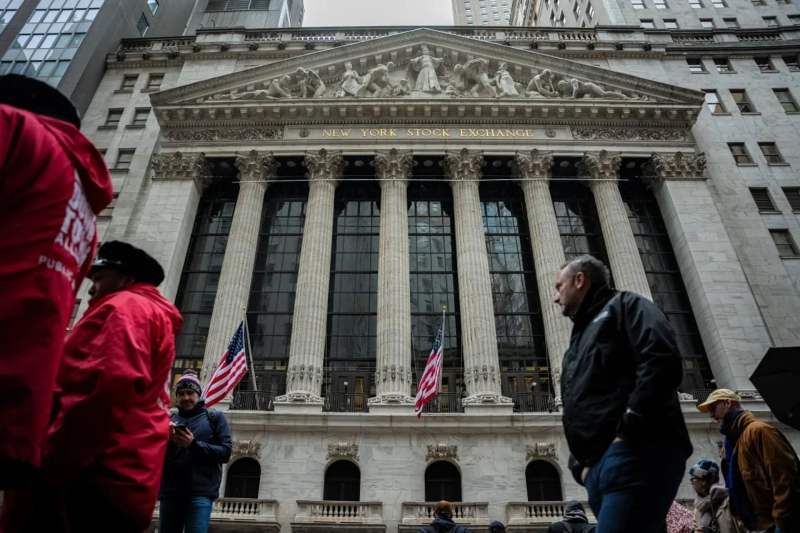
This week (March 30–April 3), New York stocks are expected to see increased volatility depending on the trajectory of negotiations between the United States and Iran. In particular, investors’ anxiety is also rising as Yemen’s Houthi rebels joined the battlefield by firing missiles at Israel. That is because, following the Strait of Hormuz, even the Red Sea—an oil-export route to Europe—could be blocked.
On the economic-data front, the March employment report due on April 3 is considered a key indicator. The question is whether US nonfarm payrolls rebounded after February’s employment shock. At the time, the figure fell by 92,000 from the previous month due to strikes and a cold wave. On Wall Street, March is estimated to have increased by 48,000. The March unemployment-rate forecast is 4.5%, up 0.1% point from the previous month.
Before that, the February Job Openings and Labor Turnover Survey (JOLTS) report due on the 31st is also worth watching. Investors can use JOLTS to gauge trends in corporate hiring and layoffs. The March private payrolls report to be released by ADP on April 1 is also cited as an indicator that could offer clues about the labor market.
For retail sales, which can help gauge changes in consumption—the backbone of the US economy—the February data will be released on April 1. The market forecast calls for a 0.4% increase from the previous month. New York markets will be closed on April 3 for Good Friday. The bond market will be open only until noon.
This week’s direction for Shanghai stocks hinges on the March manufacturing Purchasing Managers’ Index (PMI) to be released on the 31st. A key variable is whether the government’s stimulus effect, in the first year of the “15th Five-Year Plan,” translated into improvements in production indicators. In particular, if indicators for advanced manufacturing such as semiconductors and artificial intelligence (AI) revive, the market is expected to face strong upward pressure.
Major investment banks including Goldman Sachs said China’s government-led “curb on excessive competition” is translating into improved margins, and put this year’s profit growth at around 15%. The “curb on excessive competition” is a policy to limit cutthroat price competition among companies. However, oil-price volatility stemming from the US-China diplomatic calendar and Middle East risks is a near-term headwind. Experts said that if the index settles around the 3,900 level, it could enter a full-fledged bull market in the second quarter, and recommended selective positioning centered on new energy and biotech. New York=Park Shin-young, correspondent nyusos@hankyung.com

Korea Economic Daily
hankyung@bloomingbit.ioThe Korea Economic Daily Global is a digital media where latest news on Korean companies, industries, and financial markets.