One Month Into the Iran War, Diverging Views on U.S. Stocks… “Uncertainty Has Grown” vs. “The U.S. Can Withstand It”
Summary
- It said that inflation pressures are rising due to geopolitical tensions in the Middle East and higher oil prices, with even the possibility of Fed rate hikes being discussed.
- However, U.S. stocks, especially the S&P 500, have fallen only about 7% since the war began, and strong U.S. Big Tech earnings and expectations for expanded AI investment are helping to support the index.
- It said that the market is weighing a view that U.S. equities can withstand this geopolitical shock—citing a delay in the timing of rate cuts, expectations that the oil-price surge will not be prolonged, and a 3.6% rise in S&P 500 companies’ EPS forecasts—alongside the possibility of a rapid shift if the war drags on.
Forecast Trend Report by Period


Rising oil prices amplify inflation pressures
Even the possibility of Fed rate hikes is being mentioned
Strong U.S. corporate earnings and expanding AI investment are positives
Economic and financial crises are a bigger threat than geopolitical tensions
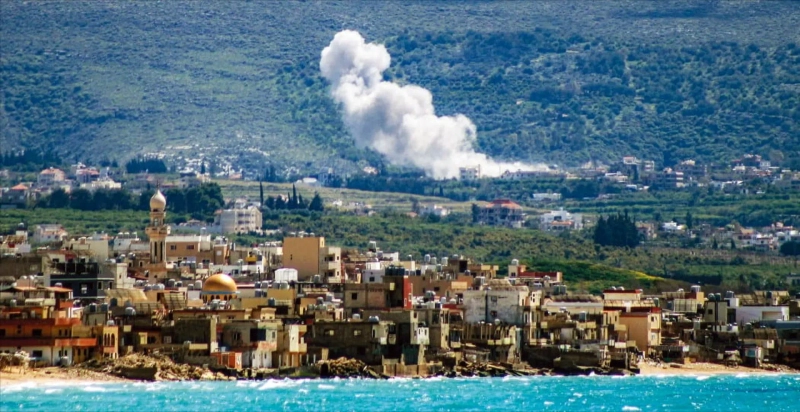
A month has passed since the United States and Israel struck Iran on the 28th of last month (local time), and global investors’ attention is now fixed on U.S. equities. How well U.S. markets withstand the Middle East’s geopolitical tensions is seen as a bellwether for the direction of the global economy.
On the 29th (local time), some on Wall Street in New York warned that U.S. stocks could face a sharp correction as the Iran war shows signs of escalation, including Yemen’s Houthis joining the fighting. The argument is that high oil prices will stoke inflation and, in turn, prolong the U.S. Federal Reserve’s (Fed) restrictive monetary policy.
Still, optimism remains widespread that New York markets, including the S&P 500, have ample resilience to endure the Iran war. Supporters of this view point to strong results from U.S. Big Tech and expanding investment in artificial intelligence (AI).
Rate-hike possibility also raised
The Wall Street Journal (WSJ) reported that a shift in sentiment has been detected within the Fed, with officials leaving the door open not only to holding rates steady but even to raising them. That comes as inflation pressures are building again due to tariffs and rising oil prices. The U.S. labor market has cooled, but the absence of a sharp deterioration is also contributing to the mood.
Fed Governor Lisa Cook said energy-price increases stemming from the Iran war are pushing up prices, stressing that “persistent inflation is the biggest risk.” Chicago Fed President Austan Goolsbee also said that “a rate hike could be necessary depending on the situation,” adding to uncertainty around the policy path.
On Wall Street, the likelihood of rate hikes is still seen as low. Even so, the fact that the Fed has begun to discuss the possibility in public is being taken as an important signal. In particular, the recent remarks have come from officials previously categorized as neutral or dovish, reinforcing the possibility of a shift in the policy stance.
Inflation concerns sit at the heart of this change. The Fed’s preferred personal consumption expenditures (PCE) measure is currently around 3%, above its 2% target. In particular, rising oil prices can lift perceived inflation through gasoline and food prices and could fuel inflation expectations, heightening policymakers’ vigilance.
WSJ said that, for now, the hold scenario is viewed as more likely than rate hikes. However, if inflation pressures persist, policy could tilt back toward tightening, suggesting the Fed is entering a phase in which “policy flexibility” is being emphasized even more.
U.S. stocks hold up despite the Iran war
Even as uncertainty has increased, many argue that U.S. equities’ more resilient-than-expected performance suggests they can continue to hold up.
In fact, the S&P 500 has fallen only about 7% from its pre-war peak, leading to assessments that the market shock has been relatively contained.
WSJ analyzed that “historically, wars and geopolitical conflicts have not had a significant long-term impact on U.S. stocks.” Since 1939, the average decline in share prices across major events was about 4%, and recoveries were swift. This is related to the structure in which the U.S. domestic industrial base does not suffer direct damage. Indeed, the broader economic impact was limited even during the Vietnam War and the Afghanistan war.
Laura Cooper, an investment strategist at global asset manager Nuveen, said, “The risk of the U.S. economy falling into recession is not large,” adding, “This is because the U.S. economy was still relatively solid when it was hit by this geopolitical shock.” She nevertheless expected that inflation concerns driven by higher oil prices would delay the timing of the Fed’s policy-rate cuts.
What has had a bigger impact on equities, rather, has been financial and economic crises. The Great Depression, the oil shocks of the 1970s, the dot-com bubble collapse, and the global financial crisis are representative examples.
Markets are also reflecting expectations that the spike in oil prices will not be prolonged. The analysis is that U.S. voters are unlikely to tolerate high fuel prices for long, and with the midterm elections approaching, a policy response will be unavoidable.
Accordingly, forecasts say moves could emerge to stabilize oil prices through various means, including expanded military intervention or diplomatic negotiations. President Trump’s long-standing focus on oil prices also underpins such expectations.
Another factor supporting equities is corporate earnings. Since the war began, the S&P 500 companies’ forward 12-month earnings per share (EPS) forecast has risen about 3.6%—the fastest pace in the past five years.
Expectations for expanded AI investment are also underpinning the market. Analysts say expectations for continued growth in demand for data centers and semiconductors remain intact. However, market optimism is based on the premise that the war will end in the short term. If the conflict becomes protracted due to failed negotiations between Iran and the United States, Israel’s continued military actions, or the deployment of U.S. ground forces, the situation could change rapidly.
New York=Correspondent Park Shin-young nyusos@hankyung.com

Korea Economic Daily
hankyung@bloomingbit.ioThe Korea Economic Daily Global is a digital media where latest news on Korean companies, industries, and financial markets.