PiCK
How long will the dollar’s super-strength last?…Wall Street warns: “Overbought, turning weaker in the second half”
Summary
- Goldman Sachs and Bank of America warned that the dollar is in an overshooting and overvalued state.
- BofA said that one month after a war, the dollar index could fall 3–5% in the medium term.
- Goldman Sachs noted the dollar could enter a tactical sell zone in the second half, advising diversification into the euro and the yen, among others.
Forecast Trend Report by Period


BofA: “Historically, tends to turn weaker one month after a war”
Goldman Sachs: “Now 15% overvalued; entering a tactical sell zone in the second half”
Derivatives-market traders still maintaining bullish positions
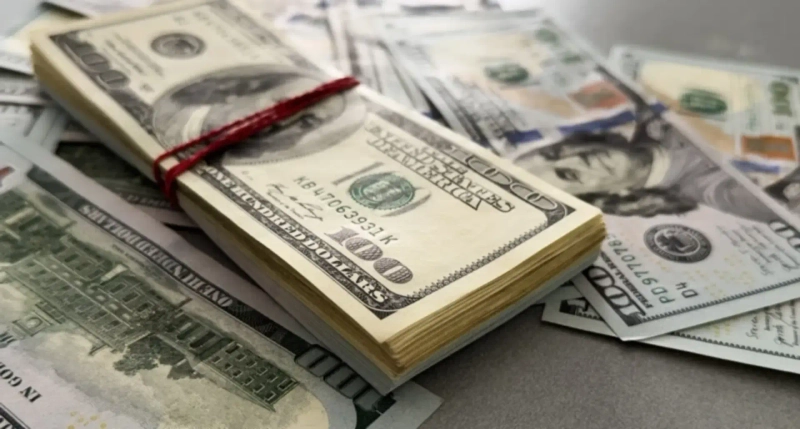
With the Middle East war throwing energy markets into turmoil, the U.S. dollar is set to post its strongest monthly gain since October 2024. But FX strategists at global investment banks including Goldman Sachs and Bank of America warned that the dollar is in an overshooting phase and could fall sharply the moment signs emerge that the U.S. is considering rate cuts.
On the 31st (local time) in European trading, the ICE Dollar Index stood at 100.488. It was off its intraday high of 100.643, but the index still rose about 3% over March.
In Seoul’s FX market, the dollar also climbed against the won, at one point reaching 1,536.70 won per dollar—its highest level since the 2009 global financial crisis.
The dollar’s strength reflects investors piling into the reserve currency as a surge in oil prices stokes inflation pressure and raises the prospect that there may be no rate cuts this year. The United States’ status as the world’s largest oil producer—seen as limiting the damage from a spike in global energy prices—also underpinned demand for dollars over the euro or the yen.
According to Bloomberg, even traders who had held short-dollar positions on expectations of weakness before the Middle East conflict quickly flipped to a stronger-dollar stance. In the derivatives market, traders now hold more than $7 billion in bullish dollar bets, the largest since last December.
Still, Wall Street’s FX experts have begun to flag the possibility of a shift toward a weaker dollar soon. Bank of America, Goldman Sachs, and Morgan Stanley say the dollar’s war premium is already fully priced in and expect downside risks to rise as the year moves into the second half.
In particular, Bank of America (BofA) said in a report released on the 30th (local time) that “the dollar tends to turn weaker starting one month after a war,” projecting the dollar index could fall 3–5% in the medium term.
According to Reuters, Athanasios Vamvakidis, BofA’s head of G10 FX strategy, said, “Historically, the dollar, which strengthens early in a war, has tended to turn weaker from one month after the invasion.” He added that “the current dollar has moved deep into overvaluation territory due to ‘fear-based overshooting,’” stressing that “as growth-slowdown concerns mount, the Fed will ultimately have no choice but to touch the rate-cut lever in the second half.” He therefore projected the dollar index would decline by about 3–5% from current levels in the medium term.
Goldman Sachs also pointed out that “the dollar is currently about 15% overvalued.”
Kamakshya Trivedi, co-head of global FX strategy at Goldman Sachs, said on the firm’s podcast that “the dollar is about 15% overvalued versus fundamentals, and the market’s focus is shifting from war fears to U.S. growth-slowdown risks.”
He projected that once the war premium fades, the dollar will lose some of its appeal as a safe haven and “enter a cyclical downturn.” In particular, he said the fiscal deficit could widen more than expected due to war-related fiscal spending, and the “twin deficits (fiscal and trade deficits)” issue could re-emerge, pushing the dollar into a “Tactical Sell” zone as the second half approaches. Accordingly, he advised diversifying portfolios into currencies such as the euro and the yen, which are currently undervalued against the dollar, in preparation for a “Shallower Dollar Descent,” rather than chasing the strong dollar.
Kim Jung-a, contributing reporter kja@hankyung.com

Korea Economic Daily
hankyung@bloomingbit.ioThe Korea Economic Daily Global is a digital media where latest news on Korean companies, industries, and financial markets.