Iran foreign minister: 'No progress in talks with the U.S.… trust at zero'
Summary
- Iran’s foreign minister said that while Iran has exchanged messages with the United States, it is not seeing progress in negotiations.
- After the Iranian president’s remarks about ending the war, oil prices fell and stock markets rose.
- With the exchange of attacks continuing among Iran, the United States and Israel, Iran signaled planned attacks on U.S. technology and financial companies in the Middle East.
Forecast Trend Report by Period


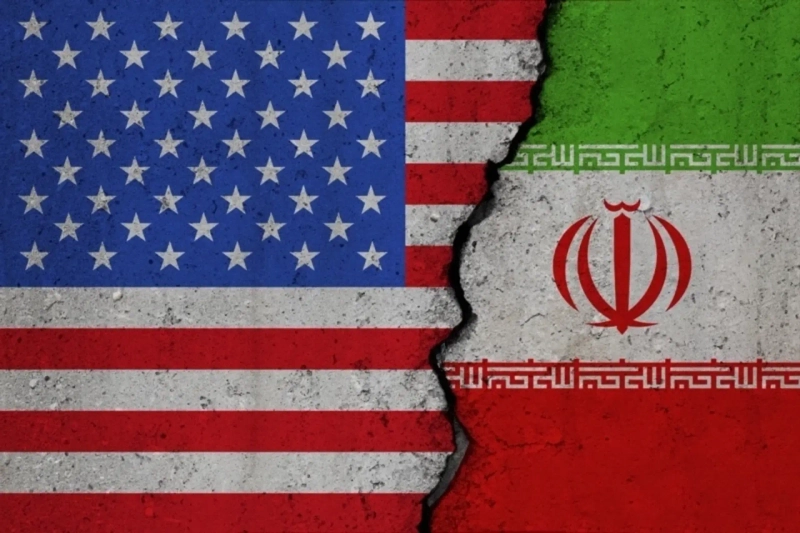
Iranian Foreign Minister Abbas Araghchi said in an interview with Al Jazeera on March 31 (local time) that while Iran has exchanged messages with the United States, it has not seen progress in negotiations.
In the interview released that day, Araghchi said that “contact with the United States does not mean the Iranian government is negotiating with the U.S. government.”
He added, “Claims that certain factions inside Iran are conducting negotiations are completely untrue,” saying, “All messages are delivered through the Foreign Ministry or received by it, while communication among security agencies is conducted separately.”
Araghchi explained that he has never had even a single ‘good experience’ in negotiations with the United States, citing the case in which “after we managed to reach an agreement years ago, the U.S. side unilaterally withdrew” (referring to the 2015 Joint Comprehensive Plan of Action, or JCPOA).
Araghchi said, “We have absolutely no belief that negotiations with the United States will produce any results. The level of trust is at rock bottom (0),” stressing, “We cannot find sincerity in them.”
Earlier, Iranian President Masoud Pezeshkian said in a phone call with European Council President António Costa that Iran has the “necessary will” to end the war currently underway. Although he added the condition that firm guarantees must come first “to prevent any recurrence of additional acts of aggression,” the remarks raised market expectations of an end to the war. Oil prices fell and stocks rose.
However, Araghchi’s comments suggest that substantial coordination between the two sides will be required for the talks to yield results. U.S. Secretary of Defense Pete Hegseth warned at a morning briefing that the United States is “negotiating with bombs,” and that Iran will face an expanded assault if it does not sign a peace agreement.
The exchange of attacks is still ongoing. Iran launched missile strikes on central Israel that day, with at least nine people reportedly injured in Tel Aviv. Separately, a fire broke out after the Al Salmi oil tanker, registered in Kuwait, was attacked at the port of Dubai. Iran’s Islamic Revolutionary Guard Corps said it will begin attacking U.S. technology and financial companies in the Middle East from Wednesday in retaliation for ongoing attacks by the United States and Israel.
U.S. Secretary of State Marco Rubio, in an interview with Al Jazeera, said President Donald Trump “always prefers diplomacy,” while warning Iran of “tangible consequences” over a partial closure of the Strait of Hormuz.
Washington=Correspondent Lee Sang-eun selee@hankyung.com

Korea Economic Daily
hankyung@bloomingbit.ioThe Korea Economic Daily Global is a digital media where latest news on Korean companies, industries, and financial markets.