Gold hit by inflation shock…likely to fall further
Summary
- Experts said that gold prices have been repeatedly falling since the start of this month, advising investors to remain cautious about gold for the time being while keeping in mind the possibility of further declines.
- They noted that as market rates continue to rise after the U.S., the European Union and the Bank of England kept policy interest rates on hold, gold’s investment appeal is weakening because it pays no interest.
- They added that amid a stronger dollar and falling gold prices, enthusiasm for gold-related products is cooling, with gold banking balances declining.
Forecast Trend Report by Period


Amid signs of rising rates and a stronger dollar
Investment appeal wanes, demand contracts
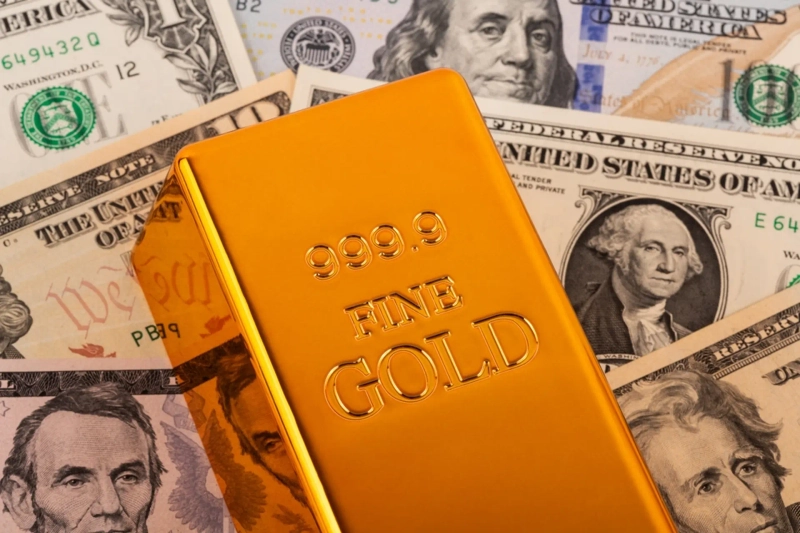
After rallying for more than a year, gold prices have been repeatedly declining since the start of this month. Analysts say the slide reflects concerns that inflation—including oil prices—will keep rising amid the war between the United States and Iran. Experts advised investors to remain cautious about gold for the time being, bearing in mind the possibility of further price declines.
According to the New York Mercantile Exchange (COMEX) on the 1st, the gold futures price (June delivery) on the 30th of last month fell 13.1% in a month to $4,456.37 per troy ounce. It briefly topped $5,400 on the 2nd of last month, right after U.S. and Israeli airstrikes on Iran, but has been trending downward ever since.
Gold, a quintessential safe-haven asset, has long been viewed as a hedge against inflation. As a result, it tended to strengthen when prices rose due to unexpected variables such as wars. Recently, however, worries that surging inflation will strongly spur an uptrend in market interest rates have emerged as a key factor driving gold’s price action. Expectations for rate cuts have faded after the U.S. Federal Reserve, the European Union (EU), and the Bank of England in recent succession held policy rates steady. As investor sentiment shifts, yields on major bonds and deposit rates have been rising across the board. The higher rates go, the less attractive gold becomes because it pays no interest.
A stronger dollar is also cited as a factor weighing on gold prices. Since gold is traded in dollars, a rising dollar increases the buying burden for investors using other currencies, dampening demand to some extent. The dollar index, which measures the dollar’s value against a basket of six major currencies, stood at 97.6 at the end of February but now is above 100.
As gold prices decline, enthusiasm for related products at domestic banks has also cooled somewhat. As of the 26th of last month, the combined balance of gold banking (gold passbook) accounts at KB Kookmin Bank, Shinhan Bank, and Woori Bank totaled 2.1775 trillion won, down by 174.7 billion won from the end of February (2.3522 trillion won).
Kang Dong-hee, a PB team leader at Shinhan Premier PWM Gangnam Center, said, "In an environment like now where the uptrend in interest rates continues, gold prices could fall further."
Reporter Kim Jin-seong jskim1028@hankyung.com

Korea Economic Daily
hankyung@bloomingbit.ioThe Korea Economic Daily Global is a digital media where latest news on Korean companies, industries, and financial markets.