Koo Yun-cheol: "Responding to supply-chain instability from the Middle East war… easing regulations to clear bottlenecks"
Summary
- The government said it will implement temporary regulatory easing—including import and transportation exemptions—for items at risk of supply disruptions such as naphtha.
- Deputy Prime Minister Koo Yun-cheol said the government will conduct daily checks of supply-chain and inflation items heavily affected by the Middle East war and respond swiftly through a hotline.
- For imported energy and raw materials, supply-concern chemicals, and packaging materials, the government said it will clear bottlenecks by introducing customs and registration exemptions, tariff support, temporary easing of labeling rules, and a fast-track process.
Forecast Trend Report by Period


The government will implement temporary regulatory easing—including import and transportation exemptions—for items at high risk of supply disruptions such as naphtha.
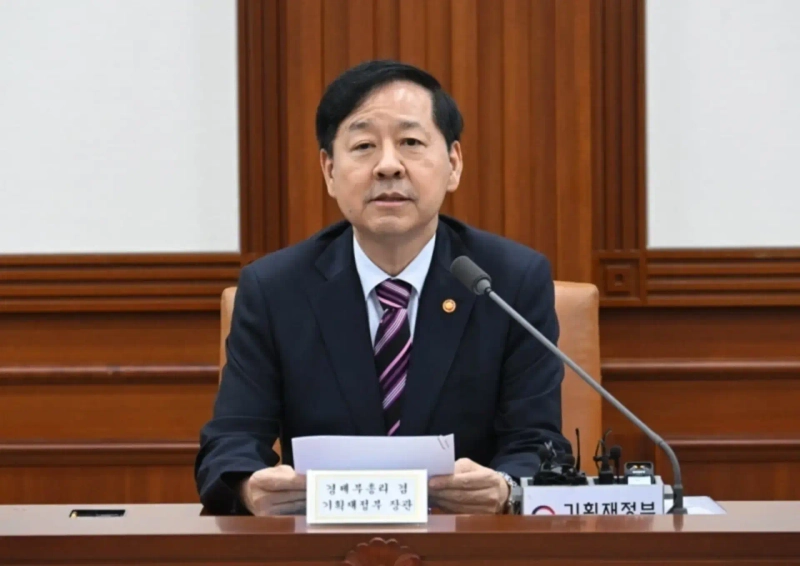
Deputy Prime Minister and Minister of Economy and Finance Koo Yun-cheol, who chaired an emergency economic task force meeting and a meeting of economy-related ministers at the Government Complex Seoul on the 3rd, said, "With the resolve of a helmsman holding the rudder amid rough seas, we will devote all efforts to overcoming the crisis," adding, "We will also promptly prepare supplementary measures in anticipation of the impact of the Middle East war and the possibility of consumption constraints stemming from energy-saving efforts."
He added, "For supply-chain items and inflation-sensitive items heavily affected by the war, we will designate officials in charge for each item to conduct daily checks, while sharing the situation in real time through a hotline involving ministers of relevant ministries to respond boldly and swiftly."
In particular, he stressed, "We will actively consider additional measures for naphtha derivatives and petrochemical products depending on future supply-and-demand conditions," and "Through temporary regulatory suspensions and the like, we will quickly resolve procedural difficulties such as supply-chain bottlenecks for key items."
Amid concerns that instability in naphtha supply could spill over into prices of everyday consumer goods such as packaging materials, the government aims to minimize supply-chain bottlenecks through temporary regulatory easing.
The government said it will complete customs clearance procedures for imported energy and raw materials before arrival and unloading, and will pursue a plan to apply special cases to companies importing goods from the Middle East to reduce, through tariffs, the rise in freight costs incurred by using alternative routes.
For chemicals such as paint with potential supply concerns, it will shorten the time required for imports by applying special cases to import registration procedures, and will temporarily ease labeling regulations on packaging materials to enable the use of alternative packaging for food, sanitary products, and pharmaceuticals. In addition, it plans to introduce a fast-track process for product-approval reviews when alternative packaging materials are used to shorten the timeframe.

Korea Economic Daily
hankyung@bloomingbit.ioThe Korea Economic Daily Global is a digital media where latest news on Korean companies, industries, and financial markets.