Stocks swing on war headlines…eyes turn to Samsung Electronics earnings [Weekly outlook]
Summary
- Brokerages said the KOSPI is expected to move between 5,000 and 5,700 this week depending on the U.S.–Iran war and volatility in international oil prices.
- In Korea, Samsung Electronics’ preliminary first-quarter results and the Bank of Korea Monetary Policy Board’s policy decision meeting were cited as key issues.
- Experts said a portfolio strategy of increasing exposure to sectors such as semiconductors, IT hardware, defense, power equipment, nuclear power, securities firms, banks and holding companies is advantageous.
Forecast Trend Report by Period


NH Investment & Securities: "KOSPI seen moving between 5,000 and 5,700 this week"
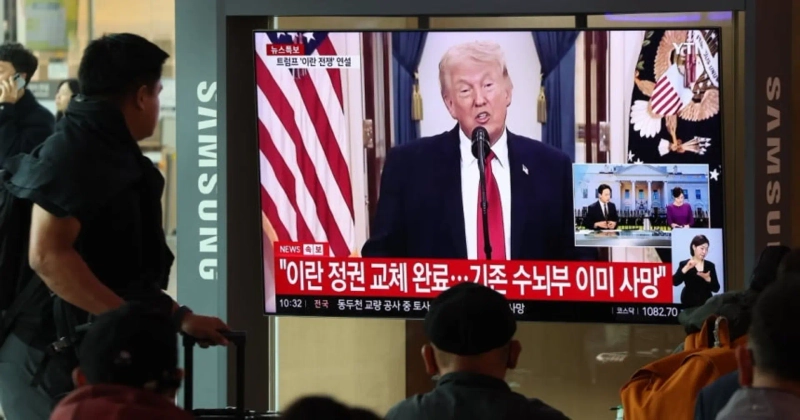
Brokerages expect the KOSPI to remain volatile this week (6–10) as trading is driven by developments in the U.S.–Iran war. Analysts advise watching this week’s economic indicators to gauge the fallout from the conflict and considering increasing equity exposure if excessive fears become priced in.
NH Investment & Securities on the 5th forecast this week’s expected KOSPI trading range at 5,000–5,700. As with last week, the market is likely to be jolted by the trajectory of the U.S.–Iran war and volatility in international oil prices.
Na Jung-hwan, an analyst at NH Investment & Securities, said, "The market could continue to swing with every remark by U.S. President Donald Trump." Jung Hae-chang, an analyst at Daishin Securities, also said, "Over the next 1–2 weeks, the strength of the recovery in risk-on sentiment will be determined by the Trump administration’s concrete withdrawal roadmap and the effectiveness of passage through the Strait of Hormuz."
Even so, experts place greater weight on the view that the situation is unlikely to spiral into a worst-case outcome. Jung said, "Threatening rhetoric and the use of military force are unavoidable in negotiations, but the likelihood that transport itself will resume has increased through legislation to levy passage fees in the Strait of Hormuz," adding, "While the cost burden is inevitable, we have avoided the worst-case scenario in which disruptions to the physical supply of key raw materials such as energy, fertilizer and naphtha become the problem."
Key economic indicators due this week include the U.S. Institute for Supply Management (ISM) services index for March (local time on the 6th), the U.S. personal consumption expenditures (PCE) price index for February (9th), and the U.S. consumer price index (CPI) for March. Minutes from the Federal Reserve’s March Federal Open Market Committee (FOMC) meeting will also be released on the 8th.
In Korea, major issues include Samsung Electronics’ preliminary first-quarter results due on the 7th and the Bank of Korea’s Monetary Policy Board meeting (10th). The upcoming meeting will be Governor Rhee Chang-yong’s last policy-rate decision meeting within his term. Some in the brokerage industry are also saying Samsung Electronics’ first-quarter operating profit reached around 50 trillion won, exceeding last year’s full-year total (43 trillion won).
Yoo Myung-gan, an analyst at Mirae Asset Securities, said, "Earnings season for the first quarter kicks off next week starting with Samsung Electronics," adding, "It is advantageous to choose sectors where earnings improvement is clear or where price-to-book (PBR) valuation appeal is high." Preferred sectors cited included semiconductors, IT hardware, as well as industrials such as defense, power equipment and nuclear power, along with securities firms, banks and holding companies.
Na also said, "From a portfolio-strategy standpoint, we need to raise the weighting of sectors that can rise regardless of the war’s outcome." He said demand for air-defense systems and energy self-sufficiency is expected to keep increasing both during and after the war, making them worth watching. He recommended, "We should maintain a high weighting in growth-infrastructure-related sectors such as semiconductors, defense, power equipment and nuclear power."
Oh Jung-min, Hankyung.com reporter blooming@hankyung.com

Korea Economic Daily
hankyung@bloomingbit.ioThe Korea Economic Daily Global is a digital media where latest news on Korean companies, industries, and financial markets.