KOSPI plunges 13.9%… retail investors ‘buy’ KRW 35tn as foreigners ‘sell’ KRW 40tn in tug-of-war
Summary
- It said that as war risks drove the KOSPI down 13.9%, retail investors net bought KRW 34.6 trillion, while foreigners net sold KRW 40.2 trillion.
- As foreigners switched the KOSPI back to net buying in April, brokerages said the market is nearing a historic low zone, with the 12-month forward PER in the bottom 1% range.
- The report said that with PER at 6.6x, valuations at historic lows, and EPS revisions higher, conditions are forming for foreign fund inflows.
Forecast Trend Report by Period


‘Five grueling weeks’ after the U.S.-Iran war
Bigger drop than Japan and Taiwan
Foreigners switch to ‘buying’ from April
“KOSPI near historic lows”
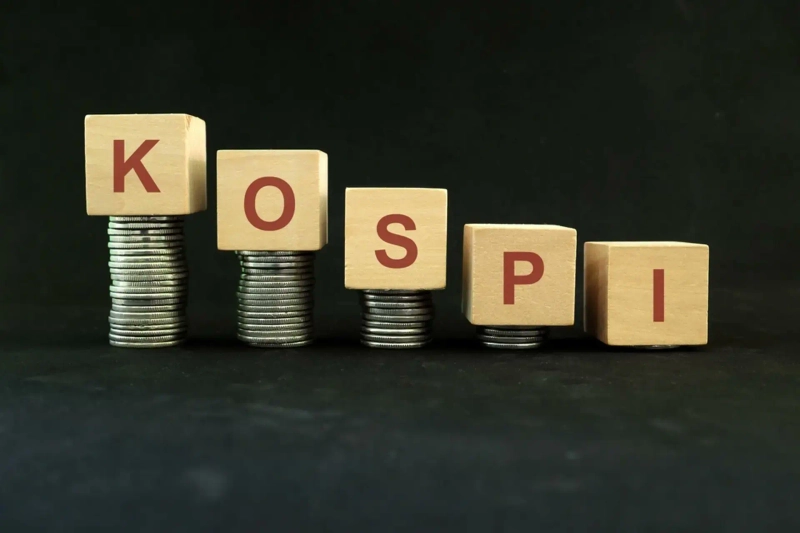
As the KOSPI tumbled on the shock of the U.S.-Iran war, retail investors stepped in with record ‘buying,’ while foreigners countered with ‘selling,’ dumping more than KRW 40 trillion. Still, that was not enough to stem foreign outflows. However, as foreigners have turned back to net buying since April, the brokerage industry is saying the KOSPI has moved close to a historic low zone.
According to the Korea Exchange and Nextrade on the 5th, from Feb. 28 when the war began through the 4th, retail investors net bought KRW 34.6 trillion in the KOSPI market (combined total of the Korea Exchange and Nextrade). Foreigners net sold KRW 40.2 trillion. On a monthly basis, both retail net buying and foreign net selling set new all-time highs, following February.
Over the five weeks in which war risk intensified, the KOSPI plunged 13.9%. The decline stood out even compared with the Nasdaq in the United States (-3.5%), a belligerent in the war, Japan’s Nikkei 225 (-9.7%), and Taiwan’s Taiex (-8.0%), whose industrial structure is similar. With the KOSPI having risen sharply, the pullback was also large.
Retail investors focused their buying on semiconductor names. From Feb. 28 to March 3, domestic investors bought KRW 8.4251 trillion worth of SK hynix. But the stock fell 17.4% over the same period. Samsung Electronics also slid 14% despite purchases totaling KRW 2.5194 trillion.
Foreigners net sold KRW 18.6478 trillion of Samsung Electronics and KRW 9.6933 trillion of SK hynix. Given that the two stocks rose 125.4% and 274.4%, respectively, last year alone, foreigners are seen as having taken profits as market volatility increased.
A surge in the exchange rate also fueled foreign selling sentiment. On the 31st of last month, the dollar-won rate hit KRW 1,530.1, the highest level in 17 years since the financial crisis.
Foreigners have turned back to net buying since April. On the 3rd, foreigners net bought KRW 993.6 billion in the KOSPI market on a combined Korea Exchange and Nextrade basis, switching back to buying after 12 trading sessions. Cumulative net buying in April has now reached KRW 90.3 billion.
According to the brokerage industry, the KOSPI’s 12-month forward price-to-earnings ratio (PER) has fallen to the bottom 1% level since 2006, suggesting it is nearing a historic low zone.
Lee Jae-won, an analyst at Yuanta Securities, said, “Over the past 20 years, there was only one case in which foreigners shifted to long-term net selling in the ‘deep value’ zone where the PER fell into the bottom 5% or lower, and in most cases they turned to net buying,” adding, “The current KOSPI 12-month forward PER is close to a historic low-end zone at the bottom 1% level since 2006.”
He added, “On the policy front, an environment is taking shape that could encourage foreign inflows, including the introduction of Repatriation Incentive Accounts (RIA) and inclusion in the World Government Bond Index (WGBI).”
In a report on the 3rd, JPMorgan assessed that “In March, the Korean market posted Asia’s largest decline as an overbought unwind after the February surge, Middle East risks, and large-scale foreign selling overlapped, but earnings per share (EPS) continue to be revised higher and the PER fell to 6.6x, putting valuations at historic lows.”
Park Subin, Hankyung.com reporter waterbean@hankyung.com

Korea Economic Daily
hankyung@bloomingbit.ioThe Korea Economic Daily Global is a digital media where latest news on Korean companies, industries, and financial markets.