"Korea is our top priority—we will supply it first"… Gulf states’ 6-country 'surprise declaration'
Summary
- The six GCC ambassadors to South Korea named the country a top priority partner and said they would give it priority supply of energy, including crude oil.
- South Korea is one of the largest customers for Middle Eastern crude and LNG, and the move is also seen as intended to pre-emptively discourage Seoul from diversifying energy sources.
- South Korean refiners’ crude upgrading facilities are a key part of the global supply chain, serving as a base that converts heavy crude into higher value-added products.
Forecast Trend Report by Period


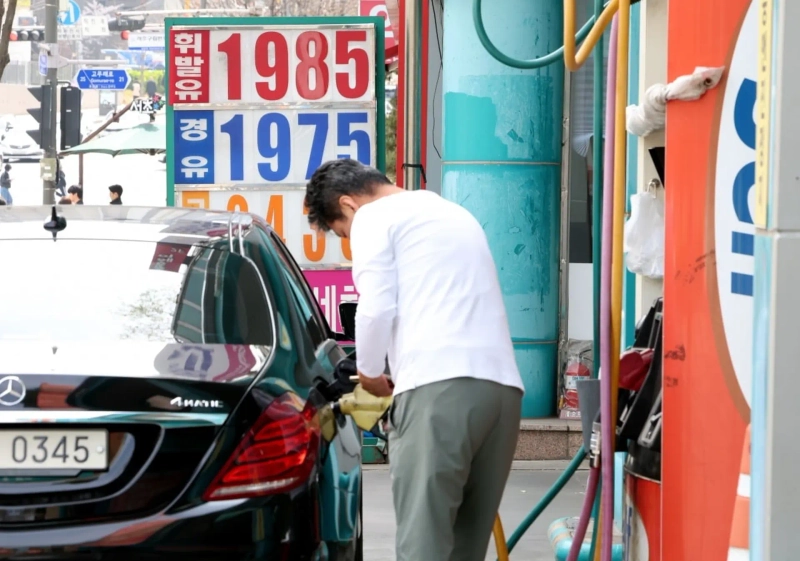
Ambassadors of the six Gulf Cooperation Council (GCC) countries to South Korea pledged to give South Korea priority supply of energy, including crude oil, in a meeting with Deputy Prime Minister Koo Yun-cheol, who also serves as minister of the Ministry of Economy and Finance.
According to the ministry on the 5th, Koo met on the 3rd with the ambassadors of the six GCC countries— the United Arab Emirates (UAE), Saudi Arabia, Qatar, Kuwait, Oman and Bahrain—at the UAE ambassador’s residence in Seoul to discuss future economic cooperation. At the meeting, the ambassadors said South Korea is their “top priority partner” and that they would “stay in close communication with the South Korean government to ensure stable energy supplies.” They added that “the more a crisis intensifies, the more important an unwavering partnership becomes.”
The remarks are seen as a response to Koo’s request for uninterrupted supplies of key resources—such as crude oil, naphtha and urea—warning that “if the Middle East war drags on, the negative impact on the South Korean economy could grow.”
Behind the explicit designation of South Korea as a “priority supply destination” is the fact that it is one of the Middle East’s largest crude customers. Of the 907.24 million barrels of crude South Korea imported last year, 69.1% came from the Middle East. Saudi Arabia is its largest crude supplier, while Qatar is a key supplier of liquefied natural gas (LNG). Observers also say the GCC aims to pre-emptively discourage South Korea from diversifying its energy sourcing to hedge Middle East risks.
Analysts also point to the role of South Korean refiners’ heavily invested “crude upgrading facilities” as a core link in the global energy supply chain—another factor behind the priority-supply pledge. South Korea’s facilities have become a global supply base that converts Middle Eastern heavy sour crude, which contains more residue and sulfur, into higher value-added products. In 2025, Australia depends on South Korea for 25% of its imported petroleum products, and the United States sources 8% of its petroleum product imports from South Korea. In particular, 68.6% of US jet fuel imports were from South Korea.
If South Korean refiners use the latest developments as a catalyst to retool facilities for lighter crudes such as North Sea Brent and US West Texas Intermediate (WTI), the Middle East’s grip on the crude market could weaken. Analysts say the same calculation underpins GCC countries’ efforts to shore up supply stability for South Korea.
By Kim Ik-hwan lovepen@hankyung.com

Korea Economic Daily
hankyung@bloomingbit.ioThe Korea Economic Daily Global is a digital media where latest news on Korean companies, industries, and financial markets.