Digital Asset Act emerges as a variable in Naver–Dunamu ‘big deal’
Summary
- It said uncertainty has grown over Naver Financial and Dunamu’s big deal due to delays in legislating the Framework Act on Digital Assets and the possibility of equity restrictions on virtual-asset exchanges.
- It noted that as financial authorities review a 15–20% cap on individual controlling shareholders and a low-30% cap for approved corporate shareholders, this could conflict with Naver Financial’s plan to make Dunamu a 100% wholly owned subsidiary.
- It said Dunamu added licensing and approval risks to key investor considerations in its revised disclosure, including the Fair Trade Commission’s business combination review, approval for a change of controlling shareholder, and acceptance of a report on changes to a virtual-asset service provider.
Forecast Trend Report by Period


If exchange controlling shareholders are capped at 20%
The 100% acquisition deal structure must be reworked
With legislation on the Framework Act on Digital Assets delayed, Naver Financial and Dunamu’s ‘big deal’ has run into snags. That is because if rules restricting stakes in virtual-asset exchanges are incorporated into the bill, the transaction structure between the two companies will likely need to be reworked.
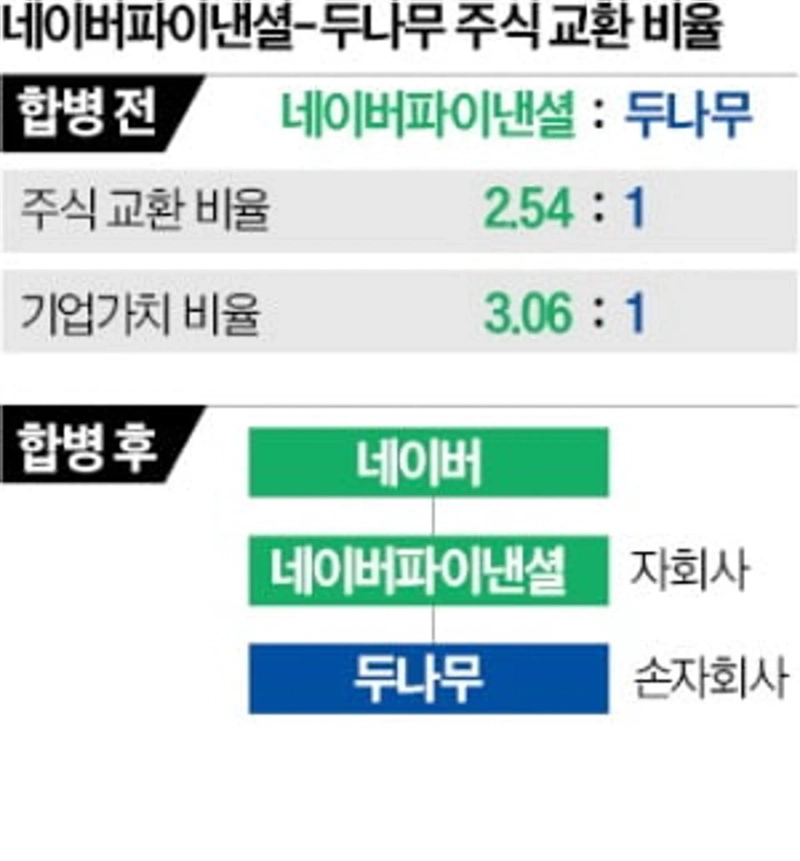
According to the industry on the 5th, Naver filed a revised disclosure on the 30th of last month, postponing the shareholder meeting schedule for Naver Financial and Dunamu from May 22 to August 18, and pushing back the deal closing date from June 30 to September 30. The company said the adjustments reflected the approval process and the status of related regulatory revisions.
The crux of the transaction is for Naver Financial to bring Dunamu under its umbrella as a 100% subsidiary. As dispersion of ownership of virtual-asset exchanges—namely, caps on controlling shareholders’ stakes—has emerged as a key issue in discussions on the Framework Act on Digital Assets, assessments say uncertainty over whether the deal will go through has increased.
Financial regulators are reportedly giving serious consideration to limiting the equity stake of individual controlling shareholders in virtual-asset exchanges to 15–20%. Under the option, only approved corporate shareholders would be allowed up to the low-30% range. If legislation hardens along those lines, it could clash with a structure in which Naver Financial holds 100% of Dunamu.
To complete the deal, multiple procedures are required, including a business combination review by the Fair Trade Commission, approval for a change of controlling shareholder under the Credit Information Act, and acceptance of a report on changes to a virtual-asset service provider under the Act on Reporting and Using Specified Financial Transaction Information. Against this backdrop, Dunamu recently added these licensing and approval risks to the list of key considerations for investors in its revised disclosure. Oh Kyung-seok, CEO of Dunamu, said at last month’s shareholder meeting, “We are proceeding in close discussions (with Naver),” adding, “We are not discussing structural changes at this stage and are moving forward with the existing plan.”
By Kang Kyung-joo / Cho Mi-hyun, qurasoha@hankyung.com

Korea Economic Daily
hankyung@bloomingbit.ioThe Korea Economic Daily Global is a digital media where latest news on Korean companies, industries, and financial markets.