JPMorgan CEO Dimon Says US-Iran War Could Fuel Inflation, Higher Rates
Summary
- CEO Jamie Dimon said a US-Iran war could trigger inflation and interest-rate increases, potentially weighing on financial markets.
- Dimon said a surge in oil prices and commodity prices could lead to prolonged inflation, rate hikes, and a decline in asset values.
- Dimon said whether geopolitical risks are resolved will determine this year's market direction, adding that the most important issue for investors now is an end to the war.
Forecast Trend Report by Period


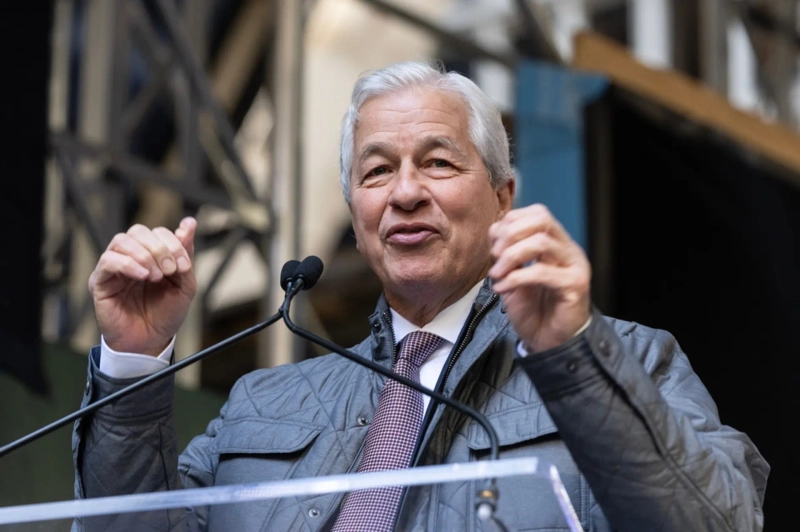
Jamie Dimon, chief executive officer of JPMorgan Chase & Co., said a war between the US and Iran could fuel inflation and push interest rates higher, weighing on financial markets.
In his annual letter to shareholders released on April 6, Dimon wrote that there is a high risk oil and commodity prices will surge further in the coming months. That could set off a chain reaction of persistent inflation and higher long-term interest rates.
He likened the risk to "a skunk at the garden party." Even a moderate rise in inflation could lead to higher rates and lower asset values, he wrote.
Dimon said the US economy is not as vulnerable as it was during the first and second oil shocks in 1974 and 1982. Still, he said conflicts among major powers, including the Russia-Ukraine war and a US-Iran clash, are urgent and could pose a far greater threat than financial indicators alone suggest.
He also wrote that the Iranian government has for years been involved in terrorism that killed thousands of people, including Americans and Iranians. That threat must be addressed appropriately, he added.
Dimon criticized Europe, saying it has failed to complete economic integration and is not responding adequately at a pivotal moment of instability in the Middle East. Energy-dependent regions such as Europe are already directly exposed to the fallout from conflict in the region. The complexity of global supply chains in industries including shipbuilding, food and agriculture would also become apparent there first, he wrote.
Whether geopolitical risks are resolved will determine the direction of markets this year, according to Dimon. The most important issue for investors now is an end to the war, though that will take time and remains uncertain.
On private credit, which has recently come under scrutiny, Dimon said it is unlikely to create systemic risk. The US private credit market totals $1.8 trillion, smaller than the $13 trillion investment-grade bond market and the $13 trillion residential mortgage market.
Still, private credit tends to lack transparency and often relies on less stringent valuation standards, meaning investors could sell off assets simply on fears that market conditions are deteriorating.
Dimon cited major tax cuts and deregulation under President Donald Trump's administration, the Federal Reserve's bond purchases and national investment in AI infrastructure as the main drivers of the US economy this year.
On AI, he said the technology will create new jobs while eliminating some others. JPMorgan plans to draw up internal management measures to reassign employees affected by AI.
Lee Mi-a, Hankyung.com reporter mia@hankyung.com

Korea Economic Daily
hankyung@bloomingbit.ioThe Korea Economic Daily Global is a digital media where latest news on Korean companies, industries, and financial markets.