Samsung, LG Seen on Course for Record Results Despite Iran War Shock
Summary
- EpicAI said Samsung is poised for record earnings this year as it enters a memory supercycle, with all brokerages maintaining buy ratings.
- EpicAI said LG’s revenue and operating profit are projected to reach record highs this year, and that physical AI, robots, and AI data-center cooling solutions could create new revenue streams.
- EpicAI and LG said risks including the war, the strong dollar, rising raw-material prices, and a surge in memory prices could weigh on second-half earnings and profitability.
Forecast Trend Report by Period


Samsung operating profit surges to $41.4 billion; LG returns to the black
Companies absorb soaring freight costs and a won exchange rate above 1,500 per dollar
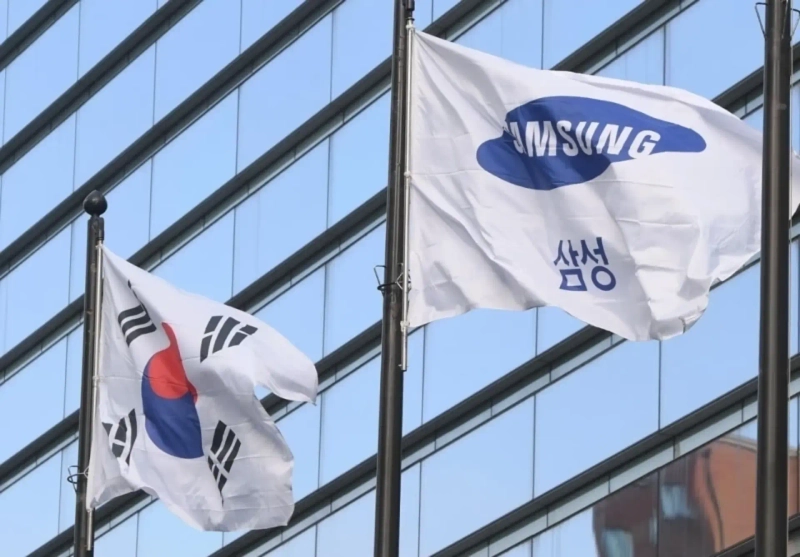
Samsung Electronics Co. and LG Electronics Inc. both posted strong first-quarter earnings, bolstering the view that they have weathered a double blow from war-driven logistics costs and the won’s move past 1,500 per dollar. Market expectations for record annual results at both companies are building on a memory-chip supercycle and structural growth in home appliances and vehicle components.
Samsung posts $41.4 billion first-quarter operating profit as sales top $96.4 billion
Samsung said it expects first-quarter consolidated revenue of 133 trillion won ($96.4 billion) and operating profit of 57.2 trillion won ($41.4 billion), according to preliminary results released Thursday. Revenue jumped 68.06% from a year earlier and operating profit surged 755%. Quarterly sales topped 100 trillion won for the first time, and operating profit in a single quarter exceeded the company’s full-year 2024 total of 43.6011 trillion won ($31.6 billion).
The earnings surge was driven by a memory-chip supercycle. Operating profit at the Device Solutions division, which includes semiconductors, likely exceeded 50 trillion won ($36.2 billion). Average selling prices for DRAM rose 61% to 87% from the previous quarter, while NAND prices increased 49% to 79%.
Expectations are also rising for high-bandwidth memory. Samsung’s next-generation HBM4 achieved a transfer speed of 11.7 gigabits per second, a performance level seen placing it among industry leaders. Some forecasts put this year’s HBM revenue at 27.5 trillion won ($19.9 billion), more than triple last year’s level.
Non-memory chips presented a more mixed picture. Foundry and System LSI likely remained loss-making, though the shortfall is widely estimated at around 1 trillion won ($724.6 million). The Mobile eXperience division may have generated operating profit of 2 trillion won to 4 trillion won ($1.45 billion to $2.90 billion), supported by smartphone shipments of about 59 million units, cost cuts and higher prices for flagship models.
LG returns to profit as operating income rises 32.9%
LG said first-quarter revenue totaled 23.733 trillion won ($17.2 billion) and operating profit came to 1.6736 trillion won ($1.21 billion). Revenue rose 4.4% from a year earlier to a record for any first quarter. Operating profit climbed 32.9% and the company swung back to profit from an operating loss of 109 billion won ($79.0 million) in the previous quarter.
The Home Appliance Solution business continued to grow by targeting both premium and volume segments while expanding online sales and appliance subscriptions, the company said. Higher-margin businesses including platforms, subscriptions and online sales also supported earnings.
The Vehicle Solution business continued stable growth on the back of its order backlog. Profitability improved from a year earlier as LG pushed ahead with cost-structure improvements. The weaker won also had a partly positive effect because the division has a high share of overseas customers.
The Media Entertainment Solution business, which includes TVs, remained in the red for a third straight quarter, though signs of improvement have emerged. LG said profitability improved sharply from a year earlier through operating-efficiency measures and returned to the black from the previous quarter.
In the Eco Solution business, revenue and operating profit fell from a year earlier because of market uncertainty related to the Middle East war. LG said it plans to target high-potential markets such as heat pumps while expanding its lineup to include liquid cooling, with a focus on capturing opportunities in AI data-center cooling solutions.
Oil spike and helium supply fears test manufacturers, but first quarter holds up
The war involving the U.S., Israel and Iran is rattling global supply chains. On April 6, West Texas Intermediate settled at $112.41 a barrel, while Brent crude, the global benchmark, closed at $109.77. In March, when the conflict intensified, Brent surged 63% and WTI climbed 51%, the biggest monthly gains since crude futures began trading in 1988. That topped the 46% rise recorded during Iraq’s invasion of Kuwait in 1990. Pressure on logistics costs has also increased because of the risk of disruption in the Strait of Hormuz.
The semiconductor industry’s supercycle has also been clouded by concerns over helium supply, a critical input in chip manufacturing. The risk stems from the possibility of production disruptions in Qatar, which accounts for about one-third of global helium supply. So far, however, no direct impact on semiconductor or appliance production has been identified. The Korea Semiconductor Industry Association said companies had secured inventories in advance and no direct disruption to production processes had occurred.
Higher tariffs under the Trump administration were another burden. Still, LG’s preemptive response to U.S. tariff policy, including raising production in the U.S. and Latin America, is seen as having supported the latest earnings. LG said it will continue to take flexible, proactive steps to minimize the impact on its business as geopolitical risks including the Middle East war lift raw-material prices and freight costs.
The exchange rate remains the biggest variable. The won rose past 1,500 per dollar for the first time in early March as the U.S.-Iran war intensified. For Samsung, which derives 90% of its sales from exports, a 5% rise in the dollar exchange rate increases profit before tax by 435.1 billion won ($315.2 million). LG’s vehicle-components business also benefited from the stronger dollar because of its high exposure to overseas customers.
Even so, the companies still face meaningful risks. Samsung plans to invest $37 billion by 2030 to build out its U.S. semiconductor manufacturing base, meaning the burden of that spending rises in won terms as the exchange rate climbs. LG is also expanding production and logistics lines in the U.S. Another risk is that sharply higher memory prices could begin to pressure margins in smartphones and home appliances from the second quarter.
Second half will be the real test
An analysis of brokerage reports published over the past month using AI-based investment platform EpicAI showed Samsung’s 2025 revenue forecast at 555.154 trillion won ($402.1 billion) and operating profit at 227.3674 trillion won ($164.7 billion). All brokerages maintained buy ratings, and target prices ranged from 230,000 won to 360,000 won.
EpicAI said Samsung is poised for record earnings this year as it enters a memory supercycle. It added that investors should keep monitoring risks including margin pressure in mobile and home appliances from surging memory prices, geopolitical uncertainty and volatility in AI demand.
For LG, EpicAI projected annual revenue of 92.2038 trillion won ($66.8 billion) and operating profit of 3.4838 trillion won ($2.52 billion), both record highs. The highest target price was 170,000 won. EpicAI said physical AI and robotics would serve as mid- to long-term growth drivers, while AI data-center cooling solutions and the Cloi home robot could open up new revenue streams.
Ryu Jae-cheol, LG’s chief executive officer, recently told shareholders at a general meeting that this year’s business environment would be challenging because of concerns over a prolonged U.S.-Iran war and rising raw-material prices. If the conflict drags on, unstable energy supplies and a global economic slowdown could weigh on second-half earnings. Investors are now watching whether Samsung and LG can carry their first-quarter momentum through the rest of the year.
Hong Min-seong, Hankyung.com reporter mshong@hankyung.com

Korea Economic Daily
hankyung@bloomingbit.ioThe Korea Economic Daily Global is a digital media where latest news on Korean companies, industries, and financial markets.