Israel’s Unilateral Strikes Expose Limits of US Leverage Even After Ceasefire
Summary
- Israel’s attacks on Hezbollah and the continued closure of the Strait of Hormuz are fueling assessments that the US cannot control Israel.
- Experts said the alliance with Israel has become the biggest risk to US national interests, exposing the limits of Washington’s ability to manage its alliances.
- Israel is wielding powerful influence over US politics and finance through AIPAC’s political funding, Jewish capital on Wall Street, and support from evangelical groups.
Forecast Trend Report by Period


Netanyahu’s Unilateral Airstrikes
No Penalty Even When Israel Acts Without Consent
“US Has Lost Control of Israel”
Hundreds of Millions of Dollars in Lobbying Shape Washington
Many of Wall Street’s Biggest Players Are Jewish
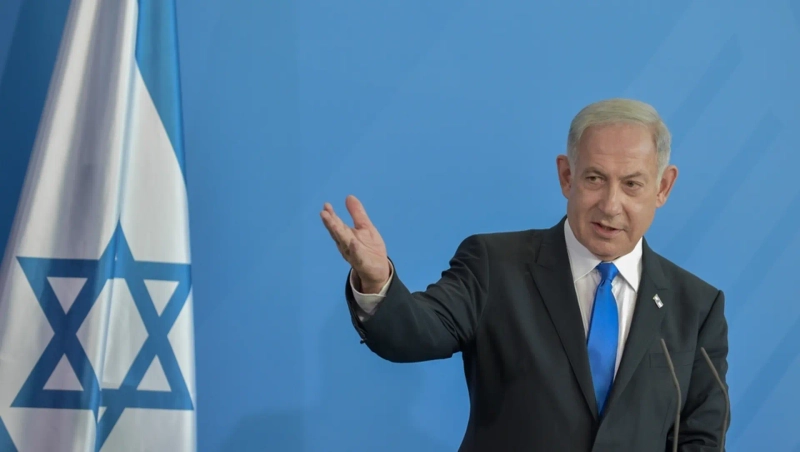
Israel has emerged as a wildcard in the US-Iran relationship despite their agreement on a two-week ceasefire. Israel’s attacks on Hezbollah, the Iran-backed militant group, have prolonged the closure of the Strait of Hormuz and fueled criticism that Washington can no longer control its ally. The US was drawn into a war triggered by Israel and now risks remaining bound by that same alliance. Broad pro-Israel religious constituencies and lobbying groups in the US have helped sustain that dynamic.
Netanyahu Over Trump
Criticism that President Donald Trump has been pulled along by Israeli Prime Minister Benjamin Netanyahu surfaced from the early days of the conflict. Joe Kent, then head of the National Counterterrorism Center, resigned early last month after claiming Trump had been misled into war by Israel and powerful pro-Israel lobbying groups in the US.
Experts say the episode exposed the limits of Washington’s ability to manage its alliances. Marion Messmer, director of the International Security Program at Chatham House, said Israel’s airstrikes on Lebanon could keep the US entangled in the conflict even as it seeks an exit strategy. The alliance with Israel has now become the biggest threat to US national interests in the Middle East, she added.
This is not the first time Israel has acted without US consent. But Washington has imposed no major penalties, reinforcing Israel’s confidence each time. A notable example came in 1981, when Israel used US-supplied fighter jets to bomb Iraq’s Osirak nuclear reactor. After regional opinion soured over suspicions of US collusion, the Reagan administration suspended a planned delivery of F-16s. It later restored relations after acknowledging Israel’s strategic importance.
Deep Reach Into US Politics and Finance
Support for Israel has long been a bipartisan consensus in the US. The close relationship dates to 1948, when Washington recognized Israel 11 minutes after it declared statehood. Since then, Israel has served as the US’s strongest military and political partner in the Middle East.
Pro-Israel forces have built significant influence across US politics, finance and religion. The American Israel Public Affairs Committee, or AIPAC, is a leading example. The Economist wrote that after a large number of politicians critical of Israel were elected in 2018, AIPAC began taking a much more active role in electoral politics. It spent $100 million on political funding in the 2022 and 2024 elections, up sharply from $150,000 spent between 2012 and 2020.
White evangelicals, a core part of Trump’s support base, are also strongly pro-Israel. In a Pew Research Center survey of 9,720 US adults during the 2024 presidential election, 81% of white evangelical Protestants supported Trump. Many back Israel for religious reasons. Another factor is the large number of Jewish figures among the biggest players in US capital markets. Major Wall Street firms including Goldman Sachs, Citigroup, Morgan Stanley and Moody’s were founded by Jews or remain influenced by Jewish leadership.
Ahn Nam-sik, a professor at the Korea National Diplomatic Academy, said campaign funding and Wall Street capital both come from Jewish circles. Israel’s intelligence apparatus, represented by agencies such as Mossad and Shin Bet, is also a major US asset.
Han Myung-hyun, Hankyung.com reporter, wise@hankyung.com

Korea Economic Daily
hankyung@bloomingbit.ioThe Korea Economic Daily Global is a digital media where latest news on Korean companies, industries, and financial markets.