Kospi Seen Retesting 6,000 as Ceasefire Holds; NH Sees 5,400-6,200 Range
Summary
- Brokerages said the Kospi is set to attempt a return to the 6,000 level this week while moving in a 5,400-6,200 range.
- Experts said investors should focus on stocks and sectors with strong visibility on first-quarter earnings improvement even amid volatility tied to war-ending negotiations.
- Analysts said the Kospi is in a deep-value zone and are maintaining an overweight strategy on exporters and growth sectors including semiconductors, autos, shipbuilding, batteries, internet, pharmaceuticals and biotech.
Forecast Trend Report by Period


NH Investment & Securities Sees Kospi at 5,400 to 6,200 This Week
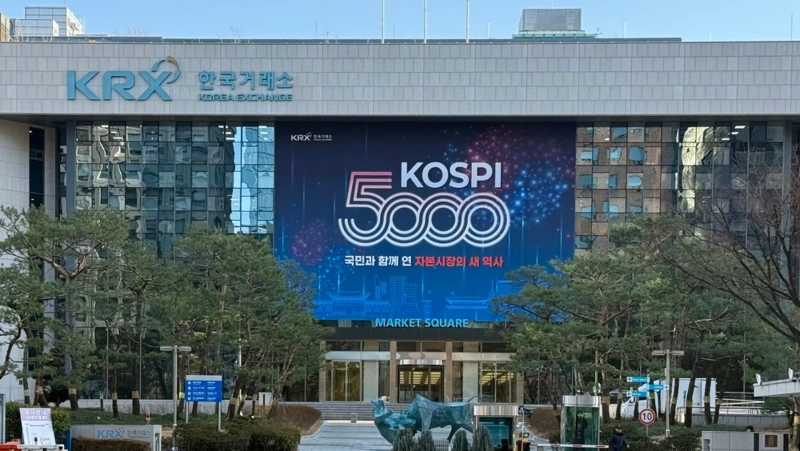
Brokerages expect the Kospi to make another run at 6,000 this week as markets swing with developments in negotiations to end the US-Iran war. The first round of talks ended without a deal, but South Korean stocks may still extend gains on hopes the conflict will move toward a settlement. With first-quarter earnings season under way, strategists are urging investors to focus on companies and sectors with clearer profit momentum.
NH Investment & Securities said on April 12 that it expects the Kospi to trade in a 5,400 to 6,200 range this week.
The US and Iran agreed to a two-week ceasefire on April 8, averting a worst-case scenario. But their first marathon round of negotiations, which began on April 11, failed to produce an agreement. That leaves room for further volatility in equities this week, depending on the course of ceasefire talks and swings in global oil prices.
"The direction of global equities will depend on how the negotiations unfold," Jeong Hae-chang, an analyst at Daishin Securities, said. "The broader trajectory toward ending the war remains intact, but noise during the negotiation process is unavoidable."
Na Jeong-hwan, an analyst at NH Investment & Securities, said the chances of a near-term deal are limited because Iran's 10-point proposal includes permission for uranium enrichment. Even so, he expects the market's focus to shift gradually from the war to corporate earnings.
That rotation could help offset some of the uncertainty hanging over global equities as South Korean companies continue to report first-quarter results, after Samsung Electronics started the season last week with an earnings surprise.
As earnings season approaches, forward earnings per share for the Kospi has been revised up to 811.5 points, putting the forward price-to-earnings ratio at just 7.12 times at the 5,800 level, Jeong said. He called that a deep-value zone, even below the 7.4 to 7.6 times trough in the Kospi's forward P/E since the 2008 financial crisis.
He recommended keeping a strategic focus on the path toward a ceasefire while responding tactically to negotiation-related noise and short-term swings in sentiment. He favors exporters including semiconductors, autos and shipbuilders, along with battery makers, internet companies, and pharmaceutical and biotech shares.
Yu Myeong-gan, an analyst at Mirae Asset Securities, said consensus forecasts for the combined operating profit of 349 South Korean companies this year stand at 722 trillion won ($523 billion), up 153% from a year earlier. The sectors expected to post the fastest operating profit growth are batteries, semiconductors, energy, displays and chemicals. The biggest contributors to total operating profit are projected to be semiconductors, energy, shipbuilding, banks and securities firms.
One event to watch this week is the confirmation hearing on April 16 for Kevin Warsh, the nominee to chair the Federal Reserve. The nomination must first clear a hearing before the US Senate Banking Committee and then a vote by the full Senate. Investors are also watching the release of US March producer price index data on April 14 and earnings from US financial firms including Goldman Sachs and JPMorgan, both of which could affect South Korean stocks.
Meanwhile, US Vice President JD Vance, who led the American delegation in ceasefire talks with Iran, told reporters at Islamabad's Serena Hotel at about 6:30 a.m. Pakistan time on April 12 that the two sides had failed to reach an agreement and that he would return to the US without a deal. Vance said the US made its red lines very clear during 21 hours of talks with Iran starting the previous day, but Tehran did not accept Washington's demands.
Oh Jung-min, Hankyung.com reporter blooming@hankyung.com

Korea Economic Daily
hankyung@bloomingbit.ioThe Korea Economic Daily Global is a digital media where latest news on Korean companies, industries, and financial markets.