Iran Says It Will Attack Persian Gulf Ports if Its Shipping Hubs Are Threatened
Summary
- The US declaration of a blockade of the Strait of Hormuz and Iran’s warning of attacks on Persian Gulf ports has heightened concerns over energy supplies.
- After Trump’s announcement, Brent crude and European natural gas futures surged by as much as 9.1% and 18%, respectively.
- Bloomberg Economics said the blockade may never be carried out or sustained, given the risks and costs of a prolonged blockade and possible pressure from stakeholders including China.
Forecast Trend Report by Period


“Warship access would violate the ceasefire; non-hostile vessels may pass if they follow the rules”
“A US blockade of the strait would carry significant costs and risks”
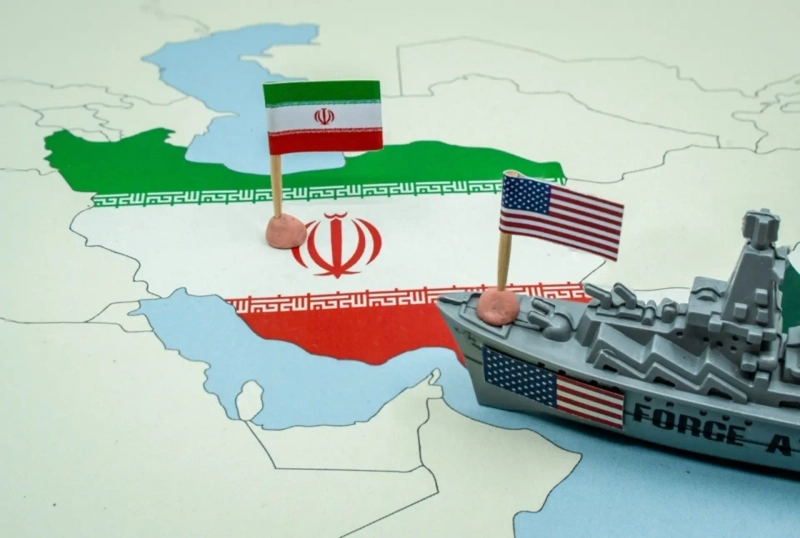
Iran said it would target all ports along the Persian Gulf coast if its own maritime shipping hubs come under threat, after the US announced a blockade of the Strait of Hormuz.
No port in the Persian Gulf or the Gulf of Oman would be safe if Iranian ports are attacked, Iran’s military said, according to state-run Press TV on April 13.
Ebrahim Zolfaghari, spokesman for the Khatam al-Anbiya Central Headquarters, said in a statement that Iran would “firmly continue safeguarding maritime security in Iranian waters.” Ships linked to the enemy have no right to pass through the Strait of Hormuz and will continue to be denied passage, he added. Another senior Iranian military official said vessels not linked to the enemy would still be allowed to transit the strait if they comply with rules set by the armed forces of the Islamic Republic.
Iran’s Revolutionary Guard also said any warship seeking to approach the strait “under any pretext” would be treated as a violation of the ceasefire.
The US said it would block all maritime traffic entering and leaving Iran’s main ports starting at 10 a.m. on April 13, in response to the collapse of talks with Tehran. Washington also threatened to resume military strikes if Iran resists. If that pledge is carried out, Iran could renew attacks on ports in Middle Eastern countries. Tensions between the US and China could also rise because Beijing continues to import Iranian oil.
Oil and natural gas prices surged after President Donald Trump’s announcement. Brent crude rose as much as 9.1% to nearly $104 a barrel, while European natural gas futures jumped as much as 18%.
A US blockade that cuts off Iranian shipping would strike at the heart of the country’s oil revenue. Iran has maintained oil exports at prewar levels and earned millions of dollars in additional income from the conflict-driven rise in crude prices.
Trump’s blockade could also have a major impact on China, which buys most of Iran’s oil exports and is one of Tehran’s main trading partners, Bloomberg reported.
The US and Israel have halted bombing Iran, and Iran has also stopped firing missiles at Gulf states. Israel, however, continues to bombard Lebanon. On April 13, the Israeli military said it had surrounded Bint Jbeil, one of Hezbollah’s strongholds about 4 kilometers from the Israeli border, and would begin an assault.
Israel’s offensive in Lebanon, which has killed more than 1,700 people, was one of the main sticking points as the US and Iran worked to coordinate ceasefire terms, according to Lebanon’s Health Ministry. Talks between the Lebanese government and Israel are scheduled for this week. Beirut has long pledged to disarm Hezbollah but has made little progress.
Developments in the Strait of Hormuz and Lebanon risk prolonging and widening a war that has already killed thousands of people and disrupted global energy supplies.
The two-week ceasefire is due to expire on April 22 unless it collapses earlier because of the US blockade of Hormuz.
Neither side has confirmed a second round of diplomatic talks. Iranian Foreign Ministry spokesman Esmail Baghaei said the two countries had reached agreement on several issues, but “differences remain on two or three core issues.” He later told state television that no one should have expected a deal from a single round of talks. “Diplomacy never ends,” he said.
Bloomberg said the US has the ability to enforce a blockade of the Strait of Hormuz, but doing so would carry substantial costs and risks. US naval vessels would be exposed more directly to threats from Iranian drones and missiles, and any strike on a ship could trigger a dangerous escalation. The report added that Yemen’s Houthi rebels, which are aligned with Iran, could also try to disrupt oil and gas flows in the Red Sea.
Bloomberg Economics analysts said Trump may ultimately choose not to carry out the blockade or sustain it, given the risks and costs of a prolonged operation and the possibility of pressure from other stakeholders such as China. They added that China could also use its leverage over key minerals, including rare earths, to influence Trump.
Kim Jung-a, Hankyung.com guest reporter, kja@hankyung.com

Korea Economic Daily
hankyung@bloomingbit.ioThe Korea Economic Daily Global is a digital media where latest news on Korean companies, industries, and financial markets.