Kospi Poised to Rebound as Wall Street Gains Despite US Move on Hormuz
Summary
- Despite the US move to block the Strait of Hormuz, all three major New York indexes closed higher, underscoring how markets have grown desensitized to geopolitical risk.
- Net buying of 750 billion won by retail investors, the S&P 500's recovery of its losses, and double-digit gains in Oracle and SanDisk showed continued appetite for risk assets.
- Han Ji-young said the Kospi could retake 5,900, supported by expectations for a second round of follow-up talks, a gain of more than 3.2% in Kospi night futures, and a won-dollar exchange rate in the 1,470 range.
Forecast Trend Report by Period


US moves to block the Strait of Hormuz
All three major New York indexes finish higher
Markets grow numb to breakdowns and resumptions in talks
The US, which had agreed to a two-week ceasefire with Iran, moved to block the Strait of Hormuz on June 13. The three major US stock indexes opened lower on concerns over escalating geopolitical risks. They ended the session higher, however, as optimism spread that the two sides would eventually reach an agreement. South Korean stocks, which edged lower a day earlier, are set to open higher on June 14.
The Kospi fell 0.86% from the previous session to close at 5,808.62 on June 13. The index dropped to as low as 5,730.23 early in the session after the first ceasefire talks between the US and Iran over the weekend collapsed. Retail investors were net buyers of 750 billion won, trimming the loss. The Kosdaq, by contrast, rose 0.57% to 1,099.84.
Wall Street also finished higher overnight. The Dow Jones Industrial Average rose 0.63% to 48,218.25, the S&P 500 gained 1.02% to 6,886.24, and the Nasdaq Composite advanced 1.23% to 23,183.74. The S&P 500 in particular erased all losses linked to the outbreak of war with Iran and moved close to the record high it set earlier this year. Among individual stocks, Oracle jumped 12.7% and SanDisk climbed 11.8%.
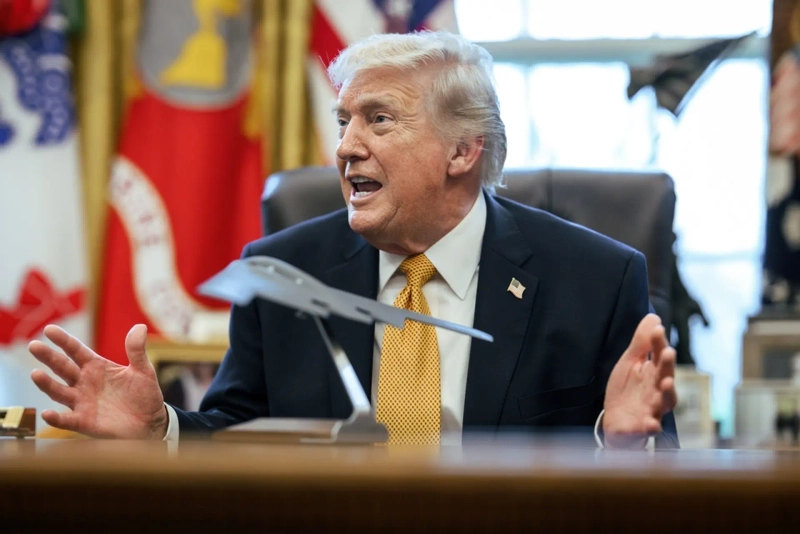
Investors say swings in global equities are narrowing as President Donald Trump's so-called TACO pattern — short for "Trump Always Chickens Out" — repeats itself. After talks held in Pakistan on June 11 and June 12 broke down, the US deployed more than 15 warships to the Strait of Hormuz on June 13. The move was intended to block Iran's oil exports and prevent it from collecting transit fees through the waterway, choking off funding flows.
Even so, markets are betting the two countries will eventually reach a deal. A prolonged war would create political and economic burdens for both sides. Trump said on June 13, "I heard from Iran today. They strongly want a deal," signaling that channels for ceasefire talks remain open.
Mark Luschini, chief investment strategist at Janney Montgomery Scott, said markets are becoming increasingly desensitized as negotiations repeatedly break down and restart. Reports have also circulated that the US proposed specific terms to Iran, including a 20-year halt to uranium enrichment and the removal of all highly enriched uranium from the country.
Han Ji-young, an analyst at Kiwoom Securities, said the Kospi could retake 5,900, helped by expectations for a second round of follow-up talks between the US and Iran, a gain of more than 3.2% in Kospi night futures, and a won-dollar exchange rate in the 1,470 range.
Lee Sun-a, Hankyung.com reporter suna@hankyung.com

Korea Economic Daily
hankyung@bloomingbit.ioThe Korea Economic Daily Global is a digital media where latest news on Korean companies, industries, and financial markets.