Summary
- President Trump said the Iran war was nearly over and that something could happen within two days, expressing optimism about a second round of ceasefire talks.
- The US is pushing for a permanent ban on uranium enrichment and seeking a grand bargain, saying Iran would be treated like a normal country economically if it agrees.
- Under US mediation, Israel and Lebanon held a high-level White House meeting for the first time in 33 years, and as ship traffic through the Strait of Hormuz increases, expectations for a ceasefire are rising, though the situation could worsen again depending on Iran's response.
Forecast Trend Report by Period


Second Round of Ceasefire Talks Gains Momentum
Ship Traffic Through Hormuz Also Increases
Vance Says Trump Wants a Grand Bargain
Pressure Mounts for Permanent Ban on Uranium Enrichment
Israel Also Shows Progress on Lebanon Ceasefire
First High-Level White House Meeting in 33 Years
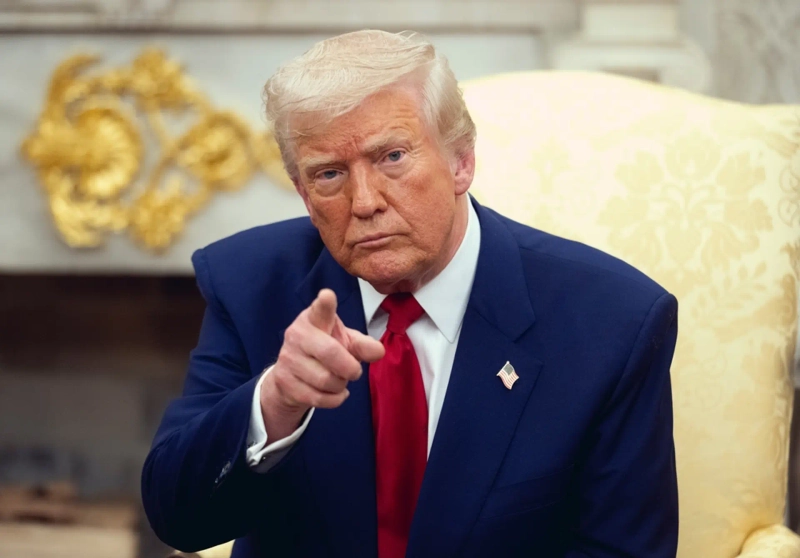
President Donald Trump said the war with Iran is nearly over and voiced optimism that ceasefire negotiations could soon produce positive news. Israeli and Lebanese officials also met at the White House under US mediation. Hopes for a ceasefire have grown as the number of ships passing through the Strait of Hormuz under US military control has increased.
Nearly Over
Trump told Fox News on June 14 that the war with Iran was "almost over." He said several times that, in his view, the conflict was very close to ending. He also said Iran appeared eager to negotiate, while adding that "we're not finished yet."
In an earlier phone interview with the New York Post, Trump said something could happen within the next two days, signaling that a second round of ceasefire talks could begin. He told a reporter in Islamabad that progress was "a little slow" and that the next meeting would be held in "a more central location, maybe Europe."
About 30 minutes later, Trump called back and said, "You should stay there." He added that something could happen within two days and that "it's become more likely that we'll go there." The comments suggested Islamabad could host the second round of talks. Trump also said Pakistan's army chief, Asim Munir, was doing "a very good job."
Questions remain over whether Pakistan will actually host the talks. Prime Minister Shehbaz Sharif began a trip to Saudi Arabia, Qatar and Turkey on June 14 that is scheduled to run through June 18. Trump also told ABC News that the next two days would be "surprising" and said he did not think a ceasefire extension would be necessary.
US Seeks Concessions From Iran
The central question is how much ground the US and Iran have closed between their positions. Vice President JD Vance said at an event hosted by a right-wing youth movement near the University of Georgia campus outside Atlanta on June 14 that Trump "doesn't want a small deal" and wants a "grand bargain." In the New York Post interview, Trump also objected to a reported US proposal to limit Iran's uranium enrichment for 20 years. He said he had always maintained that Iran cannot be allowed to possess nuclear weapons and that he therefore did not favor a 20-year limit, indicating he wants a permanent ban.
Iran is unlikely to agree easily to such a plan, but the demand appears to be part of Trump's pressure campaign.
Vance said Trump's message to Iran was simple: If Tehran is willing to act like a normal country, the US is willing to treat it like one economically. CNN reported that Vance, US Middle East envoy Steve Witkoff and Jared Kushner, Trump's son-in-law, will lead the American delegation in the second round of talks.
Will Attacks on Lebanon Also Stop?
Israel's more flexible stance on a ceasefire and related issues has also added to the positive mood.
Israeli and Lebanese government officials met at the White House on June 14 under US mediation. It was the first high-level meeting between the two countries since 1993, even though they do not have diplomatic relations. Lebanon's government does not directly control Hezbollah, the Iran-backed proxy force, limiting what it can guarantee. Even so, Israel's willingness to engage in ceasefire talks has been taken as a meaningful step.
Iran had previously demanded that Israel halt its attacks on Lebanon as a condition for a ceasefire and a formal end to the war. That has fueled analysis that Israel was brought to the table by Washington's determination to resolve the issue before talks with Iran.
It remains unclear whether Iran will agree to the quick deal Trump is seeking. Bloomberg has reported that Tehran is discussing a temporary halt to oil shipments through the Strait of Hormuz to avoid a direct confrontation with the US. That would also give Iran an incentive to wrap up ceasefire talks as quickly as possible.
Commercial shipping through the Strait of Hormuz also appears to have increased slightly. Still, the situation could worsen again if Iran's Islamic Revolutionary Guard Corps pushes back against US demands.
Sang-eun Lee, Washington correspondent, Hankyung.com, selee@hankyung.com

Korea Economic Daily
hankyung@bloomingbit.ioThe Korea Economic Daily Global is a digital media where latest news on Korean companies, industries, and financial markets.