Sandisk Rallies 517% in Six Months as AI-Agent Boom Drives NAND Demand
Summary
- Sandisk said its shares soared 517% over the past six months and 2,818% over the past year as demand for NAND flash surged amid the boom in AI agents and AI data centers.
- Sandisk said revenue for October-December rose 61% from a year earlier to $3.025 billion, while operating profit nearly quadrupled to $1.133 billion, delivering a super earnings surprise.
- Wall Street firms have been raising their price targets, saying the company could post strong results through at least 2028 and benefit from a strong price upcycle that could lead to a rare extended rally.
Forecast Trend Report by Period


Rising tensions in the Middle East stemming from the war involving the US, Israel and Iran have whipped US and global equities into sharp swings. Even in that backdrop, one stock has kept climbing: Sandisk, the world’s fifth-largest NAND flash maker.
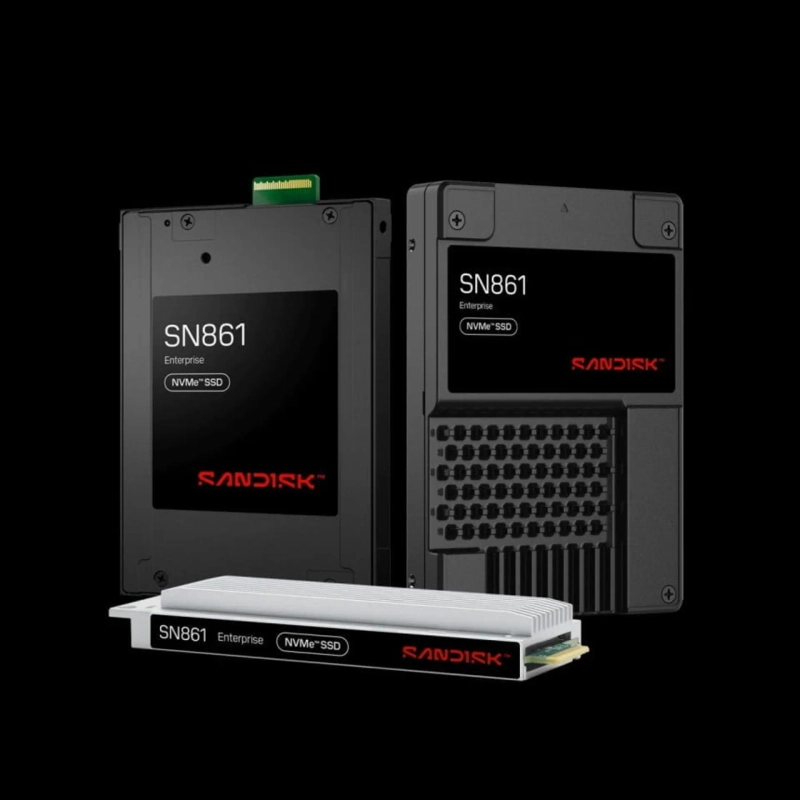
Sandisk shares have soared 517% over the past six months and 2,818% over the past year on the Nasdaq. On April 20, the company was added to the Nasdaq-100 Index, which includes 100 of the exchange’s leading companies in innovative technology and growth potential.
Investor enthusiasm for Sandisk has surged because demand for NAND flash has far outstripped supply amid the AI industry boom.
Unlike DRAM, a market dominated by Samsung Electronics Co., SK Hynix Inc. and Micron Technology Inc., NAND flash had long been viewed as a low-margin business because of broad competition. The boom in AI agents and AI data centers has changed that.
Generative AI-based agents have emerged as one of the industry’s hottest areas. Often described as personal assistants in the palm of your hand, they handle workplace tasks such as drafting emails, writing meeting notes and organizing documents, as well as personal chores including restaurant and hotel bookings. That marks a shift from earlier AI tools centered on simple search and analysis toward systems that interact directly with users.
As leading AI companies including OpenAI, Anthropic and Google expand personalized features for AI agents, the industry’s center of gravity has shifted from training to inference. The focus is increasingly on improving the functions users rely on most and even anticipating their needs.
That shift has brought two challenges into sharper focus: constrained data storage and the need for faster processing. NAND flash, which preserves data even when the power is off and offers large storage capacity, is gaining attention as a way to address both.
Sandisk will report fiscal third-quarter 2026 earnings for the January-March period on April 30. Revenue for October-December rose 61% from a year earlier to $3.025 billion, while operating profit climbed to $1.133 billion, roughly four times the year-earlier level. That compares with operating profit of just $2 million in January-March of last year.
The market expects January-March revenue of $2.93 billion. Chief Executive Officer David Goeckeler projected sales of $4.4 billion to $4.8 billion for the period.
On a March 29 conference call, Goeckeler said demand had become so difficult to gauge that the company raised its forecast for growth in the data-center NAND market this year to 60% from an earlier 20% to 40%.
Nvidia Corp.'s emergence as a new customer is another tailwind. Nvidia plans to equip its next-generation Vera Rubin AI accelerator, set for volume production in the second half of this year, with 1,152 terabytes of solid-state drives, more than 10 times the amount used in Blackwell, its current product. The semiconductor industry expects Nvidia to account for 10% of global NAND flash demand.
Goeckeler said Nvidia's new demand will require an additional 75 exabytes to 100 exabytes of NAND next year, and that could double again by 2028. That implies the data-center SSD market, estimated at 200 exabytes last year, could expand to 400 exabytes to 500 exabytes by 2028.
Major Wall Street firms have been lifting their price targets for Sandisk as they project a surge in NAND flash demand with AI spreading rapidly across industries.
According to semiconductor market researcher DRAMeXchange, the average fixed transaction price for a mainstream NAND flash product used in memory cards and USB drives — 128Gb 16Gx8 MLC — jumped 39.95% from the previous month to $17.73 in March. That was eight times the level of January last year.
Bernstein raised its Sandisk price target to $1,250 from $1,000. Analyst Mark Newman wrote that the company should deliver strong results through at least 2028.
Citigroup lifted its target to $980 from $875, while Jefferies raised its to $1,000 from $700.
Goldman Sachs raised its target price to $700 from $320, saying Sandisk delivered a super earnings surprise that surpassed even the most bullish expectations.
JPMorgan Chase & Co. said in a report last month that it sees a strong pricing upcycle over the next two to three years, setting the stage for a rare extended rally.
Investors are now focused on whether Sandisk can strengthen the stability of its medium- to long-term earnings in AI. Data centers account for about 12% of the company’s fiscal 2025 revenue. Enterprise products, at 60%, and consumer products, at 28%, still make up the overwhelming majority.
TechCrunch and CNBC reported that Sandisk still faces the task of further increasing revenue from AI agents and data centers.
Lee Mi-a, Hankyung.com reporter mia@hankyung.com

Korea Economic Daily
hankyung@bloomingbit.ioThe Korea Economic Daily Global is a digital media where latest news on Korean companies, industries, and financial markets.