PiCK
Trump Nears May 2 War Powers Deadline With No Clear End to Iran Conflict
Summary
- Continuing the war and spending money on it without congressional approval after May 2, the legal deadline for the conflict with Iran, would be illegal.
- Republicans have maintained tacit support for the war with Iran, making a broad congressional challenge to the Trump administration unlikely.
- Iran proposed opening the Strait of Hormuz and delaying nuclear talks, but the US opposes a conditional opening and is negative on postponing negotiations.
Forecast Trend Report by Period


Congress Stays Quiet
Republicans Want the Operation Finished
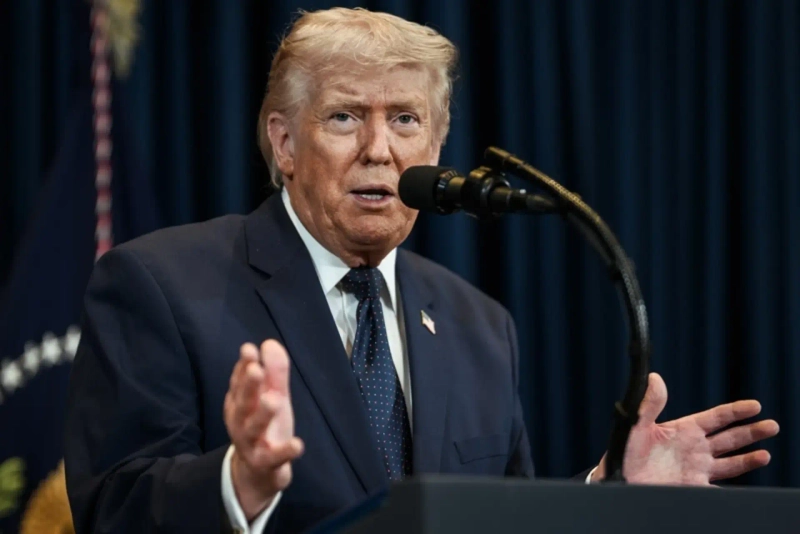
President Donald Trump is three days away from the legal deadline for the war with Iran that began on Feb. 28, yet there is little sign his administration is moving to end the conflict.
As a rule, continuing the war and spending money on it without congressional approval after May 2 would be illegal. That would push the conflict past the 60-day limit set by the War Powers Resolution, which was enacted in 1973 during the Vietnam War. The president can extend the deadline once for 30 days if he certifies to Congress in writing that more time is needed to ensure the safe withdrawal of US forces, but it is still unclear whether the administration will take that step. Democrats have repeatedly introduced resolutions to limit the president’s authority in the war, but each has been voted down.
Republicans have largely offered tacit support for the war with Iran. Congress has not held a single public hearing. Instead, Secretary of State Marco Rubio and other officials have given lawmakers several closed-door briefings.
Last week, Senate Majority Leader John Thune said most of his colleagues believe Trump acted correctly. Senator Roger Wicker, the Mississippi Republican who chairs the Senate Armed Services Committee, has gone further, urging the administration to resume airstrikes on Iran. In an April 24 social media post, he wrote that the US should finish the job by completely destroying Iran’s conventional military capabilities and eliminating what remains of its nuclear program. He has also argued that Iran’s leaders cannot be trusted to honor any agreement.
Senator Ron Johnson, a Wisconsin Republican, said holding hearings would only give Democrats a chance to rally opposition to the US. Some Republican lawmakers could break ranks if the war stretches beyond 60 days, but a broad congressional challenge to the Trump administration still appears unlikely.
There is also ample precedent for US presidents continuing military action without clearly obtaining congressional approval. In 1999, former President Bill Clinton sidestepped the War Powers Resolution during the Kosovo bombing campaign by arguing that Congress had given implicit consent when it passed related funding. In 2011, former President Barack Obama participated in NATO’s bombing campaign in Libya for more than 60 days and argued that the operation did not constitute hostilities under the War Powers Resolution because it was merely supporting NATO and involved no ground troops. After the Sept. 11, 2001, attacks, the Authorization for Use of Military Force, or AUMF, became the main legal path for bypassing the War Powers Resolution. The war in Afghanistan and operations against Islamic State in the Middle East were carried out under that authority.
Even if Congress gives only implicit consent, courts could still review whether a president acted lawfully. But the judiciary has generally been reluctant to rule on decisions to wage war, treating them as political questions. In 1982, a US federal district court dismissed a lawsuit by lawmakers who argued that former President Ronald Reagan had acted illegally by providing military support to the government of El Salvador. The court said the matter was a political question. Lawsuits seeking to block former President George W. Bush’s 2002 invasion of Iraq and challenging Obama’s Libya operation were dismissed on similar grounds.
Meanwhile, the Trump administration is reviewing proposals Iran made over the weekend to delay nuclear talks and keep the Strait of Hormuz open. Trump was negative about postponing the negotiations, Reuters and other media outlets reported. Washington has also made clear it will not accept any conditional opening of the strait. Rubio said on Fox News that if Iran’s idea of reopening the waterway means ships must coordinate with Tehran in advance, obtain permission and pay transit fees, then "that is not open." The US cannot accept any attempt by Iran to normalize a system in which it decides who can use an international waterway and how much they must pay, he added.
Iran, for its part, has shown no sign of backing away from using Hormuz as leverage. Iran’s Fars News Agency said it is a "geographical and legal reality" that the Strait of Hormuz is under Iranian control. Ebrahim Azizi, chairman of the Iranian parliament’s National Security and Foreign Policy Committee, said all vessels belonging to the "Zionist regime," meaning Israel, have no right to pass through the strait and that revenue generated from the waterway should be paid in Iranian currency.
Lee Sang-eun, Washington correspondent

Korea Economic Daily
hankyung@bloomingbit.ioThe Korea Economic Daily Global is a digital media where latest news on Korean companies, industries, and financial markets.