Kevin Warsh’s First Fed Test: Be Ready for Dissent
Forecast Trend Report by Period


Pressure From President Donald Trump
Focus on Whether He Can Defend Central Bank Independence
Building Allies Inside the Fed Will Be Key
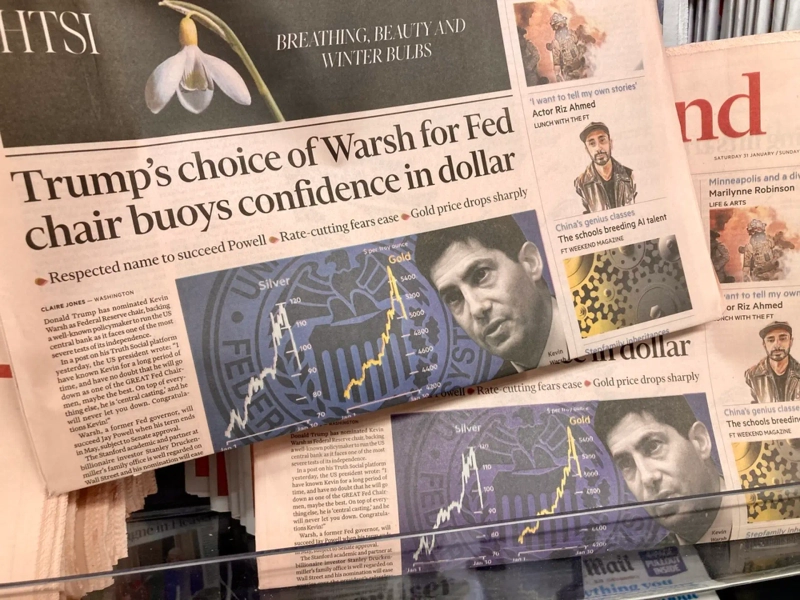
With what was effectively Jerome Powell’s final Federal Open Market Committee meeting as Federal Reserve chair held on April 29, attention is turning to how a Fed led by Kevin Warsh could affect financial markets.
Four of the FOMC’s 12 members dissented from Wednesday’s policy statement. Their reasons differed. Stephen Miran favored a 25-basis-point rate cut rather than holding rates steady, putting him firmly in the dovish camp with a clear political tilt.
The other three objected because the Fed left unchanged language in Wednesday’s statement that appeared to signal future rate cuts. They amounted to a hawkish trio.
A split with four of the 12 members breaking ranks is rare. It was the first such division since 1992.
JPMorgan interpreted the outcome as a message to Warsh, the nominee to succeed Powell as Fed chair: dissent is possible, so be ready.
Powell’s term runs through May 15. He opened his press conference on April 29 by calling it his last and congratulating Warsh as the incoming chair, making clear that Warsh is set to lead the FOMC and its press conference starting next month. Warsh also won Senate Banking Committee approval earlier that day in a 13-11 vote. If the full Senate confirms him before May 15, his path to the chairmanship appears clear. The bigger issue is that he may face an even more complicated set of challenges than Powell.
The macroeconomic backdrop is difficult. More important is how he handles Trump. The Economist said the Fed faces its biggest crisis in 50 years, with inflation running above target for five straight years even as the president continues to demand lower interest rates.
The immediate question is next month’s rate decision. Oil prices have surged because of the war with Iran, a backdrop that clearly argues against a rate cut and could even require policymakers to consider a hike. Trump has shown little concern for that constraint. Miran’s vote for a cut also underscored the president’s push for lower rates.
Even the Fed chair has only one vote out of 12. The chair can try to persuade colleagues, but cannot control them, as Wednesday’s four dissents made clear. Under Warsh, that kind of division could deepen.
Powell’s decision to remain on the Board of Governors also drew significant attention at the April 29 press conference. That could leave Warsh in the awkward position of leading the FOMC and trying to forge consensus while his predecessor remains inside the institution.
Warsh’s debut next month will be closely watched. The Economist said his success will depend on how clearly he shows he can protect central bank independence. If he does that and builds support inside the Fed, he may also gain room to pursue the balance-sheet reduction he has long advocated.
Lee Sang-eun, Washington correspondent, Hankyung.com, selee@hankyung.com

Korea Economic Daily
hankyung@bloomingbit.ioThe Korea Economic Daily Global is a digital media where latest news on Korean companies, industries, and financial markets.