Trump Says US Will Raise Tariffs on EU Cars, Trucks to 25%, Renewing Trade-War Fears
Summary
- President Trump said he would raise tariffs on EU-made passenger cars and trucks to 25% and exempt vehicles produced in the U.S. from the duties.
- The move would hit EU auto exports, with automotive value added in Germany and Italy projected to fall 5.3% and 4.7%, respectively.
- European carmakers including Volkswagen, BMW and Mercedes-Benz are pursuing talks on expanding U.S. production and securing tariff exemptions and refunds.
Forecast Trend Report by Period


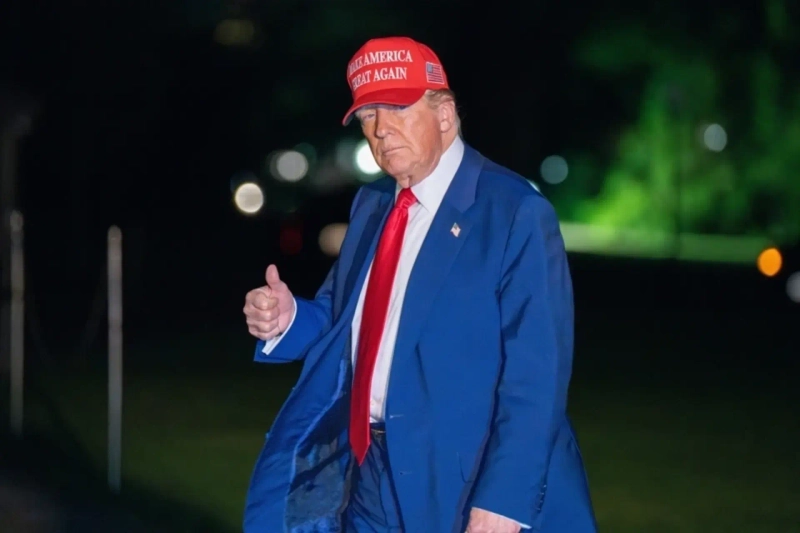
President Donald Trump said on May 1 that the U.S. will raise tariffs to 25% next week on passenger cars and trucks imported from the European Union, delivering the notice unilaterally on his Truth Social platform.
Trump said the EU was not carrying out a sufficiently agreed trade deal. He added that vehicles produced in the U.S. would be exempt from the tariffs. More than $100 billion of investment is under way, he wrote, calling it the biggest buildout in U.S. auto and truck manufacturing history.
The announcement amounts to something close to a declaration that last August's U.S.-EU agreement is no longer in force. On Aug. 21, 2025, the two sides agreed to a "framework for a reciprocal, fair and balanced trade agreement." The U.S. had since lowered tariffs on EU-made autos to 15% from 27.5%, while the EU had moved to effectively reduce tariffs on U.S. industrial goods to zero.
That agreement, however, has drifted for nearly a year without ratification by lawmakers on either side. Trump is now signaling that he wants to take the rate back to 25%.
What Trump called the EU's failure to comply with the agreement remains unclear. In and around the industry, the remark is being interpreted as a direct shot at the European Commission's proposed overhaul of Individual Vehicle Approval, or IVA, rules.
The American Automotive Policy Council said in a letter sent in December 2025 to Commerce Secretary Howard Lutnick that the EU's IVA overhaul "directly conflicts" with the Trump administration's August 2025 U.S.-EU framework agreement and joint statement.
Under the current IVA system, U.S.-made large pickup trucks such as the Ford F-150, Chevrolet Silverado and Ram 1500 can be driven on European roads if they satisfy technical requirements set by individual member states, without going through the EU's stricter bloc-wide type-approval process. About 7,000 U.S.-made SUVs and pickups entered Europe through that channel in 2024.
The EU's proposed revision, which is targeted for implementation in 2027, would tighten safety and emissions standards. U.S. officials believe that would effectively shut large American pickups out of the European market.
Andrew Puzder, the U.S. ambassador to the EU, said in a March interview that the U.S. had fully carried out the August 2025 agreement and that the EU had done "almost nothing."
The move also underscores that tariffs remain a central lever for the Trump administration. In February, the U.S. Supreme Court ruled that many reciprocal tariffs Trump had imposed under the International Emergency Economic Powers Act, or IEEPA, amounted to an abuse of presidential authority.
The administration is processing about $166 billion in tariff refunds. Tariffs imposed on national security grounds under Section 232 of the Trade Expansion Act were not covered by that ruling. Section 232 tariffs on autos and auto parts, steel and aluminum, semiconductors and pharmaceuticals remain in place.
With the IEEPA route blocked, the administration is using Section 232 as its main tool for trade pressure. The increase to 25% on EU autos is also being pursued under Section 232 authority, making it relatively less vulnerable to legal challenges.
The EU stands to take a direct hit. European automakers exported 56 billion euros of vehicles and parts to the U.S. in 2023, equal to 20% of the bloc's total auto exports. The U.S. is the top export market for EU-made vehicles. Oxford Economics estimates that if the 25% tariff is imposed as announced, Germany's automotive value added would fall 5.3% and Italy's would drop 4.7%.
Volkswagen, BMW and Mercedes-Benz together suffered $6 billion in losses from last year's U.S. tariffs alone. That helps explain why the three companies are continuing talks with the Trump administration to expand U.S. production and win tariff exemptions or refunds. Mercedes said it will add production of its core GLC SUV at its Alabama plant beginning in 2027.
BMW is reviewing additional shifts at its Spartanburg, South Carolina, plant. Audi is also pursuing U.S. production for some models. Those moves help explain Trump's claim that more than $100 billion of investment is under way and that it represents a record manufacturing commitment.
The EU has had a retaliatory tariff list covering 93 billion euros of U.S. goods ready since last year. It has held off on activating the measures immediately out of concern that doing so could trigger a full-scale trade war. European Commission President Ursula von der Leyen has repeatedly said tariffs would damage trans-Atlantic ties and cause a dangerous downward spiral.
How the EU responds to Trump's latest move will be a critical variable not only for autos, but also for trade in aviation, agricultural products and digital services.
Some also interpret Trump's abrupt tariff announcement as tied to tensions over Iran. Major members of the North Atlantic Treaty Organization, the U.S.-led military alliance, have in effect refused U.S. requests for troop deployments in a war with Iran, and Trump has voiced dissatisfaction over that, according to the article.
Kim Ju-wan, Hankyung.com reporter kjwan@hankyung.com

Korea Economic Daily
hankyung@bloomingbit.ioThe Korea Economic Daily Global is a digital media where latest news on Korean companies, industries, and financial markets.