Trump-Xi Beijing Summit to Test Whether Decade-Long US-China Economic War Can Ease
Summary
- The key question at the Beijing summit is whether the two sides can narrow differences over the core issues in the US-China economic war, including high tariffs, rare-earth export controls and AI and semiconductor export restrictions.
- The article says the US blockade of Iran and disruptions to Middle East trade routes are driving up logistics costs by 25% to 35% and adding to the burden of high oil prices for China, South Korea, Japan and Taiwan, further pressuring economic recovery.
- The article says major changes to global supply chains and the world order could hinge on how the US adjusts tariff policy after the Supreme Court ruling and handles exports of US soybeans and other grains, and on how China uses its leverage in advanced industries and its ban on rare-earth exports.
Forecast Trend Report by Period


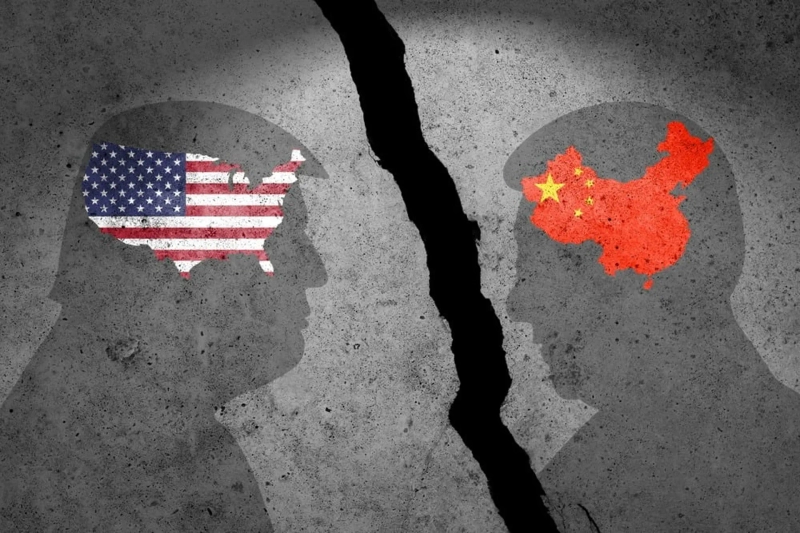
President Donald Trump and Chinese President Xi Jinping are scheduled to meet in Beijing on May 14-15. Tariffs, rare earths and other trade issues are expected to top the agenda. The two leaders had planned to revisit matters left unresolved at their summit in Busan on the sidelines of the Asia-Pacific Economic Cooperation meeting in October 2025.
What had appeared to be a relatively routine meeting has taken on far greater significance as the US-Iran war reshapes the geopolitical backdrop. Iran is a major Middle East power and has a comprehensive strategic partnership with China. If Tehran, after Venezuela, also comes under Washington's sway, Beijing's strategic room would narrow sharply. Energy supply chains tied to China would also come under pressure. As a result, the talks may extend beyond the US-China economic conflict to the war in the Middle East and the broader global order.
Meetings between US and Chinese leaders have long drawn worldwide attention because they have repeatedly altered the shape of international order. The most consequential summit historically was the February 1972 meeting in Beijing between President Richard Nixon and Chairman Mao Zedong. Until then, the US had not recognized the People's Republic of China under Communist Party rule. The two countries had fought for three years in the Korean War. Even afterward, Washington largely treated Beijing as a diplomatic shadow. Nixon's meeting with Mao changed that. Through Deng Xiaoping's reform and opening-up drive and China's accession to the World Trade Organization, China went on to become a key US strategic partner.
Another pivotal period came in the series of US-China summits from 2008 to 2016. The global financial crisis, triggered by the US subprime mortgage collapse, spread worldwide and later fed into Europe's sovereign debt crisis. The turmoil also exposed deep strains in capitalism, including widening inequality.
China used that period to unleash massive fiscal stimulus and cast itself as a stabilizer of the global economy. Watching the capitalist system falter, Beijing grew more confident that its own model was superior. Its view of the US also hardened. In June 2013, during a meeting with President Barack Obama at Sunnylands in California, Xi proposed what he called a "new type of major-country relations." The idea was for the US and China to lead the world together as equals, effectively as a G2. Obama declined to embrace that framework publicly.
China stirred a diplomatic controversy at the Group of 20 summit in Hangzhou in September 2016. Obama was not provided a mobile staircase or red carpet after stepping off Air Force One, and the incident escalated into an argument between security personnel. Beijing said the episode was a misunderstanding caused by a logistical error. In the US, however, it quickly fueled the view that China had deliberately slighted America and humiliated Obama. Calls in Washington for a tougher line on China then intensified.
After Trump's election in 2017, the US opened what the article characterizes as an economic war with China. Washington's anti-China stance became unmistakable. It moved against Chinese technology companies including Huawei and imposed tariffs. The same broad approach continued under President Joe Biden and intensified further after Trump's return to office for a second term in 2025. China responded aggressively as pressure mounted.
At the Busan summit last year, US high tariffs collided with China's controls on rare-earth exports. The standoff was so severe that the meeting ended in little more than a temporary truce. The question now is whether the Beijing summit will be any different. Can the two sides move beyond an era of strategic competition, in which each treats the other as an adversary, and enter a new phase of cooperation, or will confrontation persist?
Xi advanced the idea of the China Dream after becoming Communist Party general secretary in 2012, promising to restore China's past greatness. The goal was to make China the world's leading power and surpass the US. After taking office as president in 2013, Xi pushed hard to foster advanced industries. China still lagged the US in basic core technologies, but in many sectors it gained an edge in commercialization and manufacturing.
Public sentiment in China, however, deteriorated as corruption spread, property developers fell into successive defaults, overinvestment mounted, domestic consumption stayed weak and youth joblessness worsened. After Trump's return to power, stronger US pressure also began to shake China's export markets.
China's gross domestic product, after years of rapid expansion, has also stagnated. China's share of world GDP rose from the 3% range in the early 2000s to above 17% in 2020, but then lost momentum. Last year, it stood at an estimated 16.5%. By contrast, the US share, which had fallen to 21% during the global financial crisis, climbed to 26.1% last year. The gap between the two widened again.
The Chinese Communist Party has long justified its rule with a promise to improve living standards. A failure on that front would be a major political blow to the leadership. Economic recovery has therefore become urgent, and Beijing sees ending the economic conflict with the US as part of that task.
Trump, who began his first term in 2017, campaigned on making America great again. His vision was to deliver strong growth and revive manufacturing through America First policies and protectionism. Since returning to power in 2025, he has kept that line intact.
But Trump's agenda has also met serious obstacles. The US faces deep political polarization, backlash against migrant deportations, friction with allies and a weakening of global leadership. The war with Iran has also dragged on, adding to public fatigue. Expectations are growing that Trump could face a political test in the November 2026 midterm elections.
The US-China economic war has now entered its 10th year. The US has led the offensive, but it is difficult to say it has won. Global supply chains are too deeply intertwined for China alone to be isolated. As imports of low-cost Chinese goods decline, inflation pressure has increased. The confrontation between Trump and Xi has also lost some of its earlier sharpness. If both sides are looking for a new compromise, this summit offers an opening.
What had been expected to last four to six weeks has now entered its 10th week. The US has consumed a vast amount of weaponry, including missiles, and committed substantial resources to enforcing a blockade around the Strait of Hormuz. It remains bogged down in the conflict. Some foreign media outlets have portrayed China as benefiting while doing nothing, even invoking Napoleon's line that one should never interrupt an enemy when it is making a mistake.
China, however, is also a direct victim of the war. High oil prices are lifting inflation and adding to the country's economic strain. Rising danger in the Red Sea, where the Suez Canal shipping route is located, is another burden. The Middle East sits astride the trade route linking Asia and Europe. If that corridor is blocked, vessels must divert around the Cape of Good Hope at Africa's southern tip. Actual shipping and logistics costs have risen about 25% to 35% as a result. South Korea, Japan and Taiwan are facing the same problem.
The US has little need for the Suez Canal. It can reach Europe through the Atlantic and Asia through the Pacific. Washington's blockade of Iran is therefore also making China's economy harder to manage. That has become a core issue for the summit.
The main issues in the US-China economic conflict are already well known. The US is restricting exports of artificial intelligence technology and semiconductors to curb China's push into advanced industries. China has responded with bans on rare-earth exports and tighter controls on US technology companies operating in the country. Follow-up steps after the US Supreme Court ruled in February that tariffs imposed by the president under the International Emergency Economic Powers Act were unlawful are also in focus. Chinese imports of US soybeans and other grains are also being discussed.
Trade disputes and issues arising from the US-Iran war may yield some form of solution at the summit. The larger question is whether the two countries can resolve their deeper conflict. To borrow from the ancient Greek historian Thucydides, the root of the confrontation lies in "the rise of China and the fear that this instilled in the United States." In his book "Destined for War," US historian Graham Allison wrote that when a rising power becomes threatening enough to displace a ruling power, the structural pressure that follows tends to produce armed conflict and looks less like an exception than a rule.
China's military is not yet strong enough to displace the dominant power. The gap with the US remains wide. The US has again shown in its war with Iran that it can project military force globally, a basic requirement for a hegemonic power. China, by contrast, can fight only in areas close to its borders.
China's military conflicts have all unfolded near its periphery, including the Korean War, which broke out less than a year after the founding of the People's Republic, the 1962 war with India, the 1969 border clashes with the Soviet Union and the 1979 war with Vietnam. China has launched aircraft carriers, but it still lacks the ability to deploy fleets far overseas. Militarily, it remains a regional power.
If the US and China were to clash, it would most likely happen near China's borders. Within missile range, China could defeat US forces, but it would not be able to push far into the Pacific beyond that zone. The world no longer sees China as one pillar of a G2. The enthusiasm for framing the US and China as a G2, which peaked in the mid-2010s, has faded. It is now hard to find media outlets or books that still use that framework.
China, too, has shifted away from the phrase "new type of major-country relations." It now uses terms such as a new type of international relations, major-country diplomacy with Chinese characteristics and a community of shared future for mankind, in part to reduce US resistance. Even so, it has not abandoned its goal of being recognized as a major power equal in status to the US.
The US is pursuing a balance-of-power strategy in Asia by working with other countries to counter China. The Quadrilateral Security Dialogue, or Quad, involving the US, India, Japan and Australia, is a leading example. Washington is also encouraging rearmament by countries such as Germany in Europe and India and Japan in Asia, seeking to reshape world order from one superpower and two major challengers - the US, Russia and China - into a system centered on one superpower and multiple powers, including Russia, China, Japan, Germany and India. The aim is to preserve global security through regional balances of power. That strategy, of course, works only until China gains the capacity to break it.
Hyun Seung-yoon, chief editorial writer and head of the editorial board

Korea Economic Daily
hankyung@bloomingbit.ioThe Korea Economic Daily Global is a digital media where latest news on Korean companies, industries, and financial markets.