Samsung Chip Strike Looms After Talks Fail, Raising Prospect of South Korea Emergency Arbitration
Forecast Trend Report by Period


Government-mediated talks fail again
Union says it will go ahead with a general strike on May 21
Labor holds firm on scrapping the bonus cap
Union says there will be no further talks
Prime Minister Kim says a strike must be avoided and pledges support for dialogue
Industry calls for review of emergency arbitration
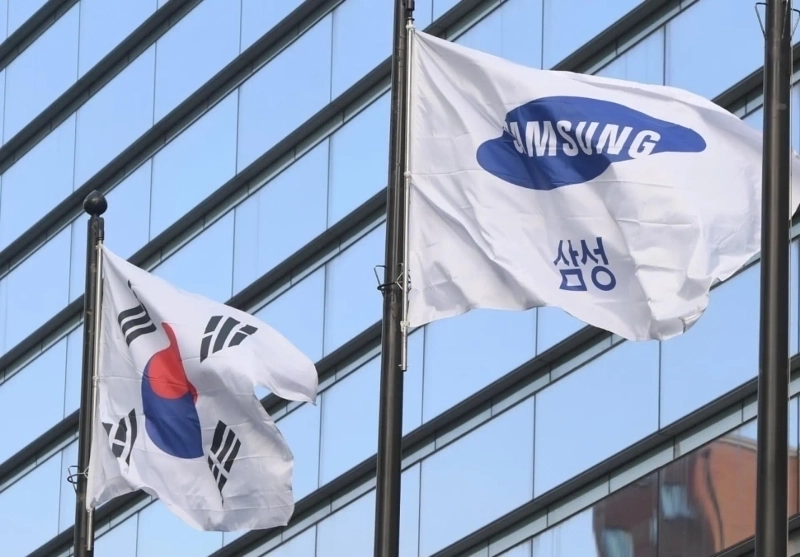
Samsung Electronics Co. and its labor union failed to reach an agreement on May 13 even after 17 hours of marathon post-dispute mediation under government supervision. The union then declared it would press ahead with a general strike on May 21, heightening fears of a shutdown at the company’s production lines. Industry and academic circles are increasingly calling on the government to invoke emergency arbitration to avert broader damage to the economy.
Union Says Labor Board Proposal Was a Step Back
The latest round of mediation, held over two days beginning May 12 under the Central Labor Relations Commission, ended without a deal and largely confirmed how far apart the two sides remain. Labor and management negotiated from the afternoon of May 12 until early May 13, but failed to narrow differences over the performance-bonus system.
The labor board proposed a compromise that would preserve the economic value-added-based excess profit incentive program and pay a special management performance bonus to the semiconductor, or DS, division. The union rejected the proposal. It is demanding a bonus pool equal to 15% of operating profit, or about 45 trillion won ($32.6 billion) based on this year’s forecast, along with the formal elimination of the current cap that limits bonuses to 50% of annual salary. The union argues that a transparent and fixed formula is needed because performance pay makes up a substantial share of wages.
Management countered with what it called a more flexible compensation framework, keeping the current bonus system while combining it with special performance payouts linked to business results.
Choi Seung-ho, head of the Samsung Electronics National Labor Union, said after the talks collapsed early on May 13 that 16 of the 17 hours had been spent waiting. He said the mediation, with no revised proposal on the table, appeared intended to sap momentum for a general strike. Choi also said the labor board’s proposal amounted to a retreat because it kept the bonus cap in place.
After an injunction hearing at Suwon District Court later that day, Choi said five months of bargaining, including the post-dispute mediation process, had produced no progress in the company’s position. The union is not considering further talks with management before the strike ends. It said 42,000 workers have signed up to participate and expects the final number to top 50,000. The union added that it would conduct the strike legally and would not engage in unlawful acts such as occupying production lines.
Samsung said the union was clinging to a rigid bonus system unrelated to management performance and expressed regret over the outcome. Even so, the company said it would keep trying to hold talks until the last moment to prevent the worst-case scenario.
Focus Turns to Government Emergency Powers
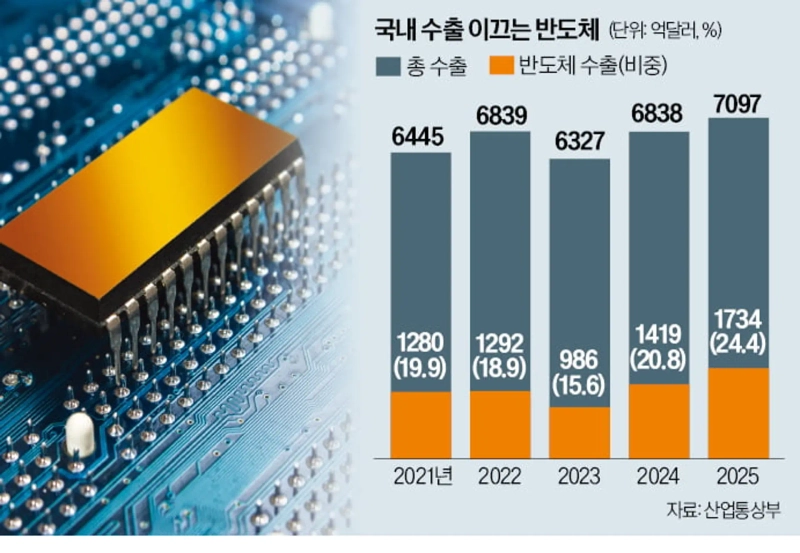
Industry and academic observers say the dispute has moved beyond an ordinary labor conflict at a single company. Samsung accounts for 25.7% of market capitalization on South Korea’s main stock market, while semiconductors make up about 35% of the country’s total exports. An 18-day strike could deal a severe blow to the economy. There is also mounting concern that any halt in Samsung’s chip lines, at a time of fierce competition for leadership in artificial intelligence, could irreparably damage customer trust.
Song Heon-jae, a professor at the University of Seoul, said a suspension of semiconductor lines could cause losses of about 1 trillion won ($724 million) a day because of the nature of chip production. If the strike is prolonged, operating profit could fall by as much as 10 trillion won ($7.24 billion), he said. Direct losses of about 30 trillion won ($21.7 billion) would meet the legal threshold for emergency arbitration because they could seriously harm the national economy, he added. Cho Joon-mo, a professor at Sungkyunkwan University, said the dispute has reached a point where the government should seriously consider emergency intervention because it is directly tied to supply-chain stability.
Emergency arbitration under Article 76 of South Korea’s Trade Union and Labor Relations Adjustment Act is a powerful legal measure that immediately bans labor action for 30 days once invoked. It was used during Hyundai Motor Co.’s 1993 strike and an airline strike in 2005. It has not been used in the 21 years since.
Presidential Office, Government Urge Dialogue
The government’s response is also intensifying. Prime Minister Kim Min-seok convened an emergency meeting of relevant ministers on May 13 and said semiconductors are a pillar of the South Korean economy. He instructed officials to actively support continued talks between labor and management so the dispute does not lead to a strike under any circumstances.
Deputy Prime Minister and Finance Minister Koo Yun-cheol also urged both sides in a social media post to pursue principled negotiations. Labor Minister Kim Young-hoon said the issue must be resolved through dialogue by any means, without regard to formality.
The presidential office is also watching closely. Kang Yu-jung, senior presidential spokesperson, told a briefing that time remains before the planned strike date and that the government will support both sides to the end so they can resolve the dispute through dialogue. Asked about the possibility of emergency arbitration, she said only that there is still time left for talks between labor and management.
Kim Chae-yeon, Kwak Yong-hee and Kang Hae-ryeong, Korea Economic Daily reporters why29@hankyung.com

Korea Economic Daily
hankyung@bloomingbit.ioThe Korea Economic Daily Global is a digital media where latest news on Korean companies, industries, and financial markets.