IMF Says South Korea’s Debt Is Sustainable, Crisis Risk Low
Forecast Trend Report by Period


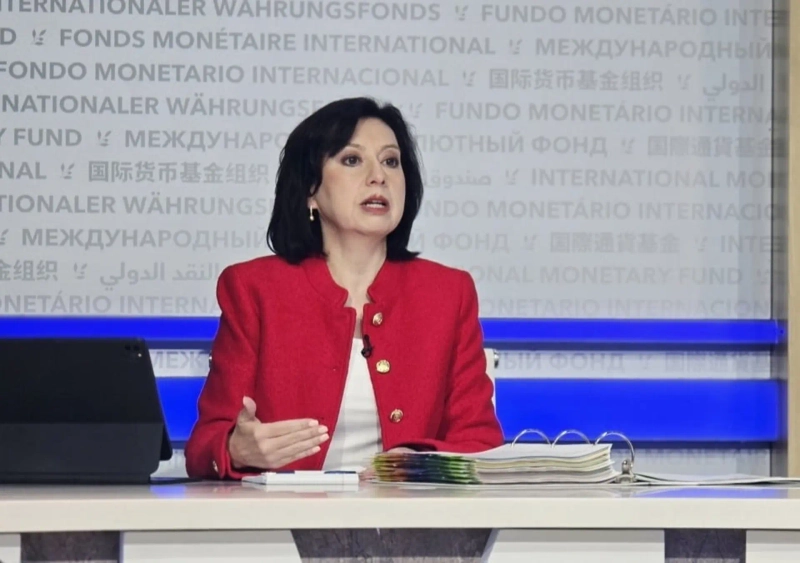
The International Monetary Fund said South Korea’s government debt remains sustainable and the risk of a debt crisis is low, commenting on the country’s debt outlook in the Fiscal Monitor released late last month.
Julie Kozack, the IMF’s spokesperson, made the remarks at a regular briefing at the fund’s Washington headquarters on May 14 in response to a question from the Korea Economic Daily.
The IMF last month released its World Economic Outlook and Fiscal Monitor reports. They projected South Korea’s general government debt at 52.3% of gross domestic product at the end of 2025, rising to 63% by 2030.
The 2030 figure is about half the global average for general government debt as a share of GDP, Kozack said, adding that South Korea’s debt position remains quite strong. When the IMF conducted its Article IV consultation with South Korea and published the report in November, it concluded the country’s debt was sustainable and the risk of a debt crisis was low. Compared with many other countries, South Korea is in a relatively favorable position on debt, she added. Article IV consultations are the IMF’s regular reviews of member countries’ macroeconomic and financial policies.
Kozack also emphasized that while the Fiscal Monitor projected South Korea’s debt would rise, it also made clear the increase starts from a “fundamentally different level.” In other words, South Korea’s debt burden remains relatively low compared with many other countries. She said it is more important to focus on the overall debt picture than on the pace of the increase alone.
She also said South Korea is maintaining a very prudent fiscal stance. While there are signs of some fiscal expansion, that policy stance is appropriate because it supports structural reforms aimed at boosting productivity. Given the demographic pressures facing South Korea, those productivity gains will be critical to future economic growth, she said.
Separately, the IMF said a scenario related to the fallout from the Iran war used in its April World Economic Outlook has already moved beyond the baseline case and toward, or into, the adverse scenario. The baseline assumptions had already been criticized as overly optimistic when they were published.
“We are clearly moving away from the baseline scenario territory” of oil prices rising through the first half of this year and toward, or already into, the adverse scenario of elevated oil prices lasting through year-end, Kozack said. Oil prices are clearly above the baseline path, but medium-term inflation expectations remain relatively well anchored and financial conditions remain fairly accommodative, she added.
The IMF said it expects requests for financial support totaling $20 billion to $50 billion from at least 12 countries. Asked by Reuters at the briefing whether Iraq had requested IMF support, Kozack said the fund could not share details on specific countries. Reuters reported later on May 14, citing an Iraqi official, that Iraq is holding preliminary talks with the IMF and the World Bank after the closure of the Strait of Hormuz halted crude exports and triggered a sharp drop in government revenue.
Iraq has the world’s fifth-largest oil reserves and an economy wholly dependent on oil exports. President Nizar Ahmedi nominated Ali al-Zaidi, the Shiite camp’s candidate for prime minister, late last month, and Iraq’s parliament approved the nomination. Once a new cabinet is formed, a request for IMF funding is expected to move forward in earnest. Kozack also said IMF staff are in Cairo conducting the seventh review under Egypt’s Extended Fund Facility and the second review related to the Resilience and Sustainability Facility. If approved by the executive board, that would clear the way for a $1.6 billion disbursement. Egypt, however, has been relatively less affected by the Middle East war, she added.
On the summit between US and Chinese leaders, the IMF offered a standard response. Anything that helps ease trade tensions and reduce uncertainty would benefit the world’s two largest economies and would also be positive for the global economy, Kozack said.
Lee Sang-eun, Washington correspondent, Korea Economic Daily, selee@hankyung.com

Korea Economic Daily
hankyung@bloomingbit.ioThe Korea Economic Daily Global is a digital media where latest news on Korean companies, industries, and financial markets.