Trump Ends China Trip With Xi Lunch at Zhongnanhai
Summary
- The US and China said they discussed tariff and trade tensions and agreed on the need for stability in bilateral relations.
- The two sides said they confirmed their positions on expanding economic and trade cooperation, managing tensions in the Middle East, and opposing Iran's possession of nuclear weapons and the militarization of the Strait of Hormuz.
- Still, there were no visible outcomes such as tariff cuts, and the talks were seen as largely reaffirming existing positions on key issues.
Forecast Trend Report by Period


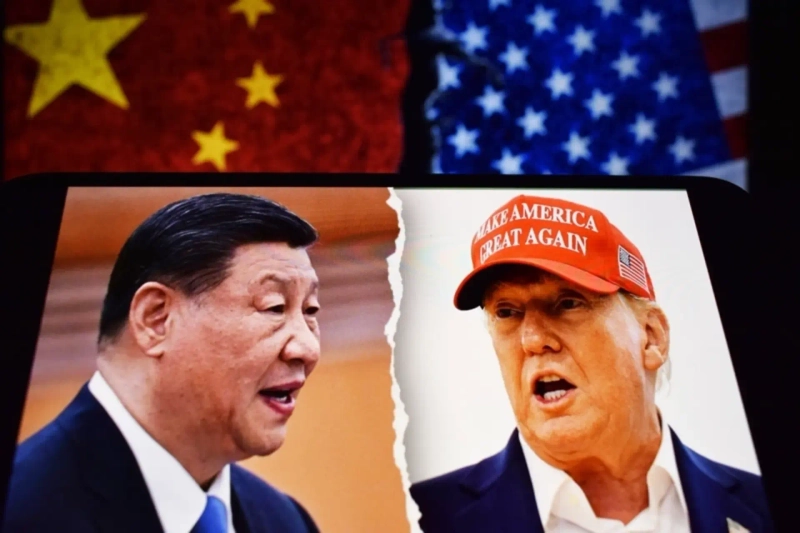
President Donald Trump will return to the US on May 15 after tea and lunch with Chinese President Xi Jinping at Beijing's Zhongnanhai, the center of China's political power.
By hosting Trump at a venue it opens only selectively to foreign leaders, Beijing appears to be signaling its intention to keep US-China ties stable.
Trump is scheduled to meet Xi on the morning of May 15 at Zhongnanhai, where the Chinese leader's office and residence are located, according to diplomatic sources. The two leaders will have tea before a lunch meeting.
Located west of the Forbidden City, Zhongnanhai was once an imperial garden. It now houses the office and residence of China's president as well as core Chinese Communist Party leadership bodies. An invitation for a foreign leader to visit the site is widely viewed as a special gesture from Beijing.
The compound also carries symbolism in the history of US-China relations. It is known as the place where then-President Richard Nixon met Mao Zedong in 1972, helping open the way for detente between the two countries.
By placing Zhongnanhai at the end of Trump's visit, China is highlighting a message that it wants to keep bilateral ties from sliding into confrontation and manage the relationship in a stable way.
Trump is scheduled to depart Beijing on the afternoon of May 15 aboard Air Force One from Beijing Capital International Airport. That will conclude his three-day visit to China, which began on the night of May 13.
A day earlier, Trump held summit talks with Xi for about 135 minutes. They discussed tariffs and trade tensions, Iran's nuclear program, Taiwan and the situation on the Korean Peninsula.
Based on statements from both sides, Washington and Beijing agreed on the need to stabilize relations. They also shared views on expanding economic and trade cooperation and managing tensions in the Middle East. The two sides confirmed their opposition to Iran possessing nuclear weapons, the militarization of the Strait of Hormuz and the imposition of transit fees there.
The meeting emphasized cooperation. Trump described the US and China as "the most important and most powerful countries in the world" and stressed the need to work together. Xi said the two countries should be partners rather than rivals. The two leaders also projected a friendly atmosphere with a walk in a park and a state banquet.
Still, the talks produced no visible breakthroughs on key issues such as reciprocal tariff cuts, a concrete agreement on Taiwan, a solution to the Iran issue or a joint statement. The meeting was significant in that the two sides kept dialogue channels open and sought to prevent ties from deteriorating further, though some assessments held that they merely reaffirmed existing positions on the core disputes.
Oh Se-seong, Hankyung.com reporter sesung@hankyung.com

Korea Economic Daily
hankyung@bloomingbit.ioThe Korea Economic Daily Global is a digital media where latest news on Korean companies, industries, and financial markets.