China Hails ‘New G2’ After Beijing Summit, While Trump Stresses Trade
Summary
- China said the US-China summit produced agreement on building a constructive China-US relationship with G2, a new positioning, and strategic stability.
- Global Times said the meeting marked a chance to broaden and deepen US-China cooperation in advanced science and technology, energy, aviation, agriculture, and Wall Street.
- Trump highlighted expectations for trade and business cooperation with China, but did not mention a new order or new positioning for ties between the two countries.
Forecast Trend Report by Period


China Promotes a ‘New Order’ While the US Focuses on Trade
Beijing Seeks to Redefine Ties as Washington Pursues Practical Diplomacy
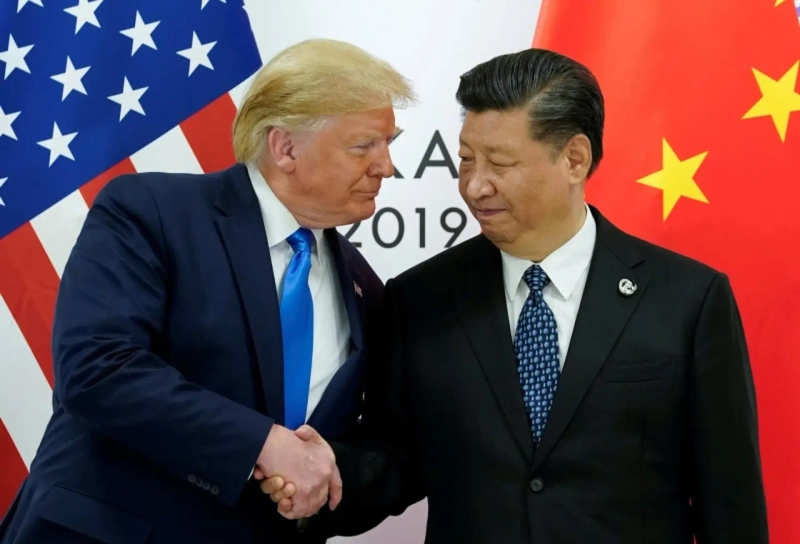
The gap between Washington and Beijing’s reading of the latest US-China summit has come into clearer focus after the leaders met in Beijing for the first time in nine years. China has cast the meeting as setting a new benchmark for bilateral ties.
The US has aligned with China on economic cooperation and trade stability, but has shown little interest in Beijing’s broader push for a new order centered on the Group of Two, or G2. That has reinforced the view that the two sides came away from the so-called Beijing summit with sharply different expectations.
China’s state-backed Global Times wrote in a May 15 editorial that President Xi Jinping and President Donald Trump met at the Great Hall of the People in Beijing on May 14 and agreed on a new vision to build a “constructive China-US relationship with strategic stability.”
Editorials in the Global Times often reflect the views of the Chinese Communist Party and the government. The newspaper described the summit as establishing a new positioning for ties between the two countries.
The Chinese term dingwei, translated into English as “positioning,” implies more than a simple description of status or character. It refers to setting the direction of the relationship and defining its standing and orientation.
The newspaper said that framework would provide strategic guidance not only for the remaining three years of Trump’s term, but also for relations beyond that period.
Xi had spelled out that idea of constructive strategic stability a day earlier. He described four pillars: positive stability centered on cooperation, healthy stability based on competition within an appropriate range, sustainable stability that can manage differences, and long-term stability that makes peace predictable. According to the paper, those “four stabilities” amount to a clear and workable blueprint for bilateral ties.
The framework is “not a stopgap measure, but a long-term solution,” the Global Times wrote, and “not a zero-sum game, but cooperation based on mutual benefit and shared gains.”
It added that building a constructive China-US relationship with strategic stability showed both countries, as major powers, were willing to provide greater stability and more public goods to the world together. From easing regional conflicts to addressing new challenges in global governance and opening new frontiers for human progress, all of that depends on stable, healthy and sustainable ties between China and the US, the newspaper wrote.
The editorial also said the two leaders exchanged views on major international and regional issues, including the Middle East, the Ukraine crisis and the Korean Peninsula.
It also expressed expectations for cooperation in advanced science and technology. The Global Times said the business delegation accompanying Trump on his trip to China had shifted from one centered on executives in energy, aviation and agriculture to one led by technology figures and Wall Street representatives. That, it said, showed clearly that the scope of China-US cooperation continues to widen and deepen.
The newspaper added that the seventh round of China-US economic and trade consultations held in South Korea produced balanced and broadly positive results. Those practical steps, it wrote, showed how the new positioning was being translated into concrete action.
Trump, by contrast, highlighted prospects for trade and business cooperation with China. He did not mention any new ordering of bilateral ties or a broader repositioning of the relationship.
That echoed the gap in how the two sides described other issues. The White House said in a statement that both sides agreed the Strait of Hormuz must remain open and that Iran cannot be allowed to possess nuclear weapons. China, for its part, said only that the two leaders exchanged views on the situation in the Middle East.
Kim Eun-jung, Beijing correspondent, kej@hankyung.com

Korea Economic Daily
hankyung@bloomingbit.ioThe Korea Economic Daily Global is a digital media where latest news on Korean companies, industries, and financial markets.