[Exclusive] Korea Pension Panel Backs Higher Domestic Stock Target, Urges Caution on Timing
Summary
- The National Pension Fund Management Committee has formed a consensus on raising the target allocation to domestic equities in its asset-allocation plan for the next five years.
- The National Pension Service’s current domestic equity weighting is about 25%, far above this year’s target of 14.9%, a gap that could affect future selling pressure in domestic stocks and Kospi market flows.
- The midterm asset-allocation plan due to be finalized on May 28 will determine the future of the domestic equity target, the allowable range and the rebalancing suspension, making it a key turning point for future market volatility and the Kospi rally.
Forecast Trend Report by Period


South Korea’s National Pension Fund Management Committee has formed a broad consensus in favor of raising the target allocation to domestic equities in its asset-allocation plan for the next five years, according to people familiar with the matter. Still, some participants argued against sharply widening the target and its allowable range all at once, after the recent Kospi rally drove the fund’s domestic equity weighting up in a short period. Some also said the committee should watch market conditions longer rather than rush to a final decision at the end of May, given elevated volatility.
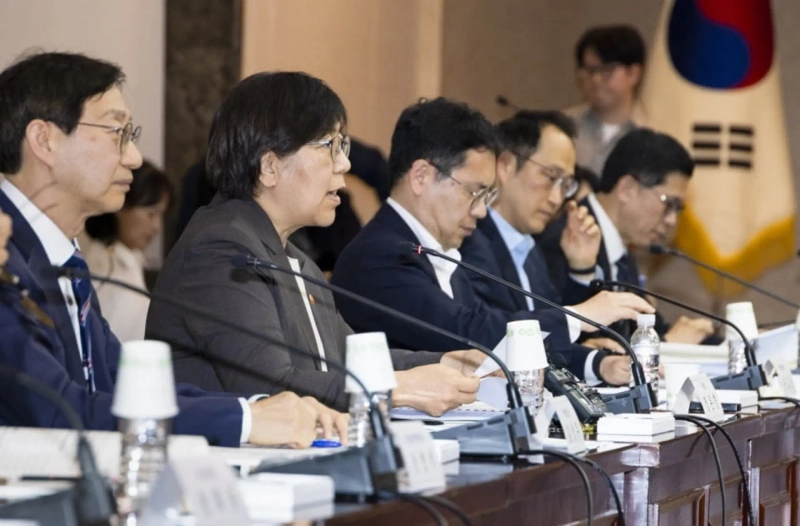
The National Pension Fund Management Committee, under the Ministry of Health and Welfare, held its fourth meeting of 2026 at the Government Complex Seoul on May 15 and discussed an interim report on the 2027-2031 midterm asset-allocation plan. The midterm plan is the key framework for managing the National Pension Service fund, setting target allocations and investment direction for stocks, bonds and alternative assets over the next five years. The committee is required to deliberate on and approve the plan by the end of May each year.
No specific target figures by asset class were presented at the meeting, according to people familiar with the discussion. Instead, attendees shared the recent jump in the fund’s domestic equity weighting following the rally in South Korean stocks. The weighting has recently climbed to about 25%, attendees said. That is roughly 10 percentage points above this year’s target of 14.9%. Most participants broadly agreed with the direction of lifting the domestic equity target from current levels.
The National Pension Service has long pursued an asset-allocation strategy of reducing domestic equities while increasing overseas stocks and alternative investments. The logic was that, once pension payouts exceed contribution income over the long term, the fund will need to sell assets to pay benefits. A higher domestic equity weighting could concentrate that selling pressure in the local stock market. But the Kospi has surged this year, led by semiconductor shares, sharply increasing the value of the fund’s domestic stock holdings and complicating that strategy.
That approach was already adjusted once this year after the Kospi jumped early in 2026. In January, the committee raised the domestic equity target by 0.5 percentage point to 14.9% from 14.4% and temporarily suspended mechanical rebalancing. The move reflected concern that large-scale selling by the pension fund during a sharp market rally could hit the market. The suspension is due to end in June, making the midterm asset-allocation plan to be finalized on May 28 a key juncture for future selling pressure in domestic equities.
The discussion within and around the committee on raising the upper bound for domestic equity exposure is seen as a practical way to limit market disruption. If the current target and allowable range remain unchanged, the pension fund would have to gradually sell a substantial amount of domestic stocks. That could weigh on Kospi supply and demand. Even so, many participants said a sharp move to lift the domestic equity target to above 20% in one step would be risky. They cited uncertainty over whether the recent stock-market strength reflects a structural re-rating or a temporary cyclical factor.
Labor and employer representatives also said the scale of any increase should be set carefully, according to people familiar with the matter. While they agreed on the direction of raising domestic equity exposure, they said more review is needed on how far to widen the allowable range and how quickly to normalize the portfolio after the rebalancing suspension ends. Labor-side participants also said the committee should consider watching the market longer rather than forcing a final decision by the end of May. Their view was that, with volatility having increased this year, the side effects of changing rebalancing rules too quickly should be examined.
The National Pension Service plans to prepare a final proposal after further discussions by the Investment Policy Committee and the Working Evaluation Committee, both under the fund management committee, based on views from stakeholders. The midterm asset-allocation plan is set to be finalized at the fifth Fund Management Committee meeting on May 28. How the committee adjusts the domestic equity target, the allowable range and the rebalancing suspension will shape the scale of future stock sales by the pension fund and the direction of Kospi market flows.
Min Kyung-jin, Hankyung.com reporter (min@hankyung.com)

Korea Economic Daily
hankyung@bloomingbit.ioThe Korea Economic Daily Global is a digital media where latest news on Korean companies, industries, and financial markets.