South Korea to Release Tokenized Securities Guidelines in July, Allow Asset Pooling
Summary
- The Financial Services Commission said it aims to announce amendments to subordinate regulations and guidelines in July as part of its push to institutionalize tokenized securities.
- The consultative body said it is reviewing a plan to allow the currently banned pooling of same-type underlying assets within a limited scope, subject to investor protections including valuation, risk management and disclosure.
- On distribution, authorities discussed OTC exchange trading limits and licensing requirements as part of a framework aimed at boosting early market liquidity while balancing fair competition and investor protection.
Forecast Trend Report by Period


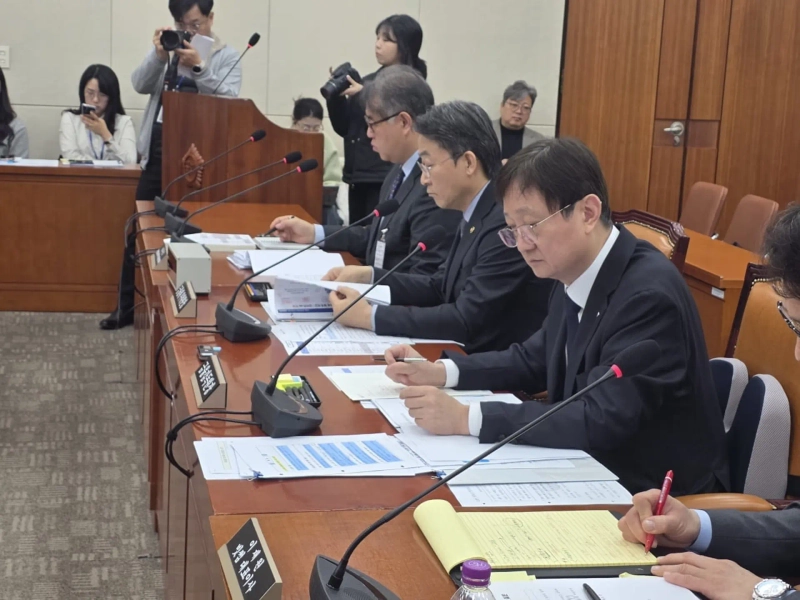
South Korea’s Financial Services Commission has accelerated work on the detailed framework for tokenized securities after holding the second meeting of a public-private consultative body on issuance, distribution and market infrastructure.
The FSC said on May 15 that Vice Chairman Kwon Dae-young chaired the meeting, attended by officials from the Financial Supervisory Service, the Korea Securities Depository, the Financial Security Institute, the Korea Financial Investment Association, the Korea Fintech Industry Association, and private-sector experts from academia and the legal profession. The consultative body was launched in March ahead of amendments to the Electronic Securities Act and the Capital Markets Act that are scheduled to take effect in February 2027. Based on the discussions, the FSC aims to announce amendments to subordinate regulations and related guidelines in July.
In opening remarks, Kwon said the emerging tokenized securities ecosystem should balance innovation and trust. On best-practice standards for issuing fractional investment securities, he said regulators would not take an exclusively restrictive approach. Authorities will pursue a plan to allow issuance of fractional investment securities backed by pooled underlying assets of the same type within a limited scope. Trading caps for over-the-counter platforms will also be set to support early market liquidity rather than become a barrier to innovation.
The meeting centered on three agenda items. First, participants reviewed which underlying assets would qualify for fractional investment securities and how to support innovation. They broadly agreed to allow the pooling of currently prohibited underlying assets within certain limits when the assets are of the same type. Investor protection measures, however, were set as a precondition, including objective asset valuation and safeguards for risk management and disclosure.
The group also discussed expanding the range of assets eligible for tokenization and preparing the supporting infrastructure. In global markets, tokenization is being actively explored not only for newer securities such as fractional investments, but also for traditional standardized securities including stocks, bonds and money market funds. The consultative body agreed to draw up a phased roadmap, conduct tests for innovations across the full securities lifecycle, including on-chain settlement, and improve infrastructure.
On distribution, participants discussed market-structure issues including licensing requirements for OTC exchanges, the scope of permitted side businesses and investor trading caps. They agreed on the need for a framework that improves trading efficiency while balancing fair competition and investor protection. Specific measures will be finalized after further discussions.
Lee Min-jae, Korea Economic TV reporter tobemj@wowtv.co.kr

Korea Economic Daily
hankyung@bloomingbit.ioThe Korea Economic Daily Global is a digital media where latest news on Korean companies, industries, and financial markets.